During my studies, I ordered a book, by Ruth Woods, FINDING FORM WITH FIBRE. I have not really spent enough time using this book, and now it’s the time.
I asked friends if I could cut fibrous materials in their gardens. I realise it is early spring and maybe not the best time to gather plant materials. I was lucky to get some dry cordelyne leaves as well as a good lot of green leaves from wild irises. I soon realised that it would be better to dry these and then work them as cordage.
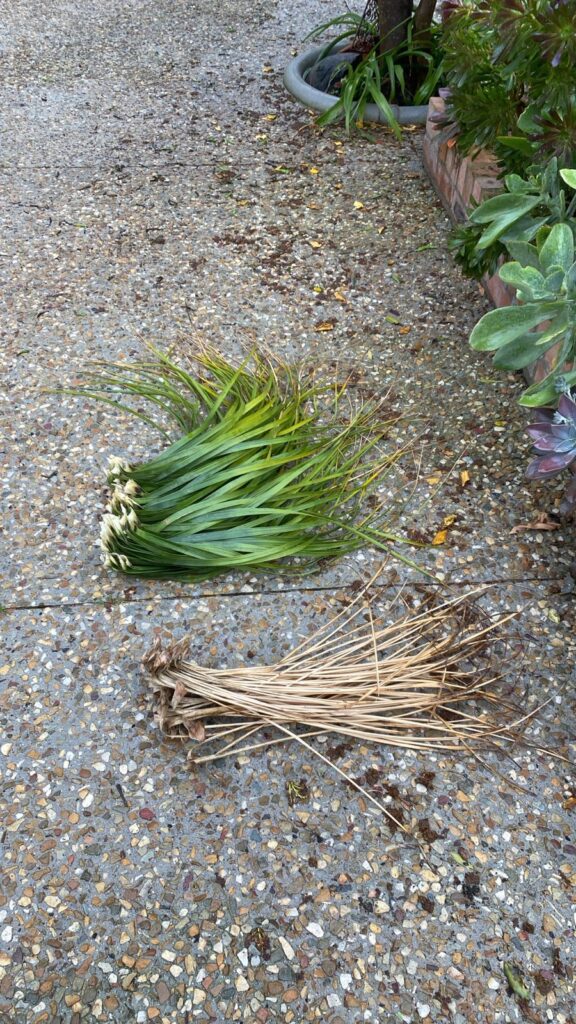
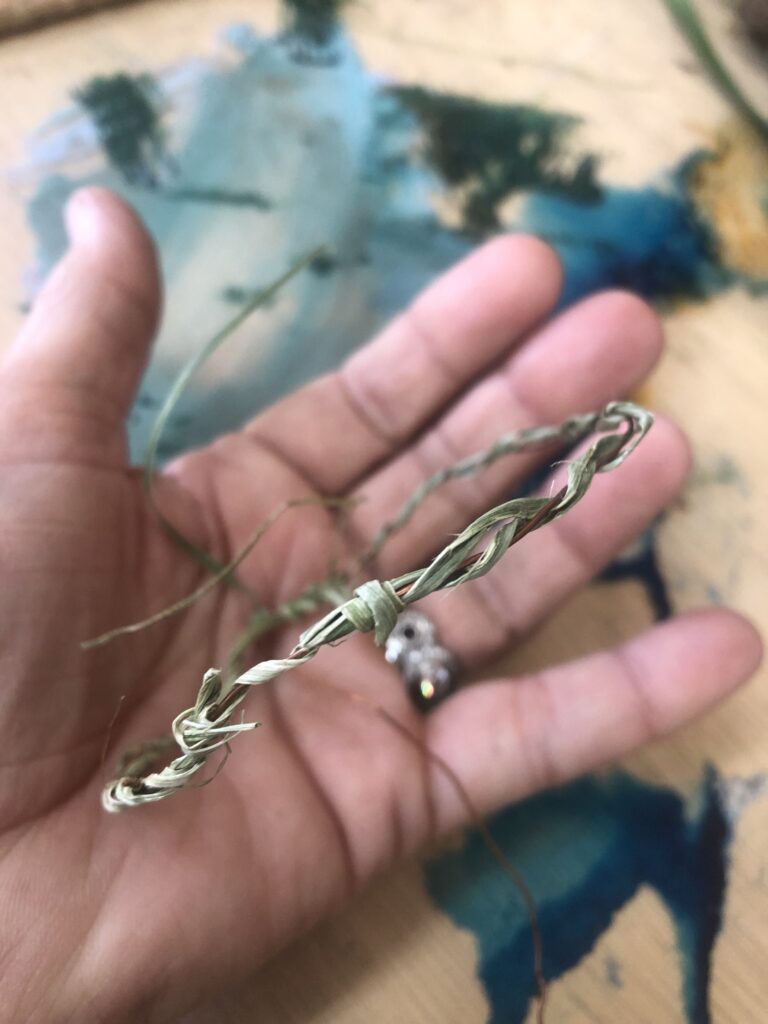
My first piece of cordage was made with the above dried materials harvested by a friend of her ‘ponytail palm. I later see in a Youtube video that this method is called, ‘splicing’. (The video refers extensively to this excellent paper by Gleba and Harris: https://link.springer.com/article/10….) interesting is that there are two techniques to splice: “In splicing, strips of fibres are joined in individually, often after having been stripped from the plant stalk directly and without or with only minimal retting. The techniques can be separated into two main types: (1) Those where fibre strips are added in continuously (Cooke et al. 1991, 21, fig. 5b; Médard 2003, 83; Granger-Taylor 2003; Tiedemann and Jakes 2006, 295, fig. 1); (2) Those where fibre strips are joined end-to-end, by either twisting”
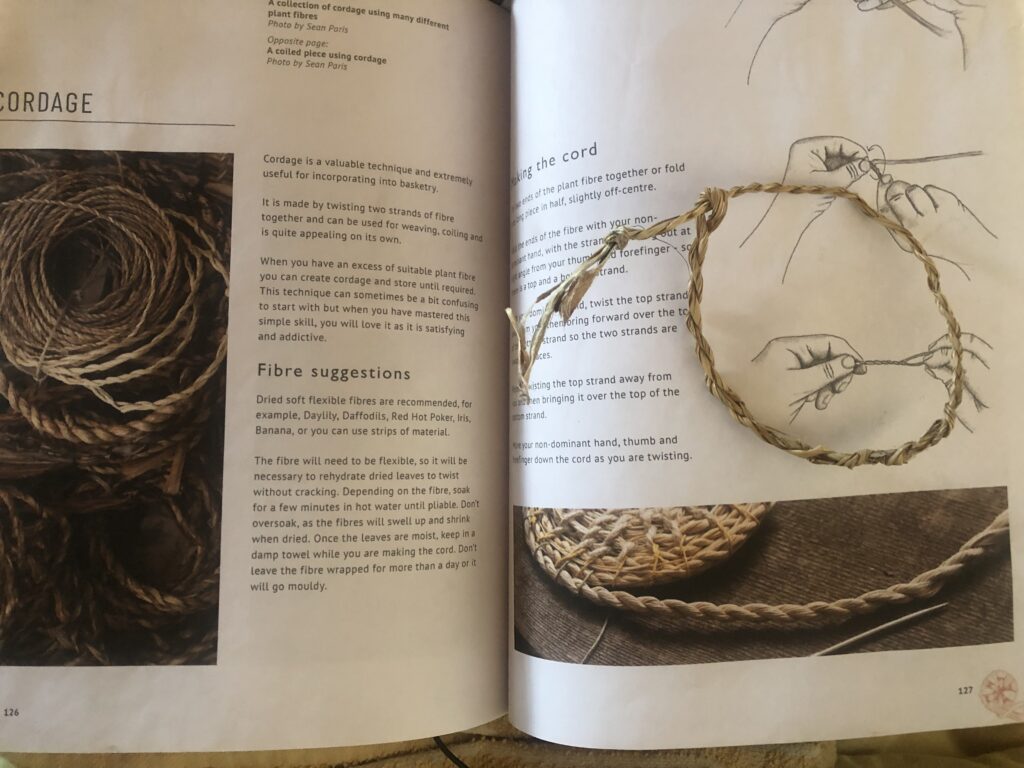
There are loads of video material on YouTube to learn about making cordage. Below is one to keep in mind.
I also tried an ‘under-and-over’ weaving pattern with the dried pony tail palm and then experimented with thinner strips, rolled into twine to weave texture into the form.
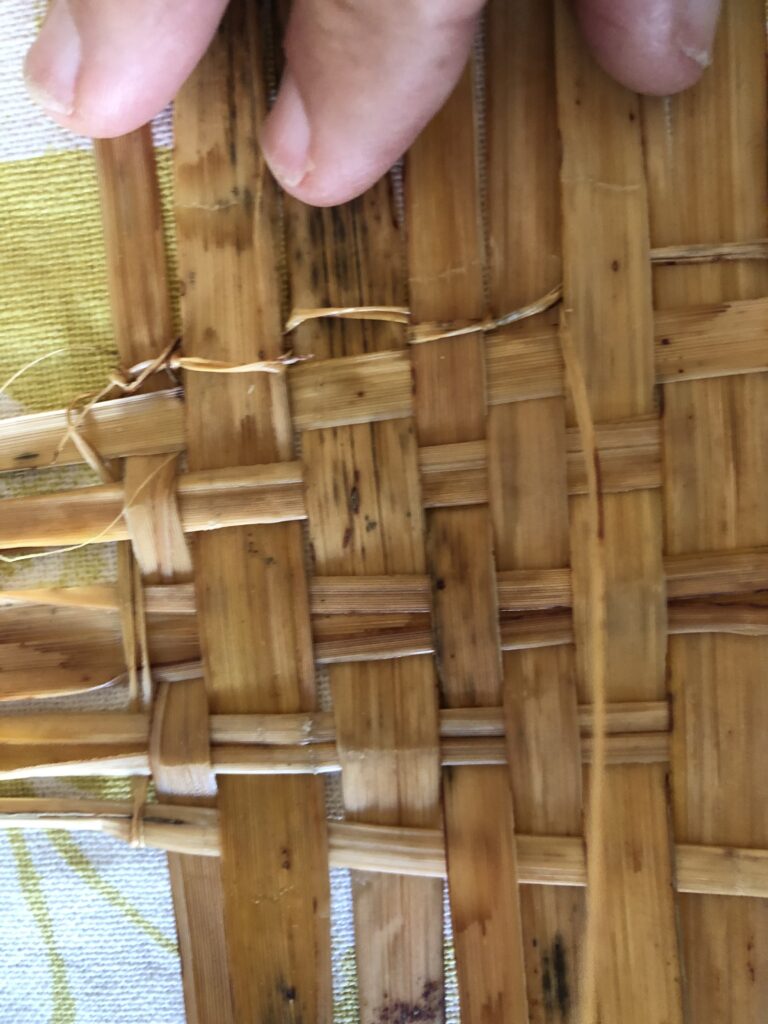
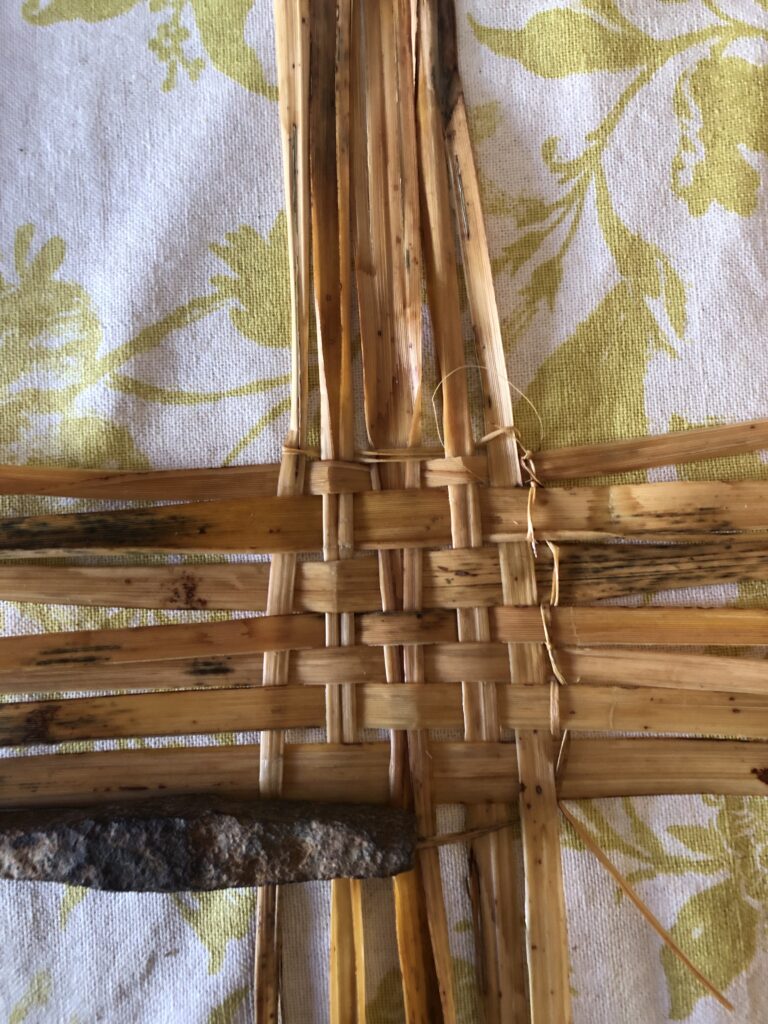
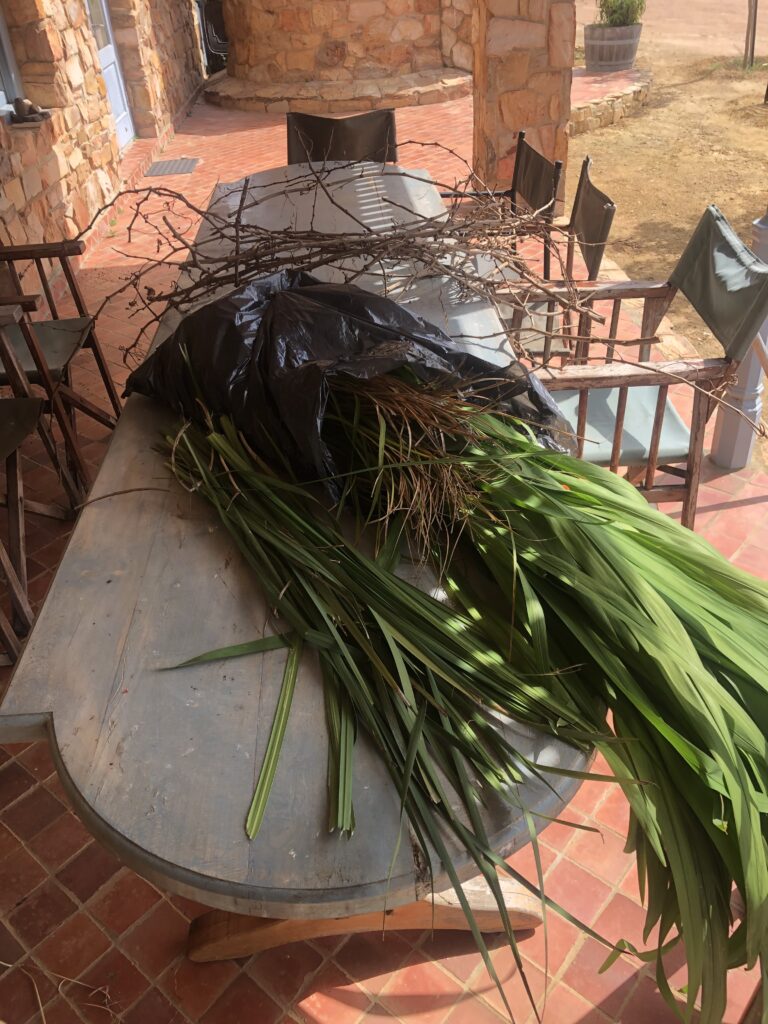
Mellowing is a new word I learnt: wrapping the dried leaves in a damp towel, rolled up nicely and keeping overnight. Ready to use the next morning. I tried this with a small ‘sample’ using the dried leaves from plantmaterial I was gifted.
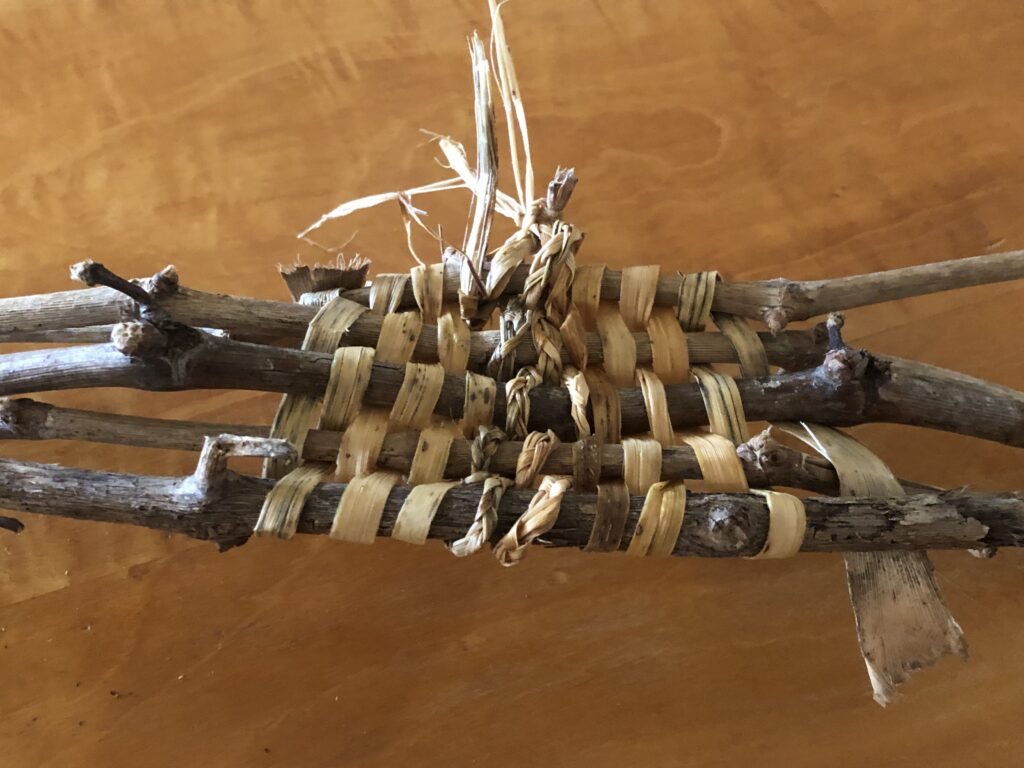
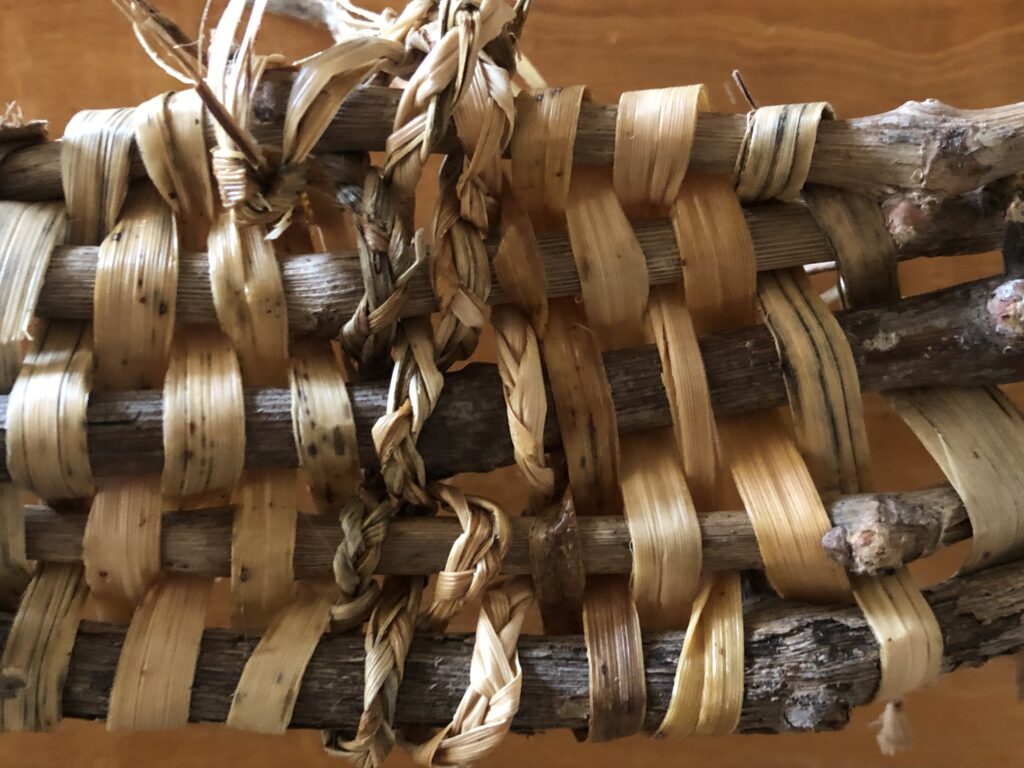
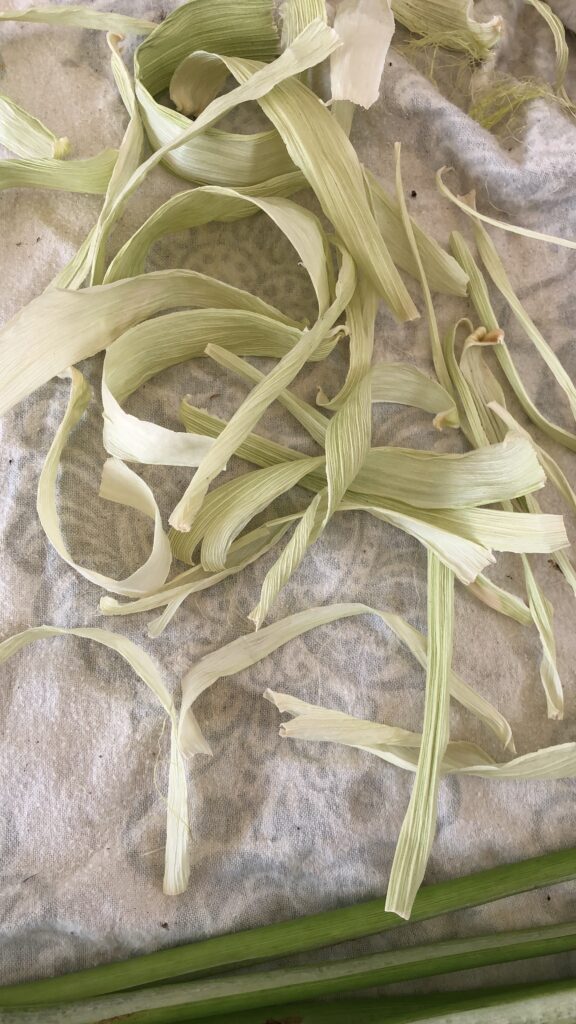
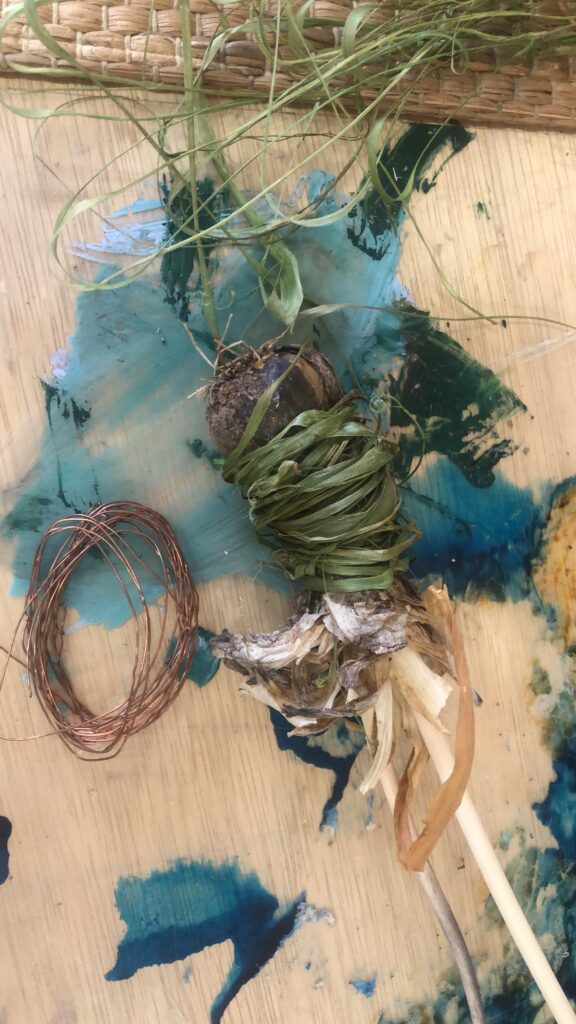
I also had cron husks as well as arum lilies, which I learnt I first had to dry. They seem to be good for cordage, braiding and weaving. It must be wetted before usage.The wetting helps the fibres to be flexible, as I learned from the above process when make the ‘sample’. I had a servere allergice reaction to the arum lilies: I teared the skin from the fibrous stems. After reading about this, I learnt that arum lilies cause a toxic reaction due to calcium oxalate crystals, leading to burning, swelling, irritation, and potential symptoms like nausea, vomiting, and diarrhea if ingested. Skin contact can cause dermatitis and eczema. I now work with handgloves. I loved to explore with the arum lilie fibres, made cordage with it and then coated soft cooper thread with it.
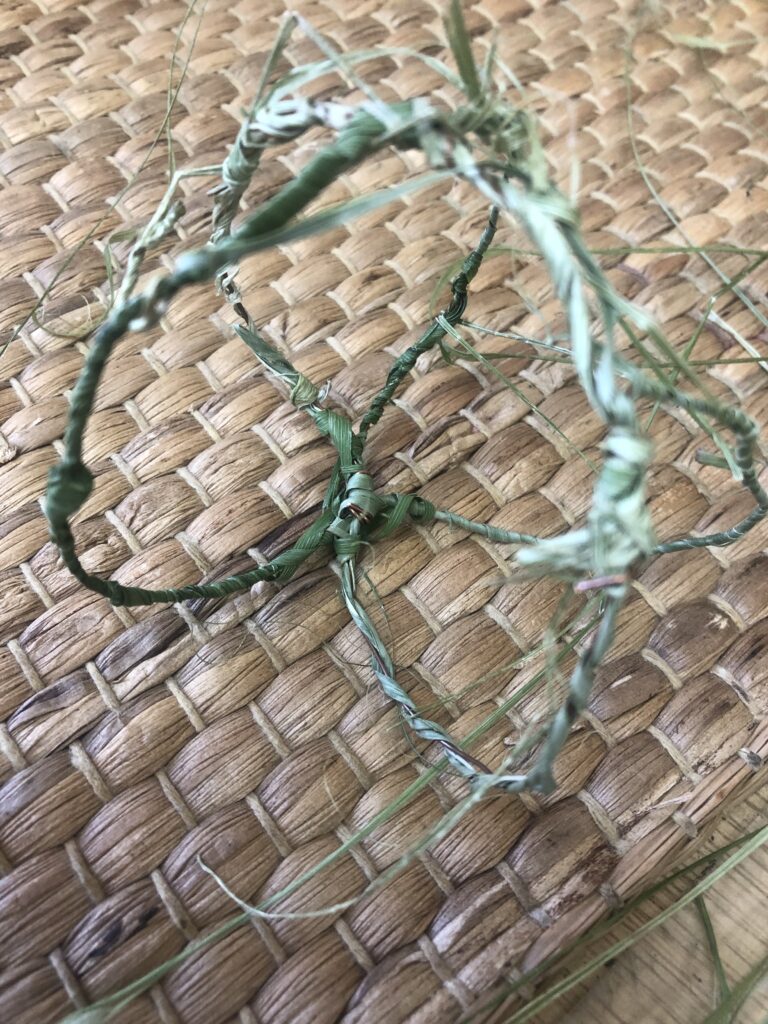
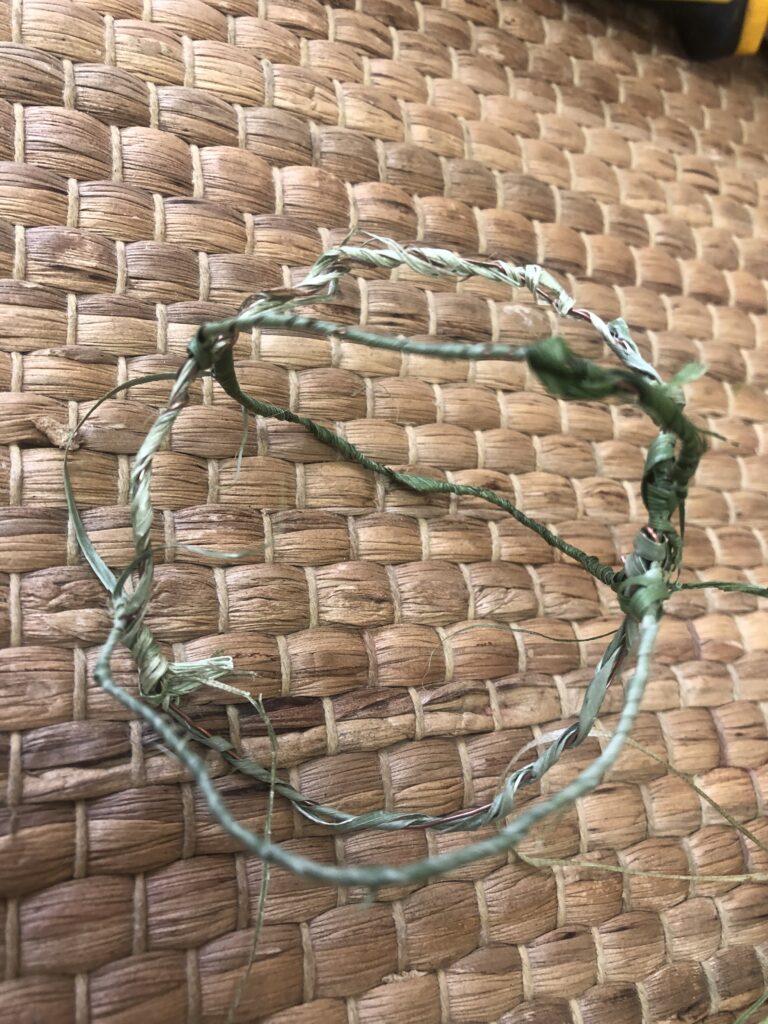
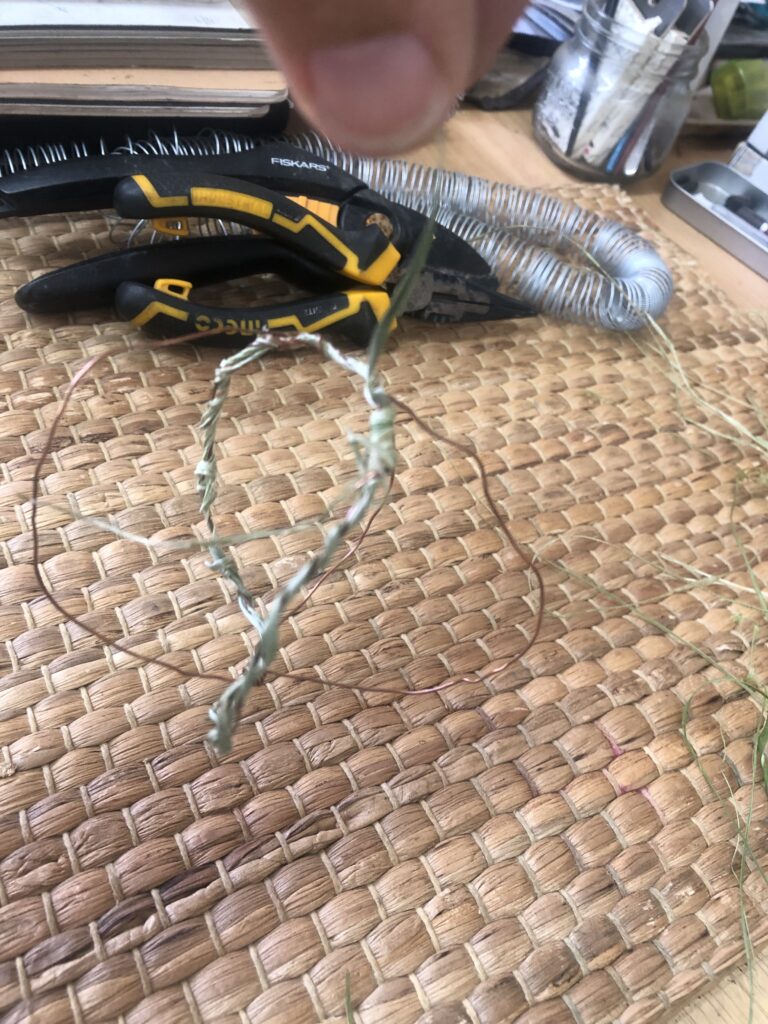
Vine shoots, with lovely tendrils and knots, were gathered from our garden; my husband planted at least 30 vines one year ago, and I hoped to use the first pruning shoots. We were on holiday when the vines were pruned, but I asked that it were kept so I could collect and use them. I placed them in water and left them for at least a week to be flexible. I started rolling them into bundles, hoping it would create some memory in the stem for later use. I will need to manipulate them for interesting sculptural pieces or as a ‘skeleton’ for nests.
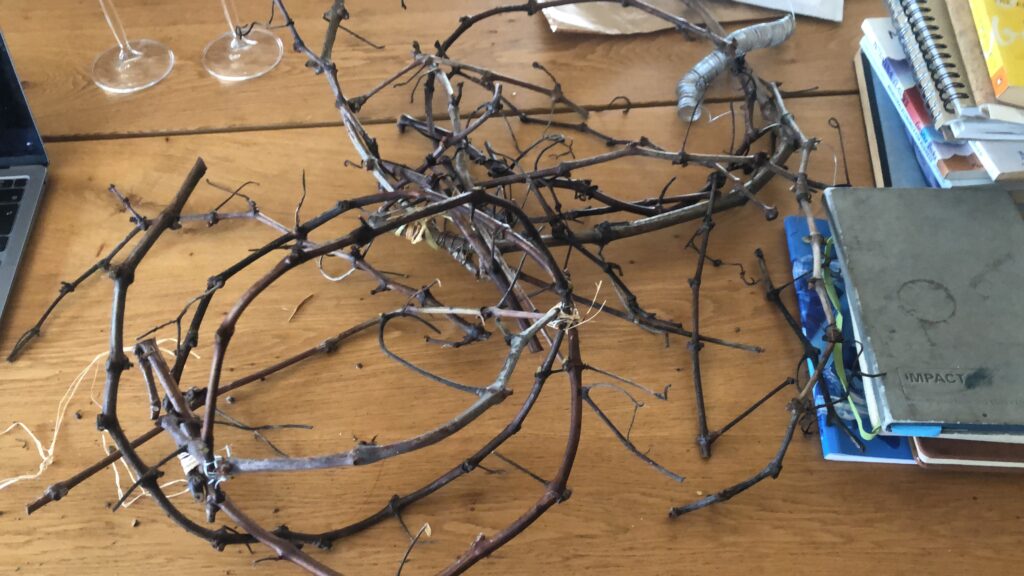
I tried to make a random weave object inspired by an image in Ruth Wood’s book, Princess Glory by Robyn Norris. (p153) was my inspiration to try to weave with the vine. I started by using wire to keep the form, but after a while, I could work without any fastening, and just use weaving with the flexible vines. I do like the curls and twists of the vines – they add nice texture to the object.
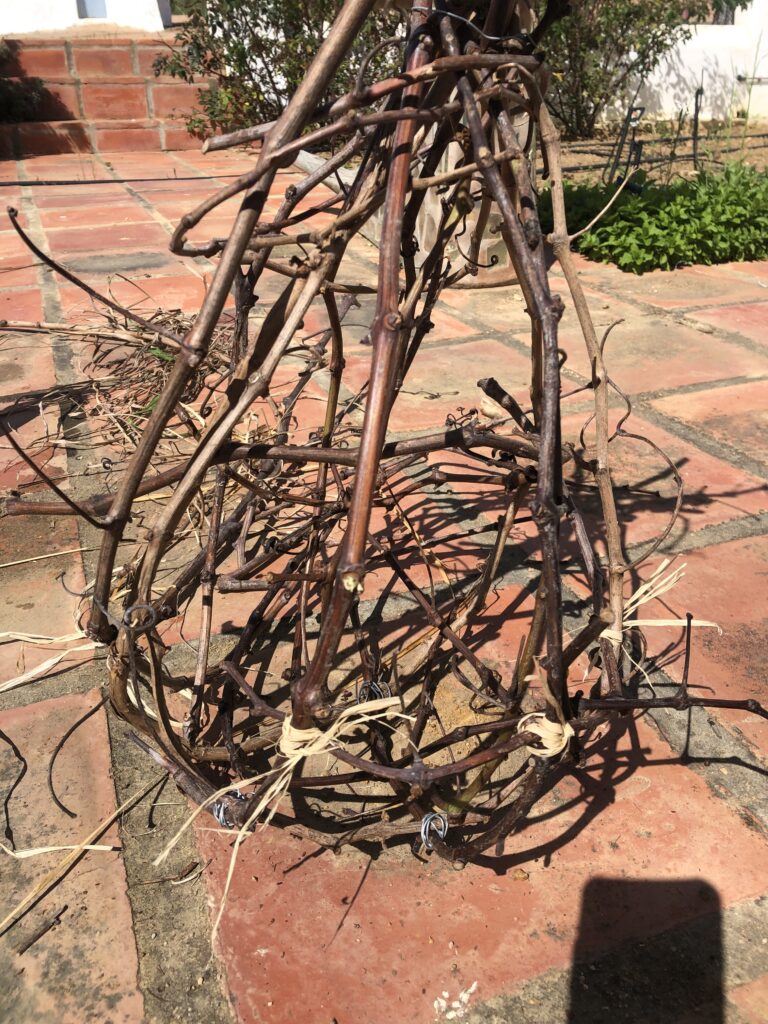
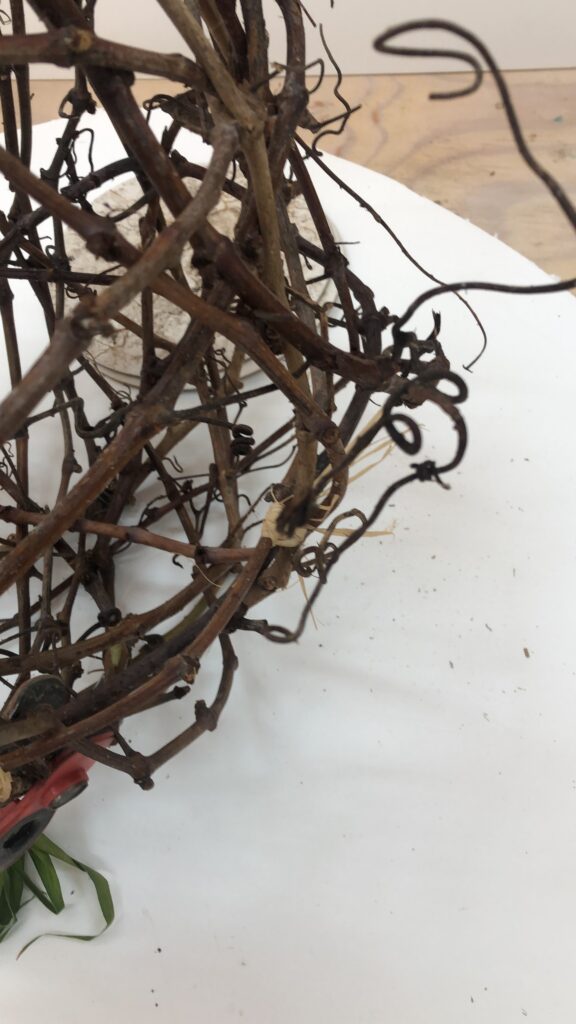
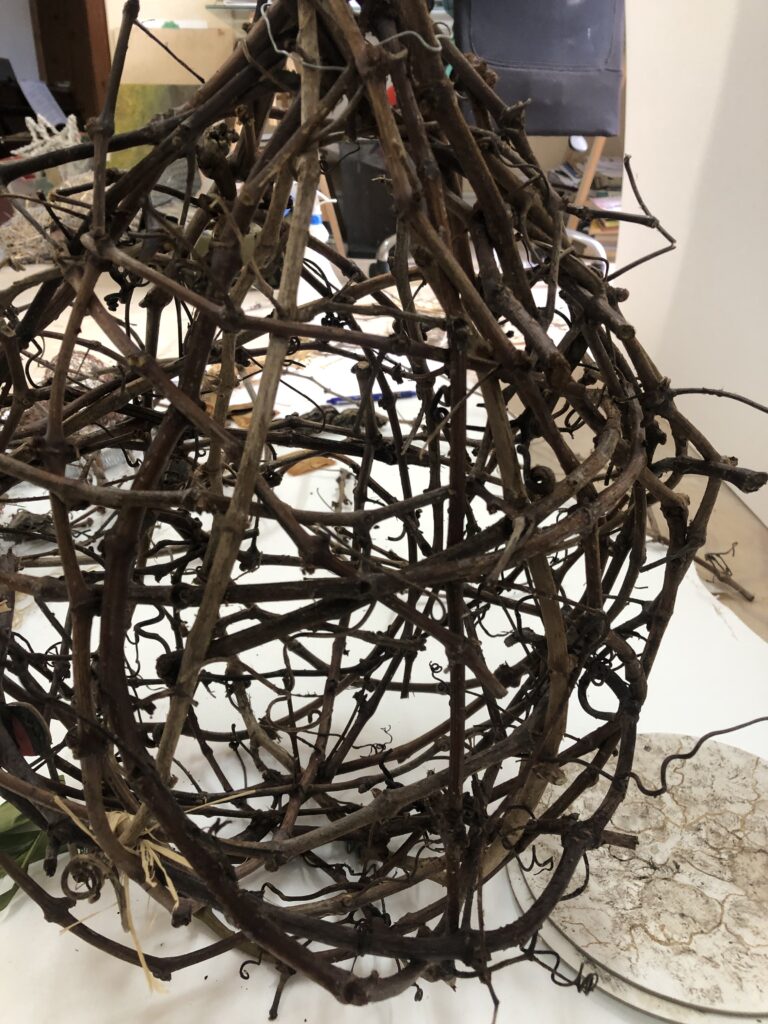
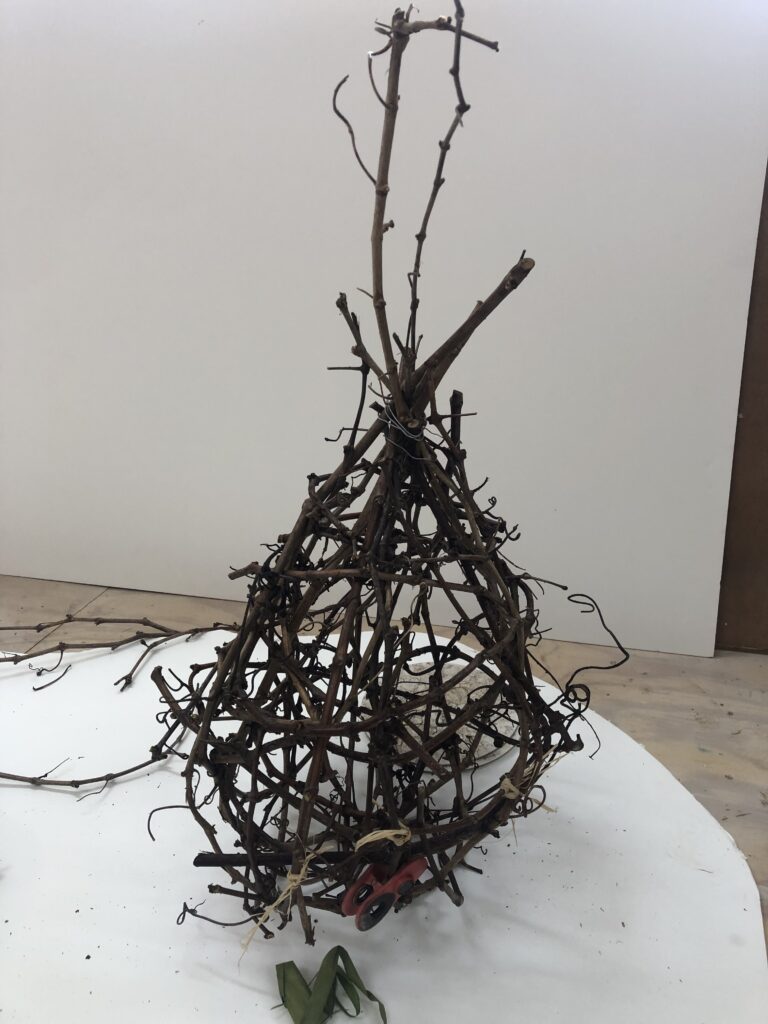
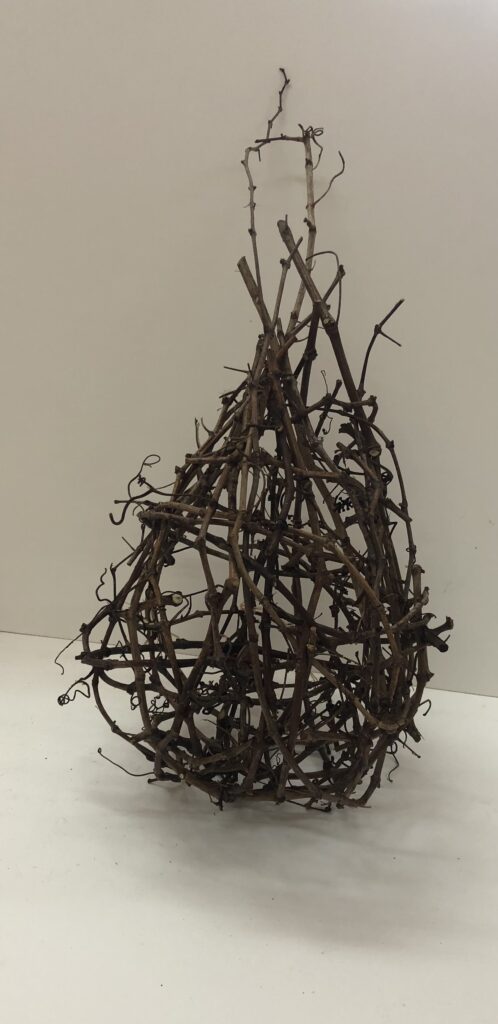
I will continue to work more on this random weave object as I wet more vines to use.
Arum Lily (Zantedeschia aethiopica)
I had a bunch of lilies I picked in the veld here on the farm, and decided to work with it. I bundled the stems and let them dry for 2 weeks. (Woods writes it could take several months to dry: Finding form with Fibre, p89)
My ChatGPT search suggested the following: A Way of Working: Coiling as Collaboration
When you work with stems that are still soft, you’re essentially collaborating with the plant’s own transformation. The material is alive to movement and still responsive — it hasn’t yet hardened into its final self.
That resonates deeply with the rhythms already in your practice:
- working with what is becoming rather than what is fixed
- allowing the material to lead
- seeing form as something that evolves through care and time.
You could even note the gradual changes: the tightening, darkening, or small shifts in tension as the coils dry — almost like observing the slow breath of the piece as it finds its own form.
Black Wattle:
In South Africa, Acacia mearnsii is a highly invasive species that outcompetes indigenous plants and negatively impacts water resources. Utilising the wood and stems from planned clearing or management initiatives for crafts like weaving is an effective and environmentally beneficial way to repurpose the invasive material. The stems and branches are the primary materials for weaving. In Australia, the bark has also historically been used for making rope. The material must be pliable and not snap when bent. For this reason, freshly cut, green stems are best and easiest to work with.
More advice for prepping this material:
- Stems should be cut to the desired length, generally from young, fast-growing plants, which can be achieved through a sustainable practice like coppicing.
- If the material has dried, it needs to be re-soaked to become pliable again. The general rule for brown willow (bark on) is one day of soaking per foot of rod length.
- After soaking, the material should be allowed to “mellow,” usually wrapped in a wet towel for a period proportional to the soaking time, to reach an ideal weaving condition.