13 March 2026
My first visit to the site after our holiday was early January and I found that it fell onto the forest floor. My dad passed on that day, and I have not visited the site since. I did not have the motivation or inspiration, and asked myself if this was about a threshold between one phase of a practice and the next. And, interestingly, the situation resonates strongly with the ideas I have already been exploring: collapse, disappearance, partial visibility, and time.
Returning to the site is no longer about fixing the fallen work. It is about seeing what the work has become and to reopen the conversation I had with the work.
My curiosity asks if it may actually be the work continuing without me that I need to confront. But I feel I need to visit the site before I really make these assumptions. I am learning that the fact that my work is process-based and relational rather than product-driven does not necessarily mean that something is going wrong. In fact, the feeling of avoidance could be part of how a work changes phase. I almost feel as if I have come to stand in front of a choice which I am not ready to make, and that I should remove this need to feel I have to make a choice.
I am learning that when the process comes first, conceptually, it slows me down. I need to touch my materials and move from there. My idea is to visit the site out of curiosity, not out of responsibility. I can return and permit myself to an observation visit. I need to deal with the fact that the work still matters to me – how to continue is the question.
I am going back to see what the work became.
Not to repair it.
Not to justify it.
Not to finish it.
Just to see, without tools or a plan. I will take my notebook and a pen.
Just stand there and observe and document what I see. (Take photos)
Thoughts around the structure
Gravity has returned the structure to the ground, and the work has moved through a full cycle:
forest floor → suspended field → forest floor again
That arc resonates with themes already strong in my practice:
- nests forming and collapsing
- shadows appearing and disappearing
- traces rather than permanent structures
- time acting on material
Site return
My return to the site was met with some shock, as the structure was removed from the forest floor. The gardeners informed me that they had moved it out of concern for the safety of the circles on the steel structure. It seems that children have played in the area and have done some damage. I was so touched by their concern and the way they placed the circle and enclosed it with plant material – almost like a new nest for the work. This concern and care were much appreciated – almost a way to protect the work. One of the circles have been damaged, it is broken, but the idea of repair was immediately in my mind.
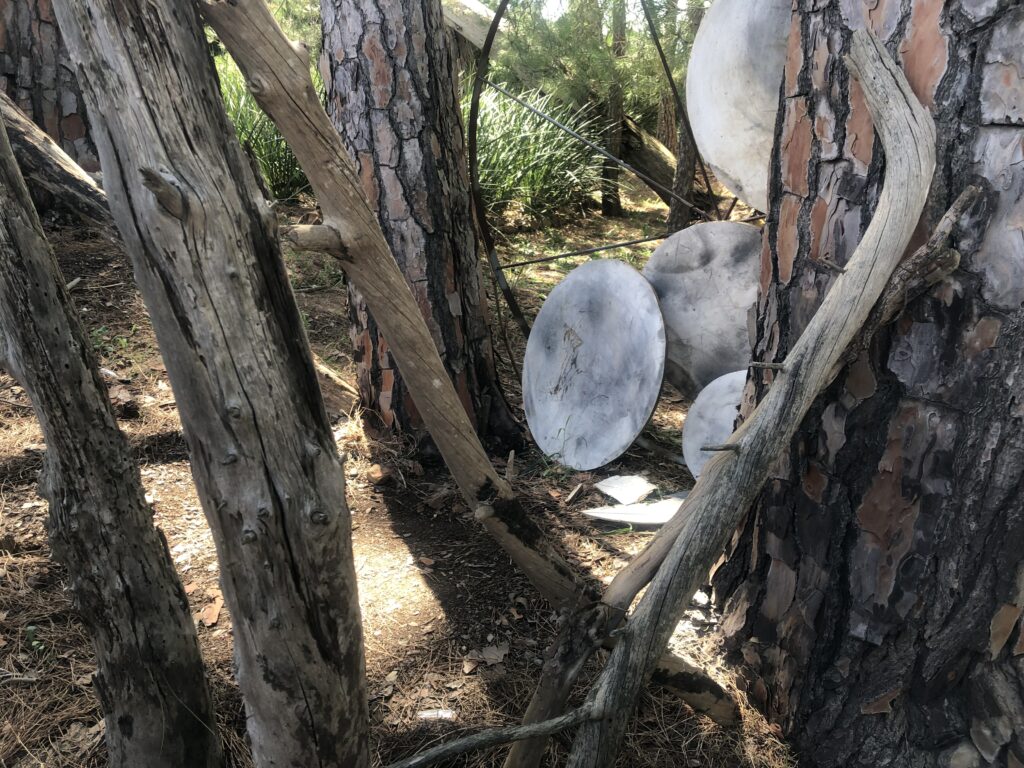
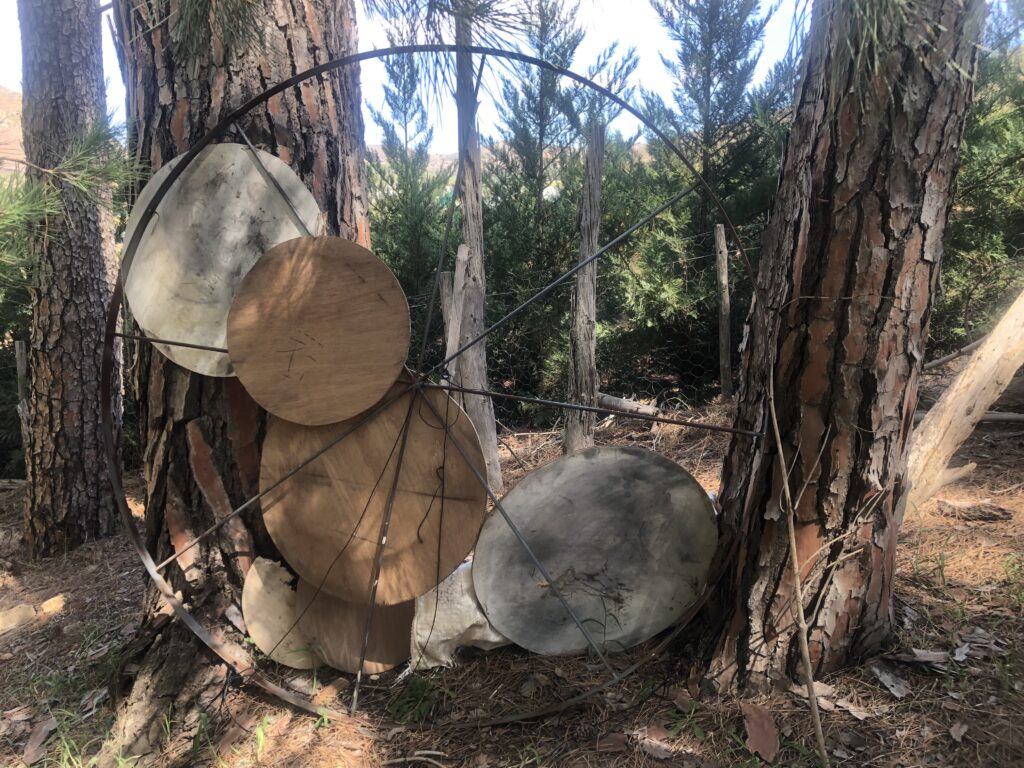
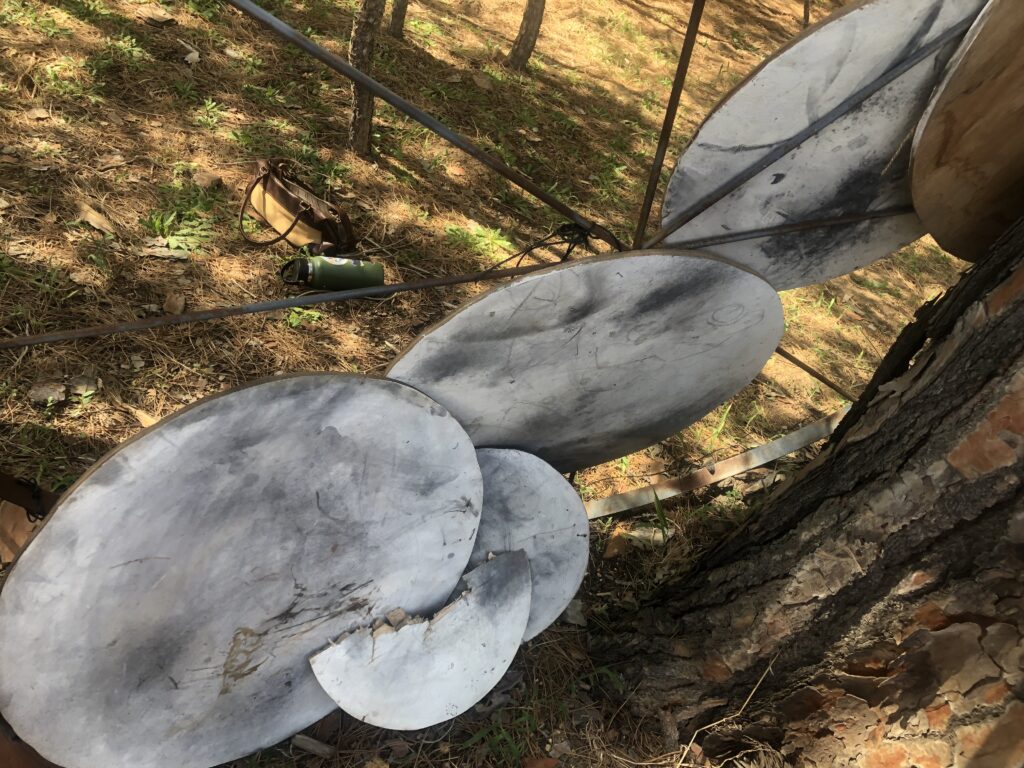
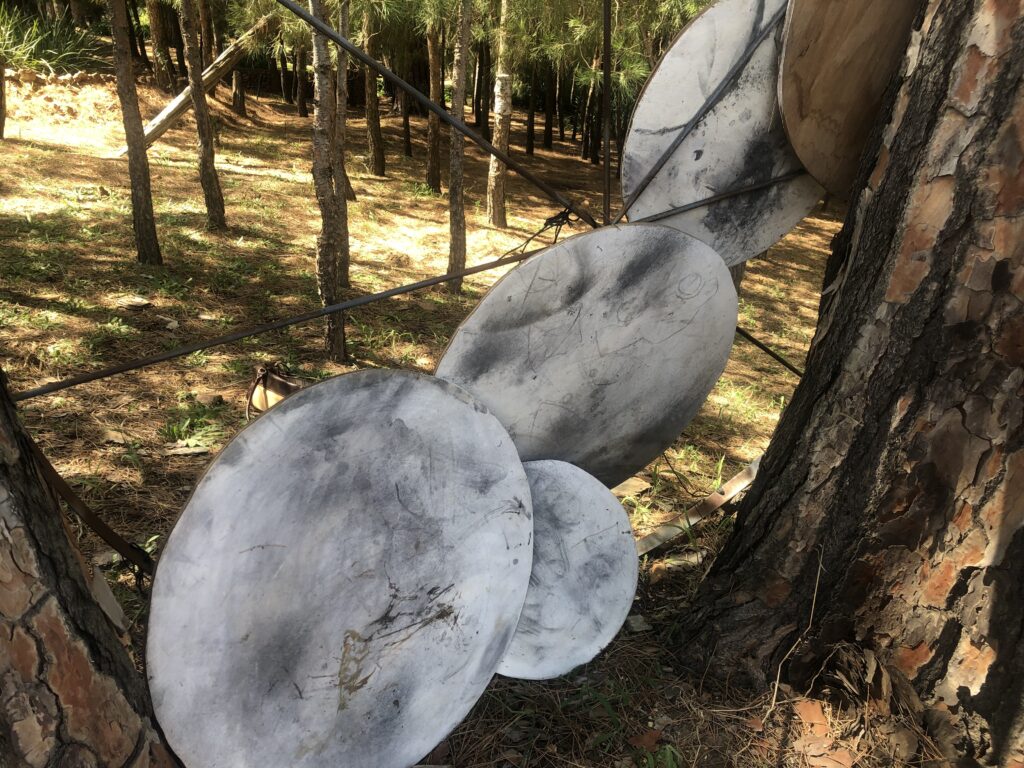
The time spent at the site this afternoon was healing in many ways. I had the urge to gather materials -fallen pine needles, pieces of bark, and make something. I just sat and observed. I spent some time around the little public seating area close by – the fallen debris on the ‘table’ made me ask if I could try to work with cyanno type print – use this space and really upscale a print. I gathered the wooden circles and took them to the studio. I need to deal with the steal structure.
The broken circle
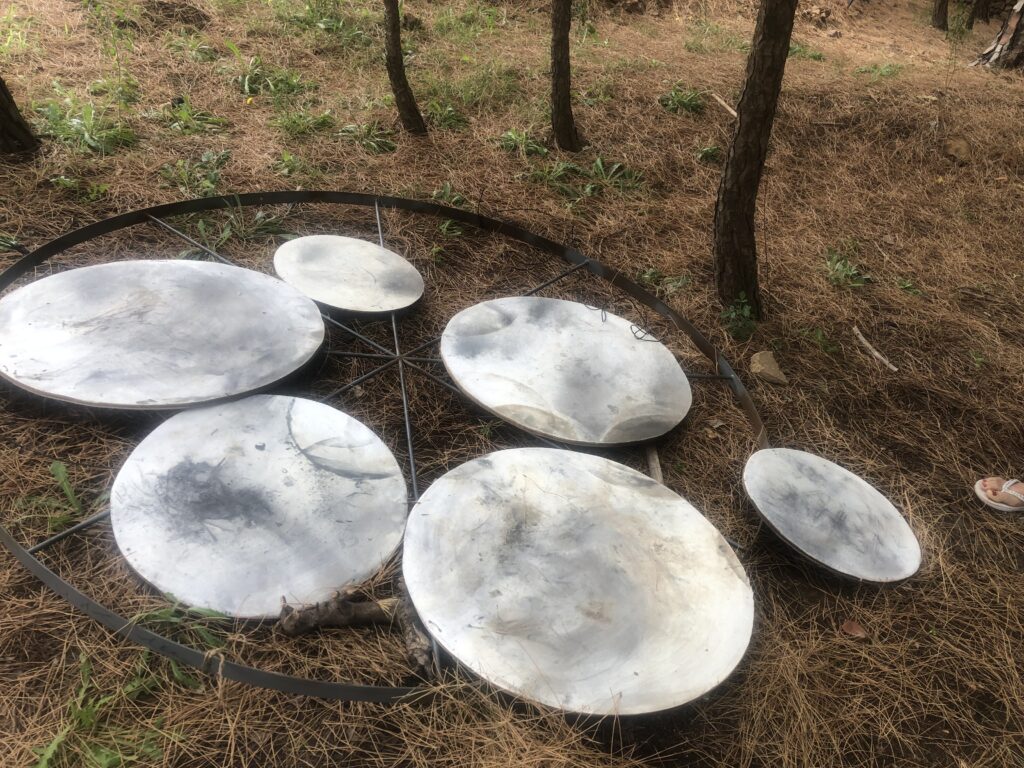
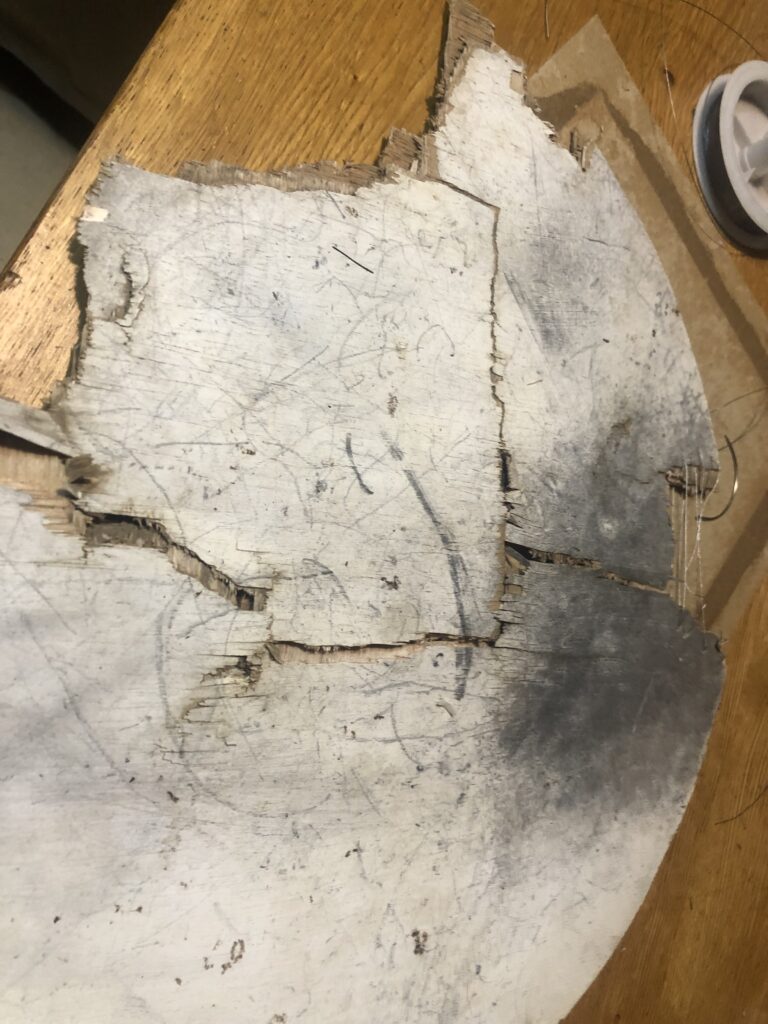
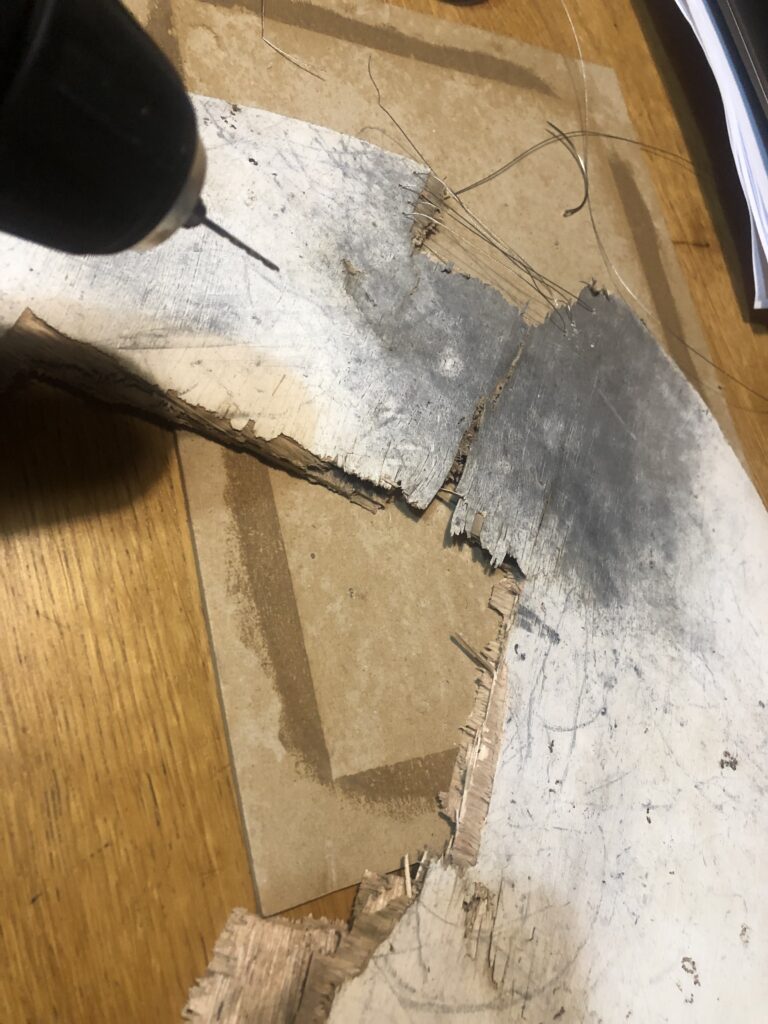
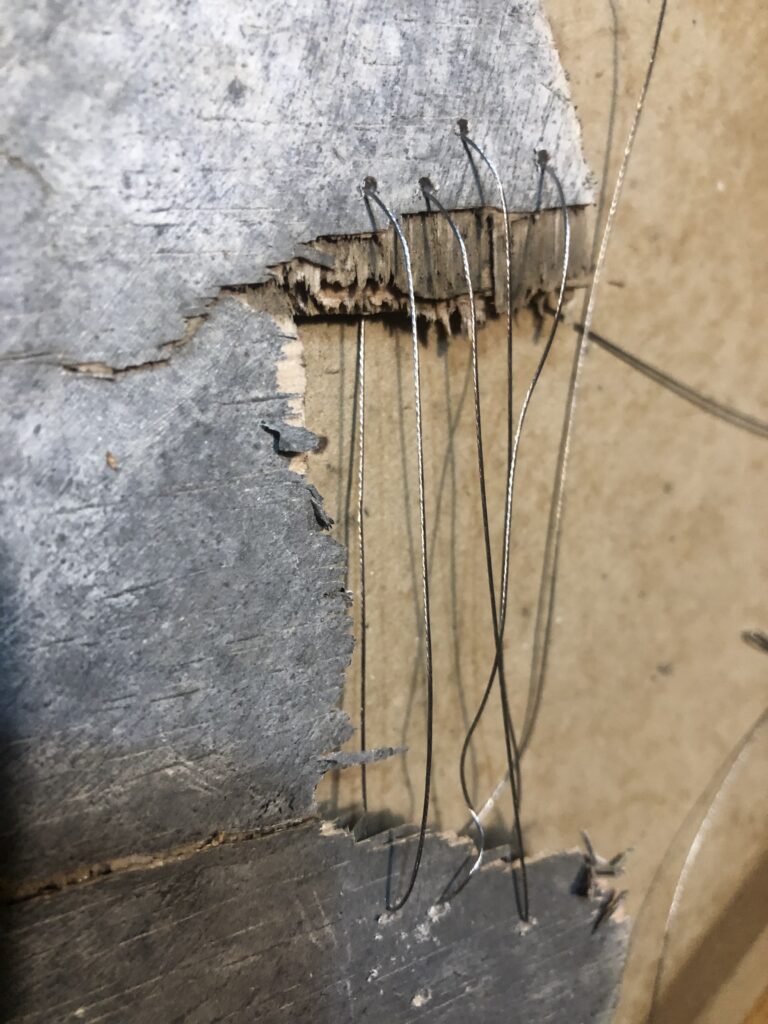
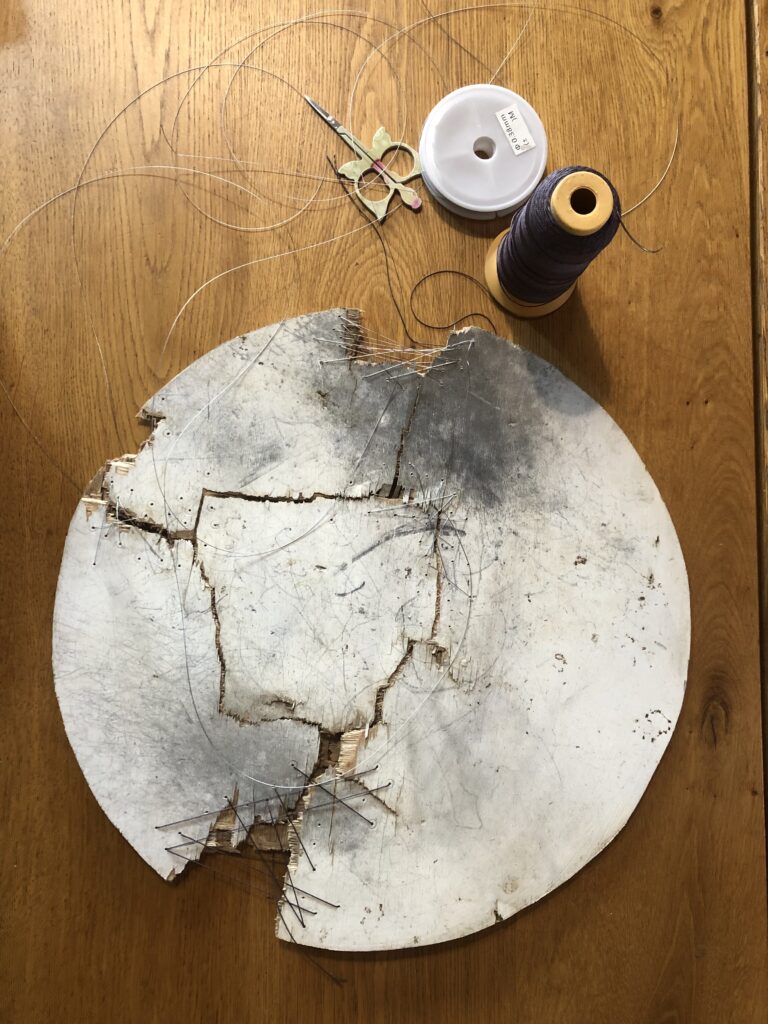
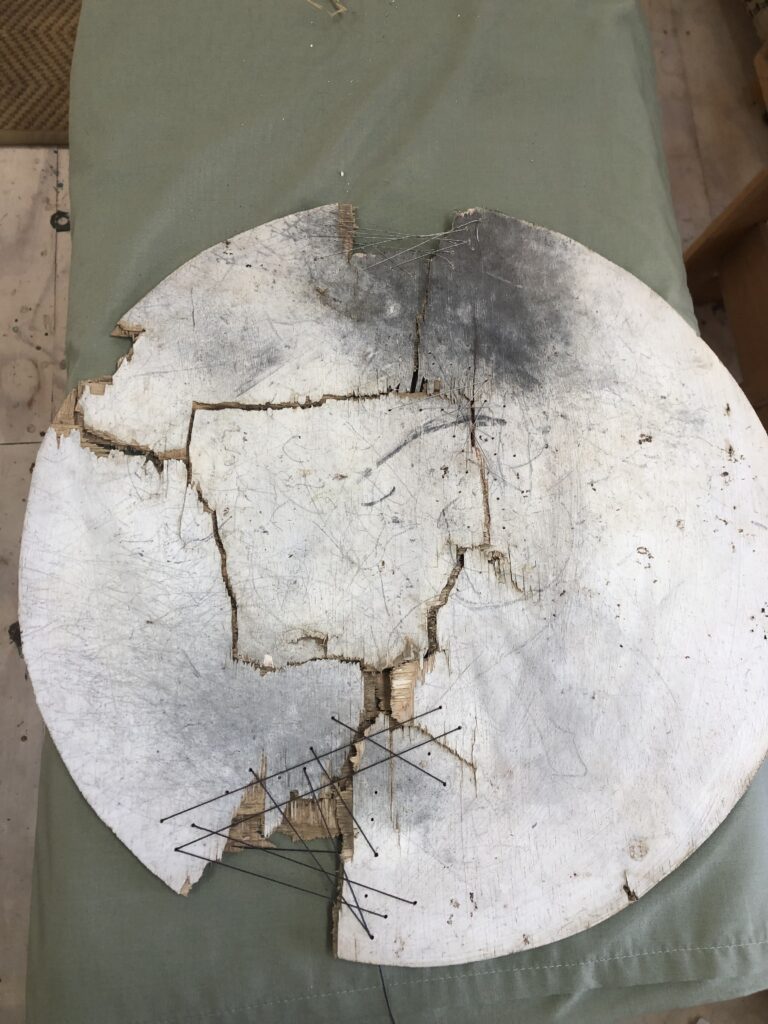
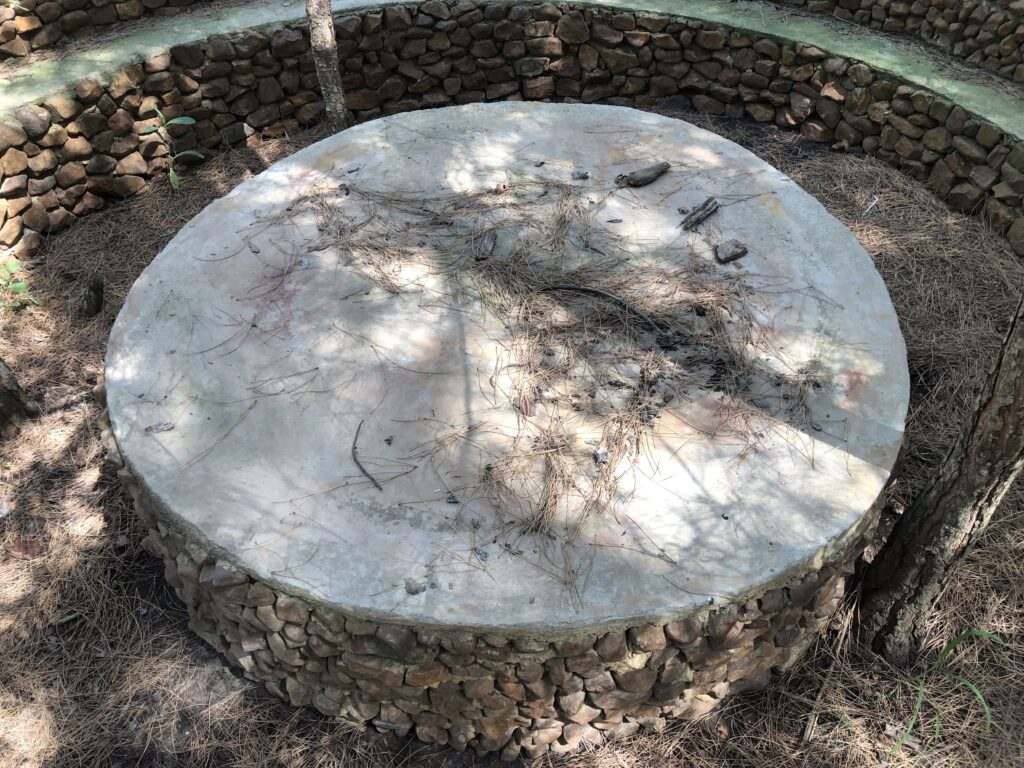
In many ways, I feel my relationship with this space has changed – I feel strong about being in the space, observing, listening, sitting down in silence and exploring to have work grow out of this experience – like a response.
Does this mean I can start a site practice, which is not about placing one artwork in a location? It will be about returning, observing, listening, and letting work grow out of an ongoing relationship with that place. I envision the place becoming something like a long-term collaborator.
My first intervention or work will be to place the steel circle onto the forest floor and ensure it is safe and sturdy. To me, it will be about the circle becoming a very minimal structure that quietly invites interaction, and it is actually part of an important tradition in contemporary art. This deliberate placement will allow people, weather, and time to complete the work.
The steel circle will naturally frame attention, and the spaces in between can become small zones that invite arrangement. Forest materials will be readily available to explore this invitation.
Children and visitors naturally experiment with materials.
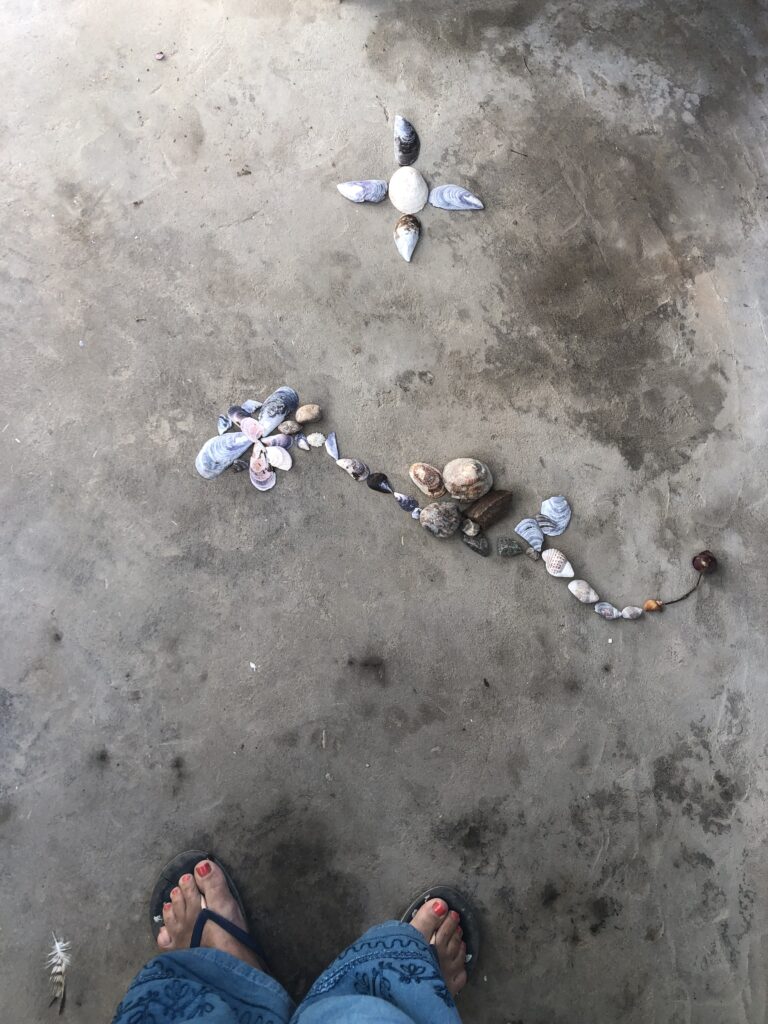
This reminds me of our playful holiday time at the coast, where we used found shells, made a small gesture with them on the toilet floor, and it became a space for an ‘open work’.
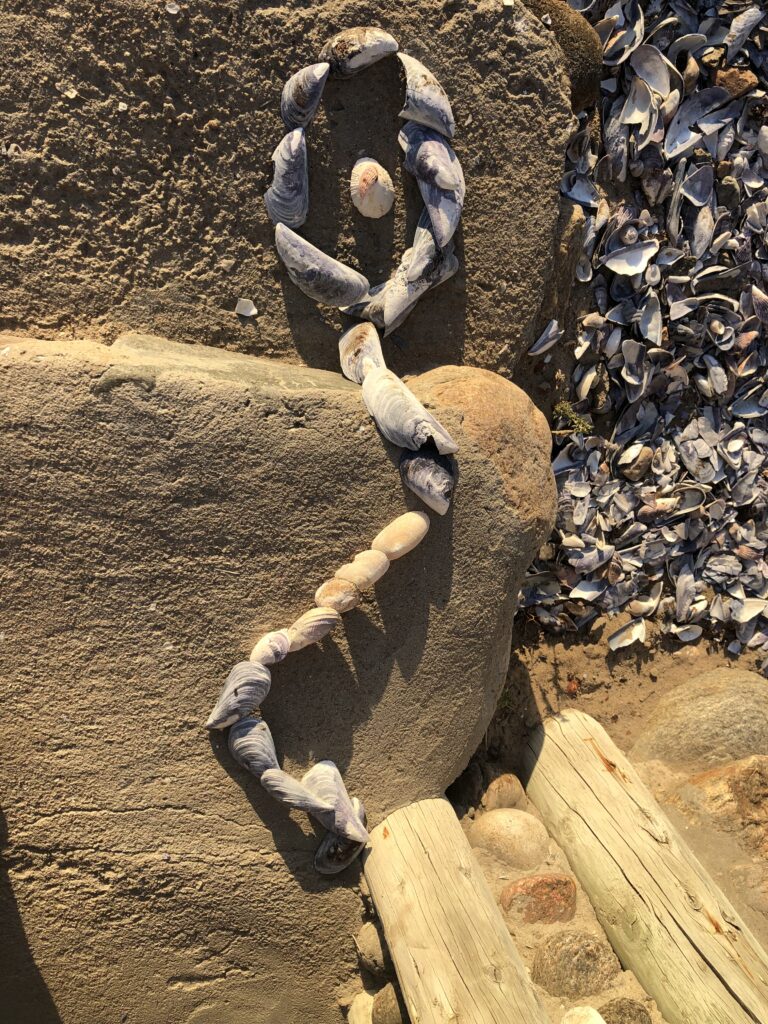
AFTERLIFE and THOUGHTS to CONTINUE my PRACTICE
I created a small practice to follow during the next period as I have access to the pine forest and as a creative opportunity
- The Environment Draws:reactive drawing – respond on what happens around me
- Movement as mark body: the body as the tool
- Drawing with the pine forest:create different drawing fields on the steel circle
- Others – beyond the self, invite others to join
- Reflection/synthesis
1
Walk slowly through the site and pause where something catches my attention.
Examples:
- sound of wind
- light moving through branches
- voices from the picnic area
- texture of the forest floor
Each time I pause, I will make a small mark or rubbing on my paperscroll
Do not plan the drawing.
Think of the paper as a seismograph of the landscape.
Reflective question: What changed when the drawing came from the environment rather than from intention?
2.
Walk slowly in the labyrinth (same site)
Practice
Attach a scroll or paper, along with drawing tools, to my body.
Possibilities:
- drag paper behind you
- let the ground make marks
Walk the labyrinth slowly.
Notice:
- rhythm of steps
- pauses
- curves of the path
Let the marks record movement and time.
Reflection question
How does the body “draw” differently from the hand?
3
Let materials become the drawing tools.
Location
Steel circle on the forest floor.
Practice
Gather natural materials:
- pine needles
- bark
- stones
- cones
Use the circle’s four sections as small drawing fields.
Experiment:
- arrange materials
- photograph
- make rubbings
- create cyanotype prints
Do not think of this as sculpture.
Think of it as drawing in space.
Reflection question
What happens when drawing is made through placement rather than lines?
4.
Allow others to influence the work.
Location
Public areas near the circle or tables.
Practice
Leave the circle quietly arranged.
Observe what happens.
Children or visitors may:
- move objects
- add stones
- rearrange materials
Record changes in your scroll.
You might:
- draw the new arrangement
- make a rubbing of it
- write a note about the interaction
Reflection question
How does the drawing change when others participate unknowingly?
REFLECTION
Bring the week’s experiences together.
Location
Studio or quiet place near the site.
Practice
Unroll the scroll.
Observe:
- marks from walking
- rubbings
- environmental traces
- body drawings
- collaborative moments
Add a final layer:
- charcoal lines
- fragments of writing
- reflections on listening and walking
The scroll becomes a map of the week.
Reflection question
Where did the drawing feel most alive?