In 1778, in Port Louis, on the island then called Isle de France, a boy was born who would later be known only by the name of the place he came from — Louis van Mauritius. At three years old, he was put on a ship to the Cape as a child slave, sold on the waterfront to a Cape Town family, and grew up enslaved in a city that used the sea, the tavern, and the rumour of distant wars to carry news it could not fully control.
By the time Louis was a grown man, married to a free woman, but working as a tailor, hired out by his owners to earn money for them, he had heard a great deal through that grapevine — of the French Revolution, of the Haitian slaves who had defeated their masters and built a free republic, of Britain’s abolition of the slave trade the year before, in 1807. In a Cape Town tavern, two Irish sailors, James Hooper and Michael Kelly, told him plainly that in other countries, people were no longer owned by other people. Louis later testified to what that conversation did to him: “I had heard that in other countries all persons were free, and there were so many black people here who could also be free and that we ought to fight for our freedom.”
On the night of 27 October 1808, Louis rode onto the farm Vogelgezang, just north of what is now Malmesbury, dressed as a visiting Spanish naval captain — a stolen uniform, ostrich plumes, epaulettes, two “soldiers” at his side who were really the Irishmen from the tavern. He told the farmer’s wife, who was alone on the farm, that he was there on official military business. It worked. From Vogelgezang, the group moved on to the next farm, and the next — more than thirty in total, across the Swartland and the Koeberg areas — gathering enslaved people and Khoikhoi labourers as they went, until their numbers had grown from a handful to over three hundred. (From my research, there is no indication that farms in the Riebeek Valley were part of this procession)
What they did at each farm was its own kind of rebellion, beyond the walking itself. They told the enslaved people to address their masters as jij (jy), the familiar, informal word, where u (you), the respectful form, had always been required of a slave speaking to an owner. For one night, the entire grammar of who was permitted to be familiar with whom was reversed. Wine was taken from cellars and shared out. Horses and weapons were gathered. Farmers were tied, not harmed. The plan was to walk all the way into Cape Town, seize the Amsterdam Battery, turn its guns on the Castle, raise a red flag, and negotiate the end of slavery itself.
They never reached it. At Salt River, thirty-six hours after Louis had ridden onto that first farm, colonial cavalry and infantry met them, and the march ended. Forty-seven people were put on trial. Louis was among those sentenced to hang. Emancipation of slaves in this colony was put into practice in 1838 and it seems slavery only finally petered out in 1870 after the last of the prize slaves’ compulsory indenture periods were completed.
I did not know any of this the first time I walked this stretch of the Swartland, more than two centuries later, following a different line — the decommissioned railway that once carried wheat off these same farms. The rail came a hundred and forty years after Louis’s walk, built through land that had already, once, carried a different kind of procession: not freight moving toward a port, but people walking toward their own freedom.
It was only later, holding a tolbos — a tumbleweed, rootless, carried wherever the wind takes it — that I found myself thinking of Louis again. Not because the plant stands for him; it doesn’t, and I don’t want to ask it to. But because both of them, in such different ways, are bound up with this same question this land keeps returning to me: who gets to move freely across it, and who decides.
Interest in how slavery impacted this area:
The first slave reached the Cape in 1653, a year after the first white settler party under Jan van Riebeeck. Thousands more would follow. Slavery was to remain an institution in the Cape until the end of the Dutch period in 1795, and well beyond, for it was not until 1834, under British administration, that Cape slaves were finally emancipated.
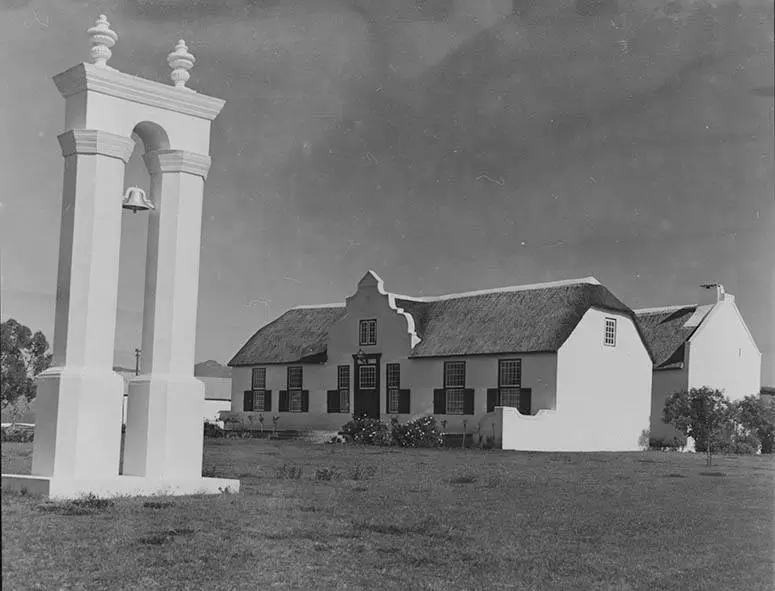
Here in the Riebeek Valley, I have also discovered a farm with a slave bell: Zonquasdrift. In its earlier history, this farm was bequeathed to Jan Jacobsz. In my reading, I discovered that Jacobsz was a free slave, formerly known as Jacobs van Macassar, and that he inherited the farm from his owner, Stjinjie de Bruin (the testament is a document I can search for). She bequeathed the farm to him in 1719. Bear in mind that during this time slavery was still practised and that farm workers could have been slaves as well during his ownership. Later, in 1737, he became the owner of the farm Allesverloren, here in Riebeek West.
I learned the following about Jan Jacobsz: Jan Jacobsz (c. 1695–1737) was a Free Black (Vrijzwart) born at the Cape. His father was Jacob of Macassar (a freed slave originally from Sulawesi, Indonesia) and his mother was Maria of Guinea, also a slave.
Why do I need to witness the line
The line runs through the farm where I live. I wanted to walk it, and to witness what is happening to it.
I did not know how deep this walk would go, or where it would lead me. I love history, and I care about how it sits in the present. But I walk because walking makes me think.
It is decommissioned now. Renosterveld, grass and trees are slowly taking back the rails. If I’m lucky I meet jackal and duiker, and I film them when I can. Mostly they leave themselves behind in spoor and droppings, and I listen to the birds.
The line carries on past our boundary, along a corridor beside Knolfontein, a wine farm, and I follow it. For a long time the story of this valley was told from a colonial point of view, one linked to Jan van Riebeek settling in Cape Town and the Dutch colonising the Cape. I hear other voices talking. I don’t try to settle them, or to speak for them. I walk, I record, I witness.
One day, while I was making a rubbing of a tolbos beside the line, three boys were playing nearby with wire cars. That is how the tolbos came into the work.
It cannot move by itself. It needs the wind, or a hand. Then it rolls, scattering its seed as it goes, and it gathers what the path offers at that moment. I am not in control of what that is.
I kept “I did not know how deep this walk would go” and “walking makes me think” in print, because they are true and they leave room for what you say aloud.
I live close to the line; it runs through the farm where I live. I wanted to walk this decommissioned line to witness what is happening to it. Walking it, I watch renosterveld, grass and trees slowly take back the rails. I meet jackal and duiker when I’m lucky, and film them if I can. Mostly I find their spoor and droppings, and I listen to the birds. I walk onto the neighbours’ farm, as the rail runs along a corridor next to Knolfontein, a wine-producing farm. For a long time the valley’s story was told from a mostly colonial perspective: this is linked to after Jan van Riebeek settled in Cape Town and the Dutch colonised the Cape area. I hear other voices talking and don’t attempt to resolve or speak for any of this. I walk, I record, I witness. One day, while I was making a rubbing of a tolbos beside the line, three boys were playing nearby with wire cars. That is how the tolbos entered the work. It cannot move by itself. Pushed by wind or a hand, it rolls, scattering its seed as it goes. It gathers what the path offers at that moment, and I am not in control of what that is.