Yesterday, along the rail walk, I realised that I have come to an intersection where the iron meets the paw, and the shrubs along the way are not empty; they have become a library. The railway has been reframed in my mind – it is a path of animals, not just trains. I know that walking has helped me construct something in my mind, which would not have happened had I not been walking as part of my making.
Apart from making a scroll work, I am constructing the Renosterveld corridor in my mind. I refuse to see it as a space for the rail industry. This brings me to the ideas of Promenadology —the idea that the way the landscape can be saved for future users is more important. What began as an exercise in Spaziergangswissenschaft—the science of walking to perceive a landscape—has unfolded into a commitment to its conservation. My walk is no longer just a passage but a systematic witnessing of the Swartland Shale Renosterveld’s resilience within a wounded industrial corridor.
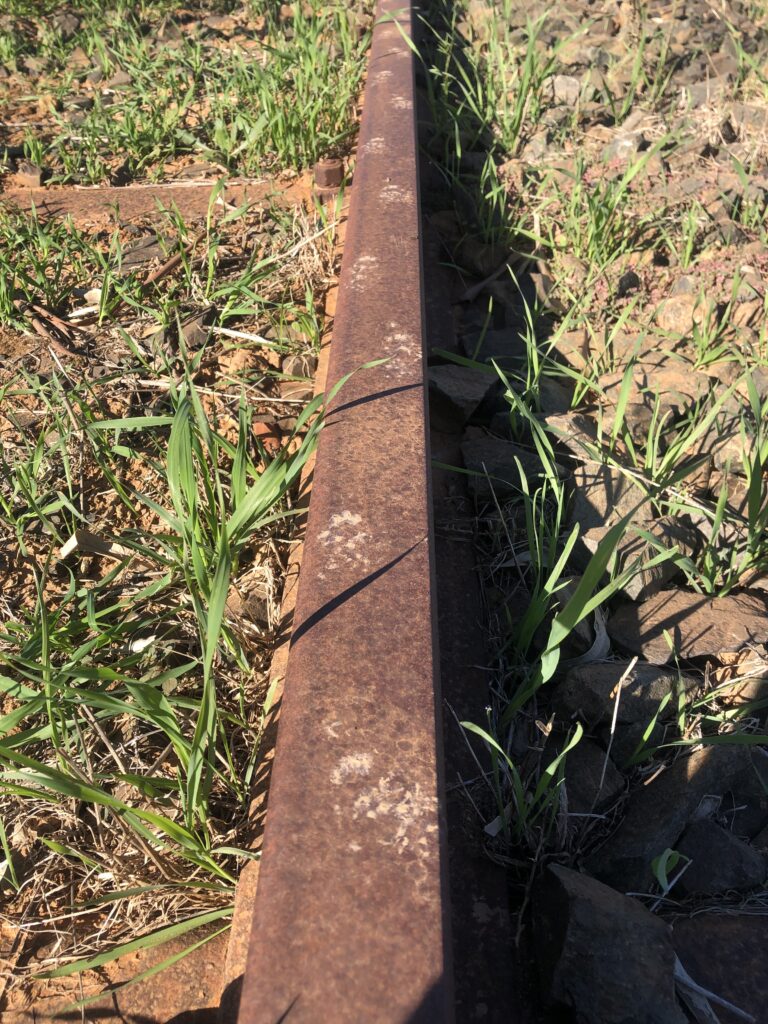
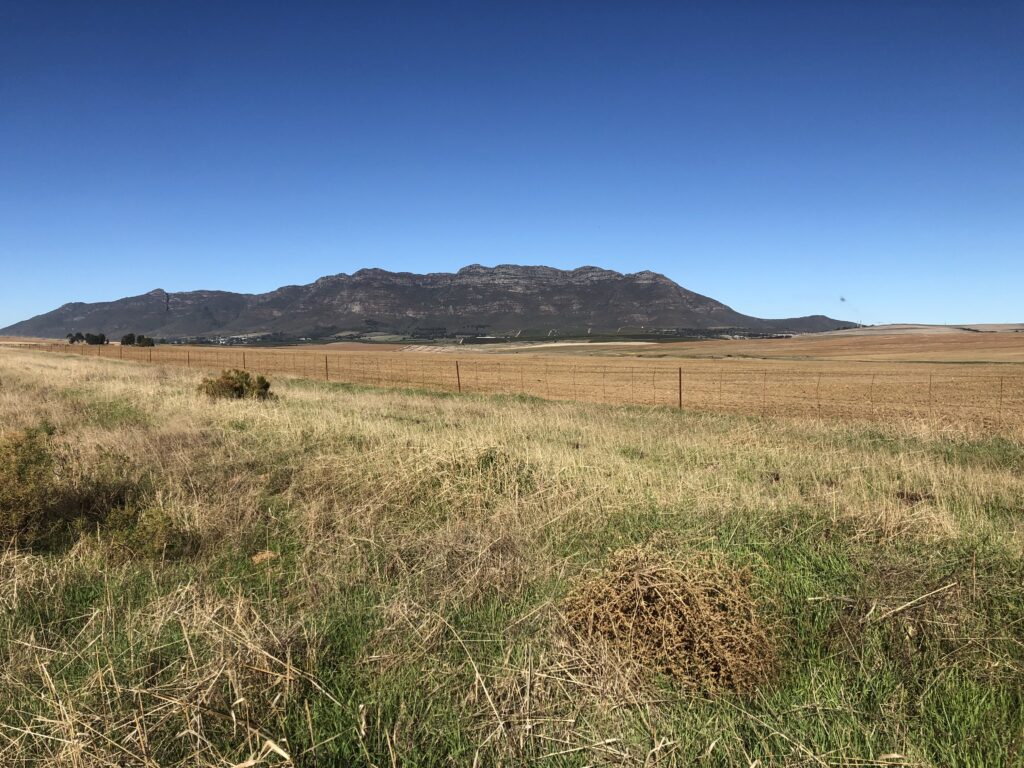
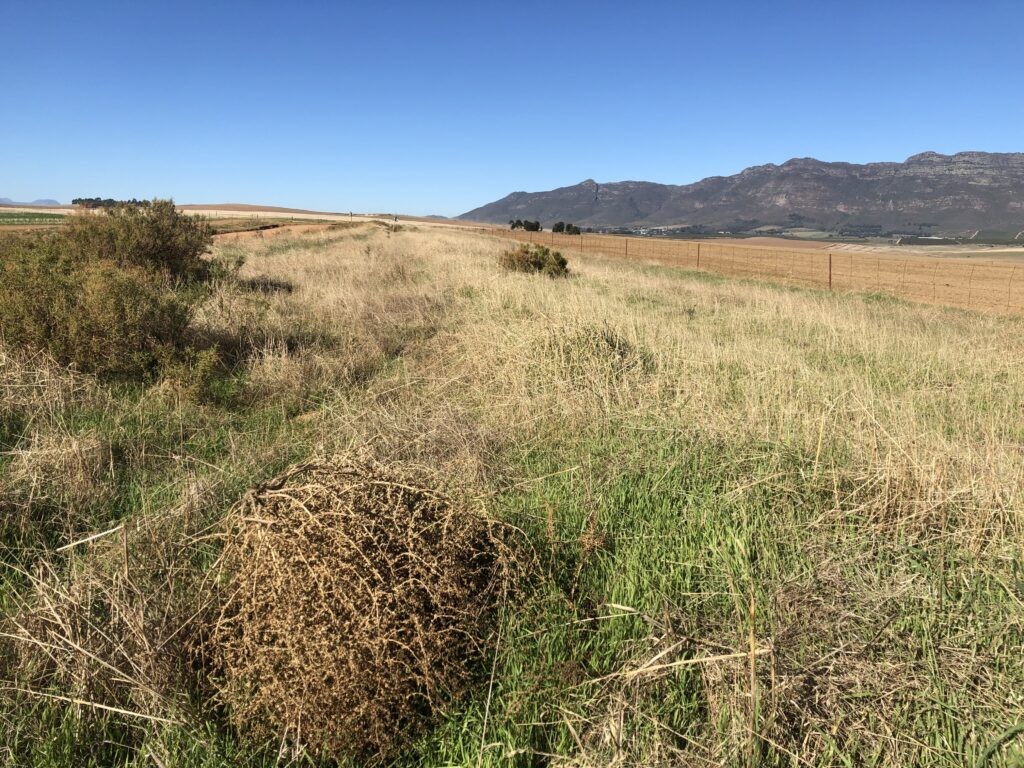
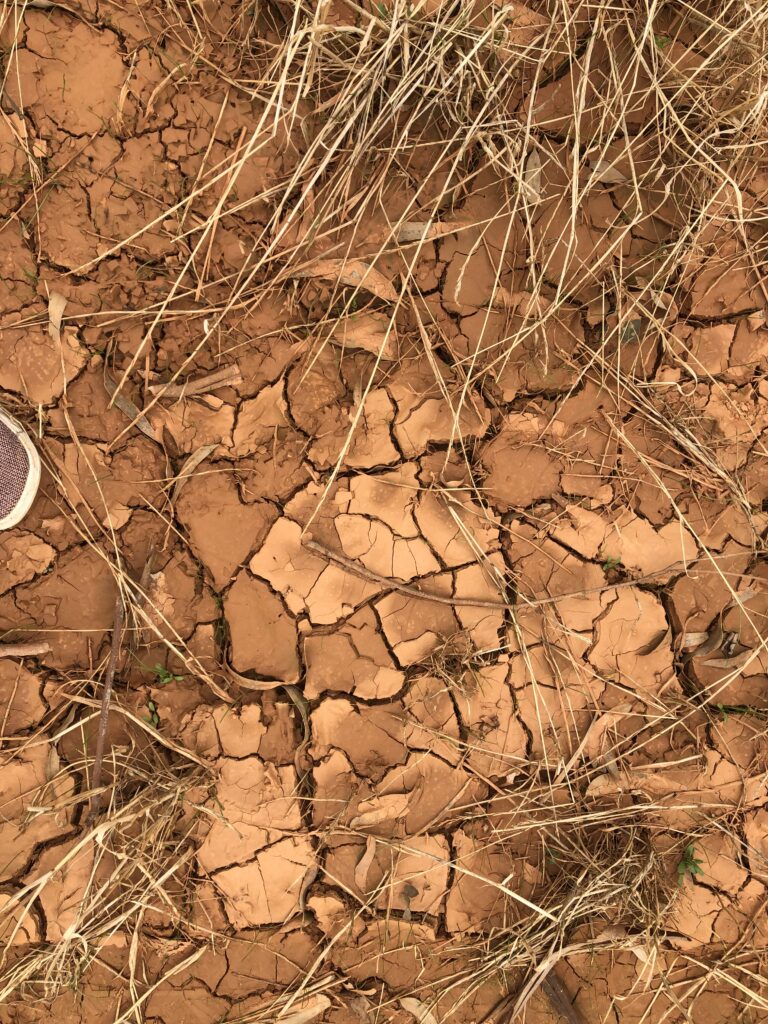
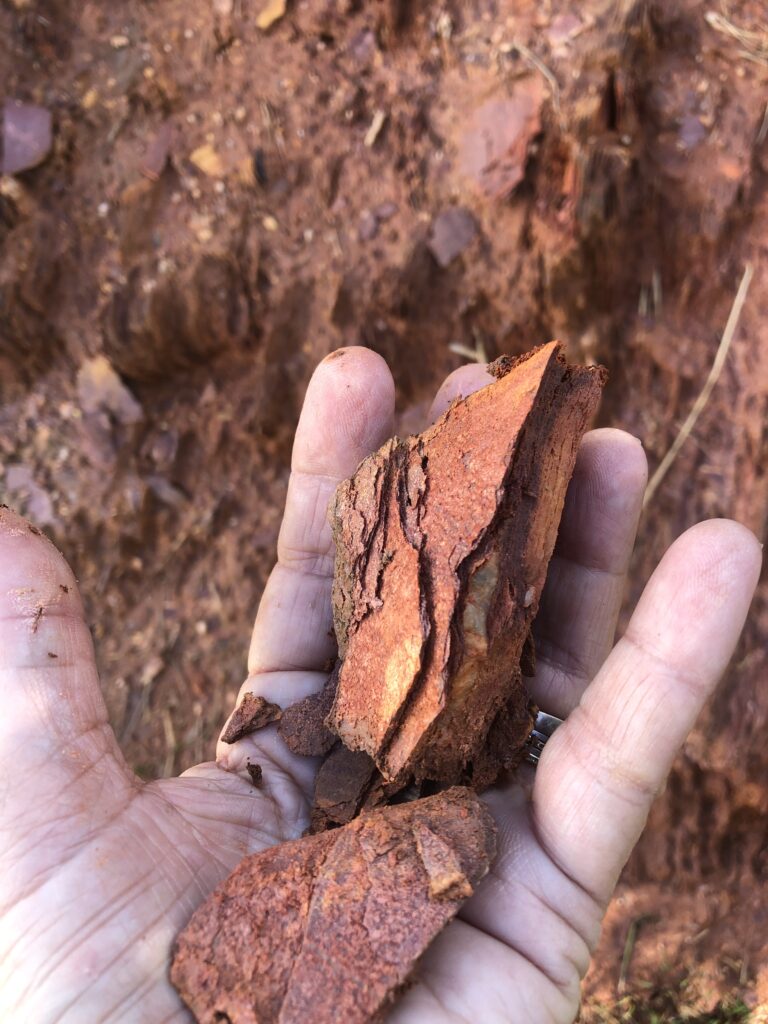
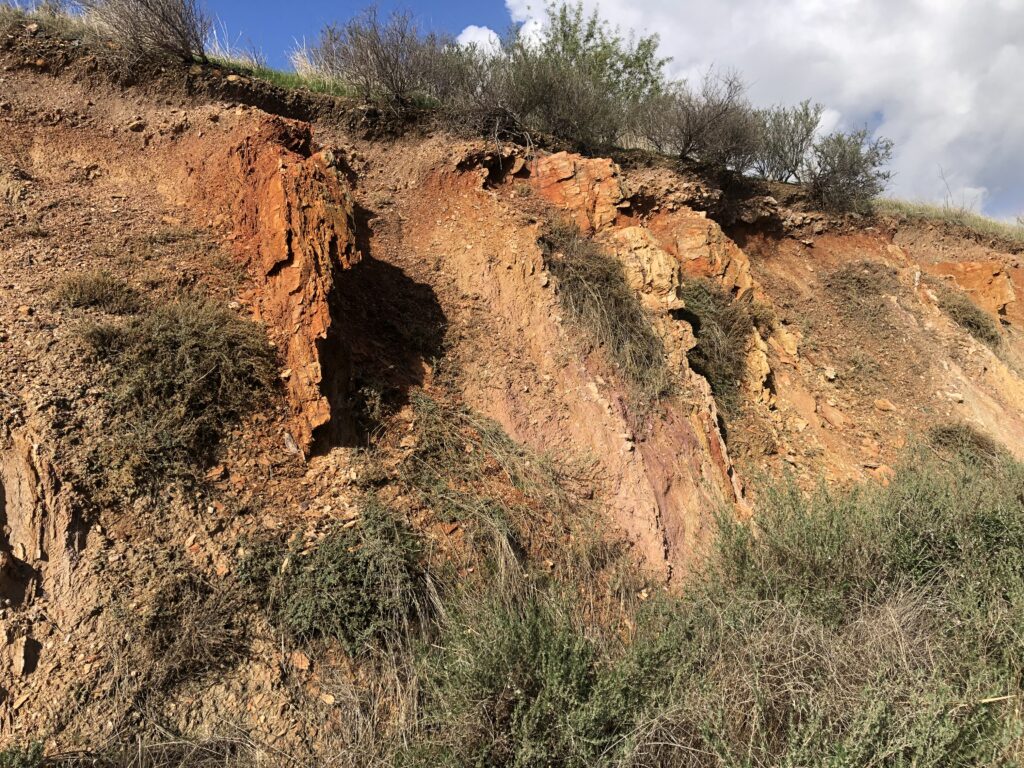
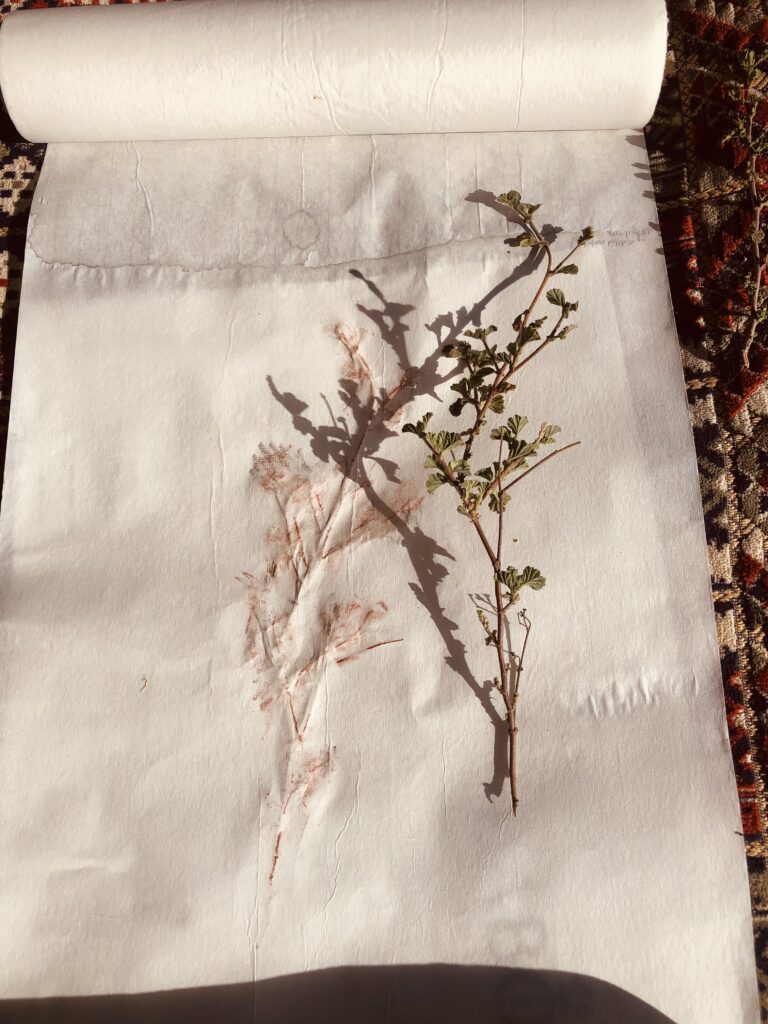
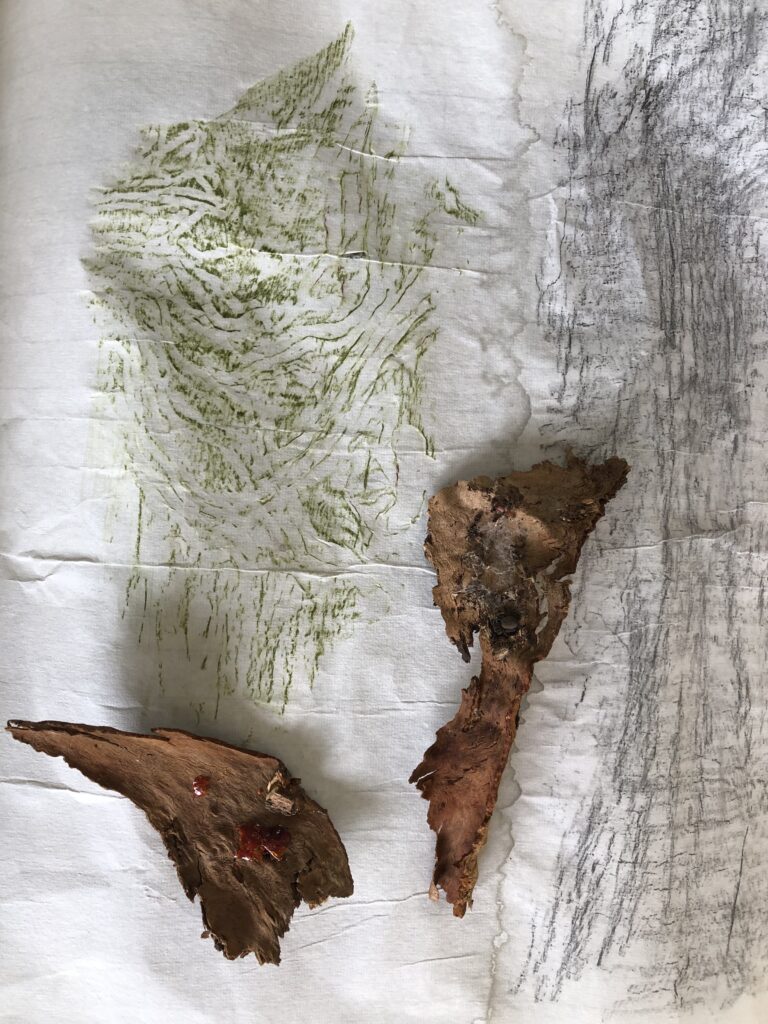
I have learned to follow my instinct – I work more intuitively and lean more towards the unknown of every new step I take. On a personal level, it became clear to me that I started out by mentally mapping the space, even when I was not sure what I was going to do. As I continued walking, my analytical mind naturally sought a logical outcome for the data I was collecting. I did not just want to see the “Ghost Line”—I wanted to repair it. I do think there is an irony of the rail: The rail was built to “uproot” things (transporting them away), yet it became the place where the Renosterveld was allowed to stay rooted. My imprints capture the minute details of those plants that stayed behind while the world moved on.
A social media post which shows how the walking started shifting to a restoration ecology – I love the irony:
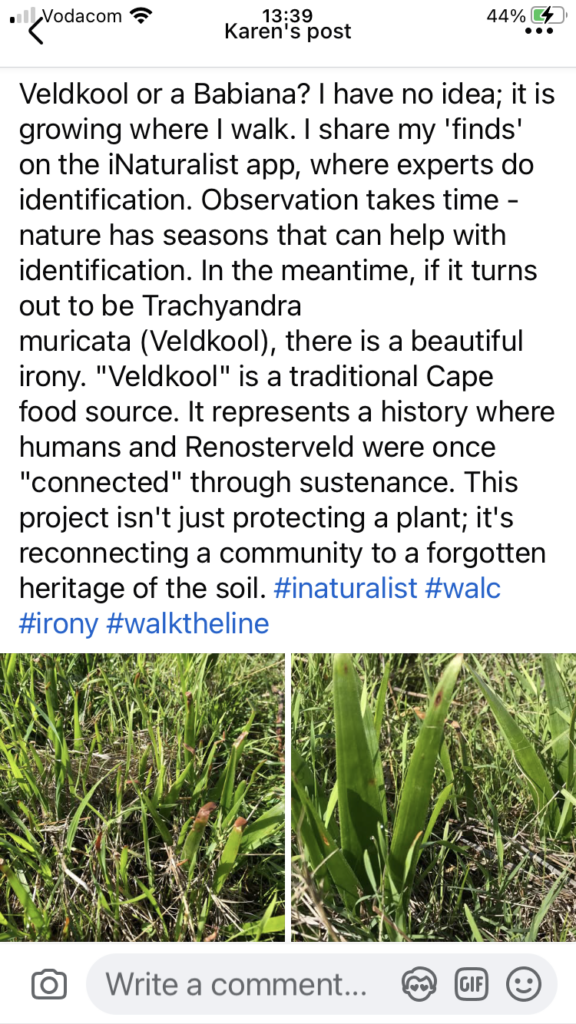
I am seeing more ways to focus :
The Industrial-Ecological
The rail is a cold, straight line of human intent, but the spoor I find upon it is a curve of living intelligence. By following the tracks of the Genet , Bat eared Jackal and the Mongoose across the iron, I am unlearning the ’emptiness’ of this landscape. Every paw print or sighting is a story that erases the myth of industrial silence, revealing instead a crowded, busy highway of non-human lives. My art is not just a collection of found objects; it is an act of listening to the land as it speaks.
The Relational/Deep Inquiry (Focus on Empathy)
To track the Renosterveld is to practice an intimate archaeology of the present. When I find a porcupine’s dig or a bird’s feather in the thorny scrub, I am catching a glimpse of a neighbor I have long ignored. This is a relational practice: I am mirroring their need for cover, their search for water, and their resilience in the face of the plow. I no longer walk past the veld; I walk with it, recognizing that my story and the Spurfowl’s story are entangled in the same granite soil.
The Reanimating Voice (Poetic & Succinct)
In the dry, scrubby late autumn of the Swartland, the tracks, feathers and droppings on the rail were the first signs of life reanimating. I walk these lines to find the doorways of empathy that human supremacy tried to close. Between the rust and the bulb, there is a living intelligence that doesn’t need words. My work is to gather the quills, feathers, the iron, and the stories, weaving them into a new map where the wild and the human find a common gauge.”
My making along the walk
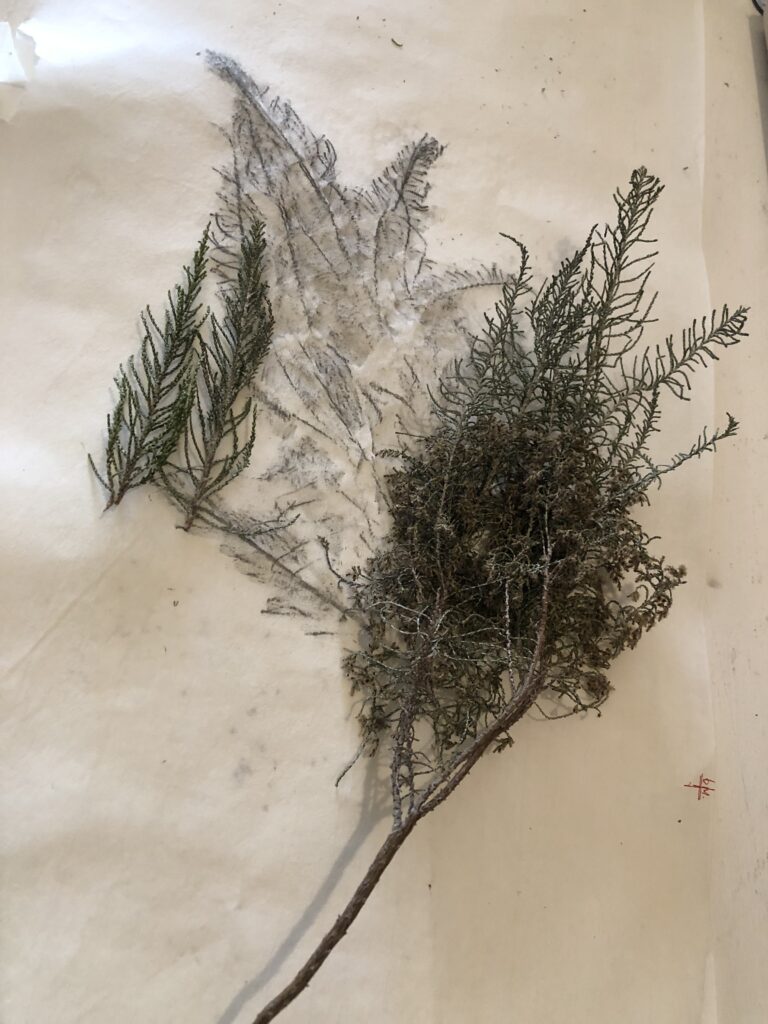
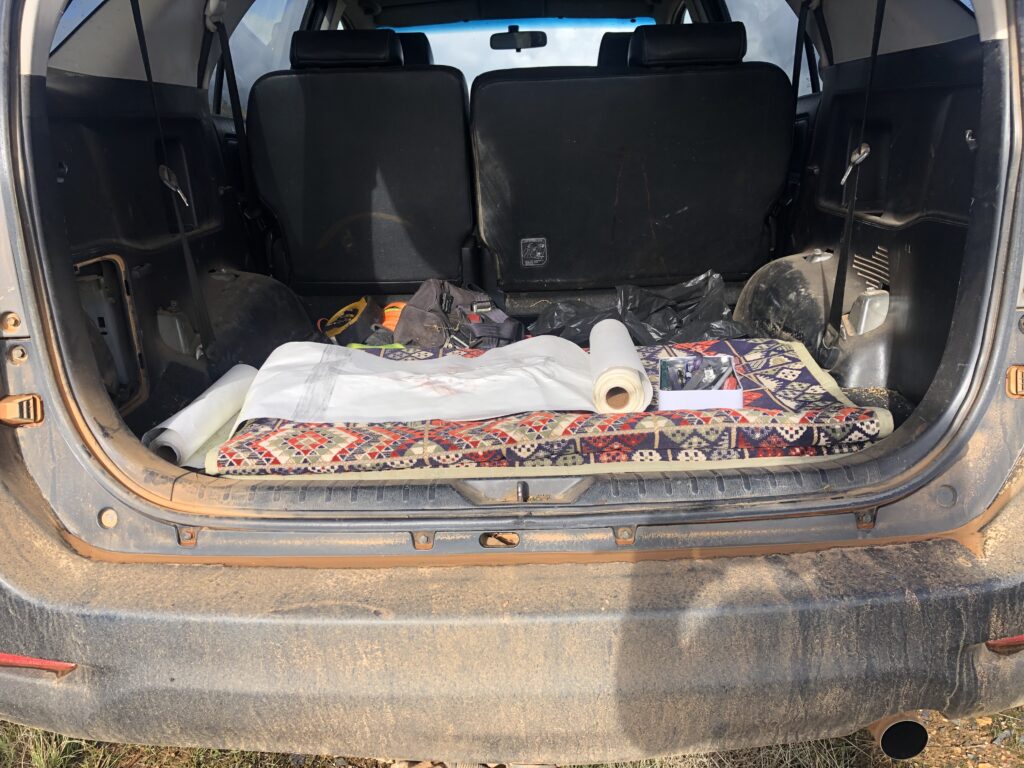
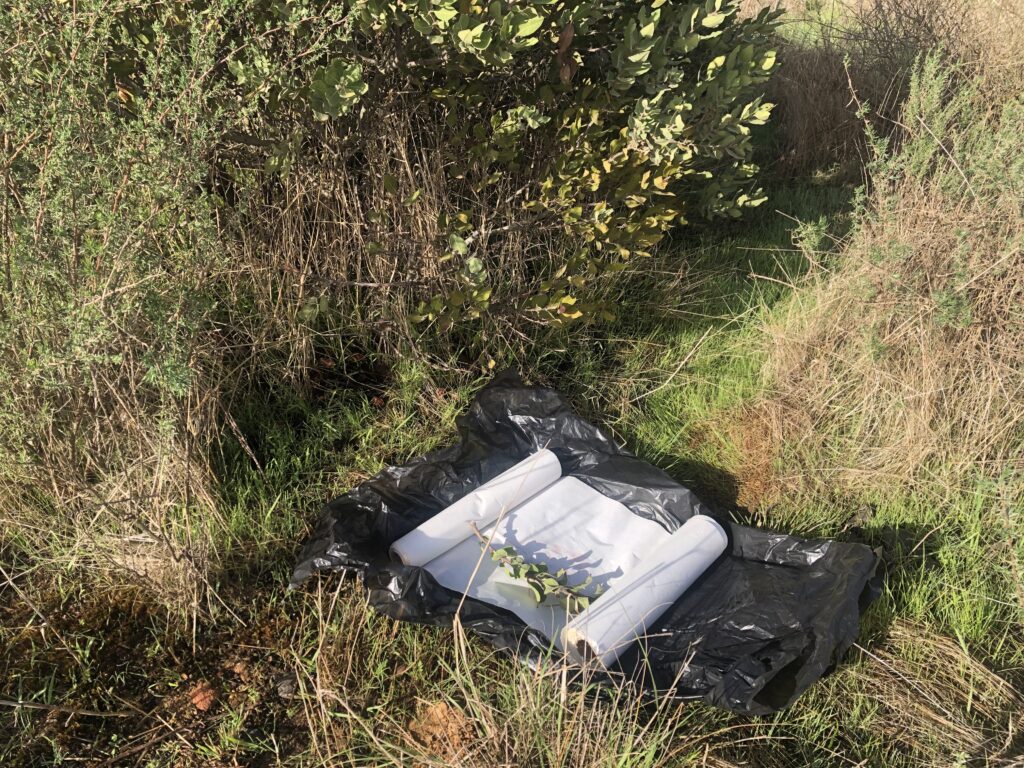
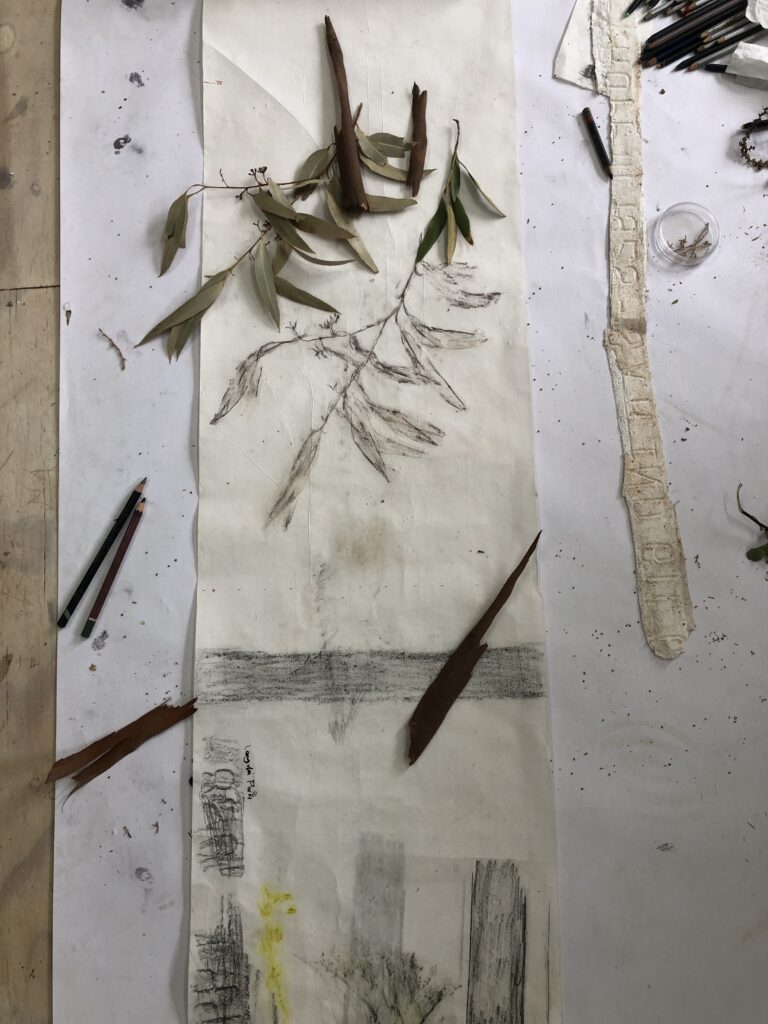
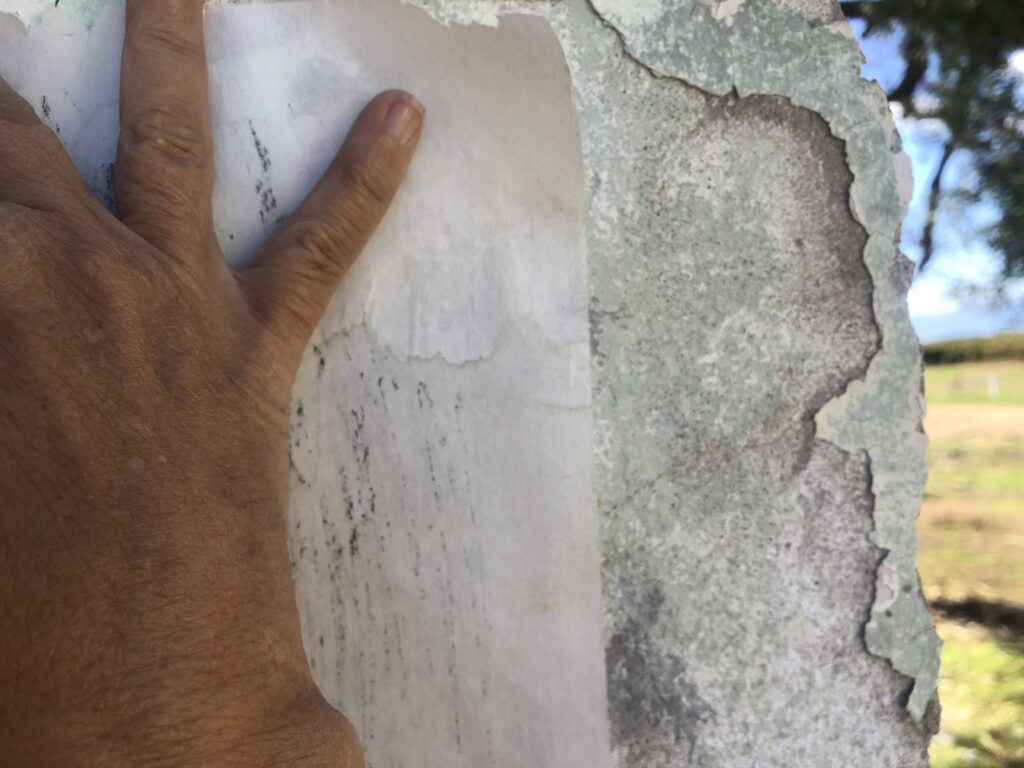
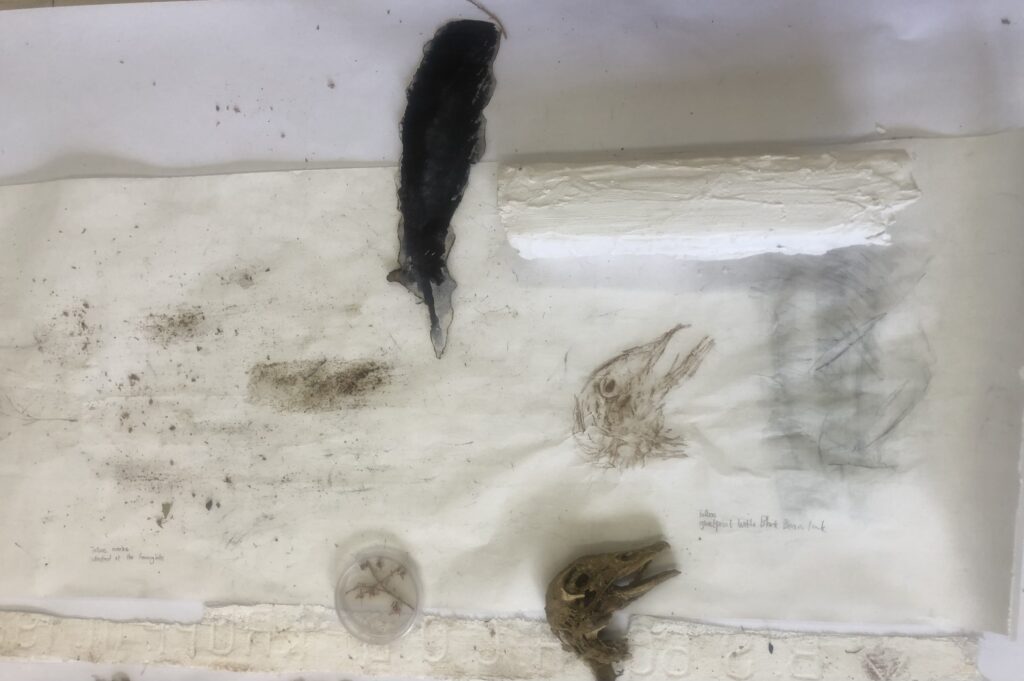
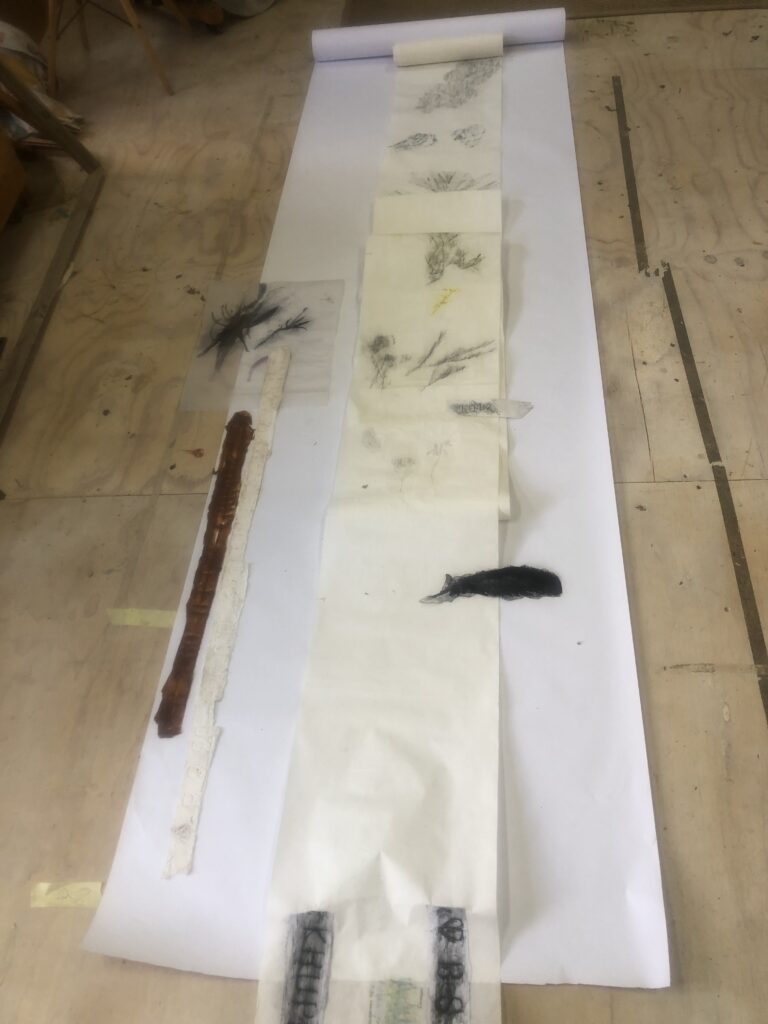
Below are images of the progression of the scroll drawings, from time to time even my car becomes my studio. A friend talked about my ‘rolling studio’ – it reminds me of the rolling wheels of the train that used to pass this line.
Learning about the Renosterveld
While research/reading, I came upon a website with great information about the Swartland Shale Renosterveld plants. The following insert was taken from the website: www.fynboscorridors.org:
“Geology & Soils: Clay soils derived from Malmesbury Group shales (specifically the Porterville Formation in the north and east and the Moorreesburg Formation in the west). The soils contain prismacutanic and pedocutanic diagnostic horizons and Glenrosa and Mispah forms are predominant.
Climate: Winter-rainfall regime, with MAP 270–670 mm (mean: 430 mm), peaking from May to August. Mean daily maximum and minimum temperatures 29.6°C and 6.3°C for February and July, respectively. Frost incidence 3 or 4 days per year. Mists are common in winter.
Endemic Taxa: Low Shrubs: Leucadendron verticillatum, Aspalathus acanthophylla, A. horizontalis, A. pinguis subsp. longissima, A. pinguis subsp. occidentalis, A. puberula, A. rectistyla, Cliffortia acockii, Lotononis complanata, Serruria incrassata. Succulent Shrubs: Erepsia ramosa, Ruschia patens, R. pauciflora. Herb: Indigofera triquetra. Geophytic Herbs: Aristea lugens, Babiana angustifolia, B. latifolia, B. odorata, B. secunda, Hesperantha pallescens, H. spicata subsp. fistulosa, Lachenalia liliflora, L. mediana var. rogersii, L. orthopetala, Lapeirousia fastigiata, Moraea gigandra, M. tulbaghensis, Oxalis fragilis, O. involuta, O. leptocalyx, O. levis, O. macra, O. perineson, O. strigosa, Pelargonium viciifolium.
Conservation: This is a critically endangered vegetation unit. Target 26%, but since 90% of the area has been totally transformed (mainly for cropland), the target remains unattainable. The remnants are found in isolated pockets, usually on steeper ground. So far only a few patches have been included in conservation schemes (e.g. Elandsberg, Paardenberg). Aliens include Acacia saligna (very scattered over 65%), A. mearnsii (very scattered over 62%) as well as several species of Prosopis and Eucalyptus. Alien annual grasses (species of Anagallis, Avena, Briza, Bromus, Lolium, Phalaris and Vulpia) are a primary problem in remnant patches. Other serious aliens include herbs such as Erodium cicutarium, E. moschatum, Echium plantagineum and Petrorhagia prolifera.”
Other research indicated that land should be cleared from invasive species and grasses: “In a natural system, Renosterveld shrub species establish on patches that are opened up by grazing and trampling, or small-scale fires. Therefore, to successfully re-establish Renosterveld shrub species on old fields, grasses needto be removed first. Seedlings of Wild Olive were however damaged by browsing antelope, and grew best in areas where they were sheltered by grass. This species, as well as others (Rhus sp. – Taaibos, Euclea sp. – Guarri) are restricted to heuweltjies (underground termite colonies), where the soil is very nutrient rich, and plants grow in high densities. These species must therefore be able to withstand
competition when establishing and growing. (http://awsassets.wwf.org.za/downloads/rv_restoration_guidelines.pdf)