The wonderful thing that happened is that walking and making art asked of me not only to research the new encounters, but also to become a bit of a botanist, and this I really love!
Below is a list I started to keep, but I need support from the INature group to qualify and verify my findings; only then can I share it publicly. With some of the plants, I might have to wait till Spring to see them flower/bloom. I hope that this will be developed as the dream of the line becoming a ‘Renosterveld node’ gets closer. I also use materials and information from SANBI and PlantZAfrica for my research. I joined the monthly online sessions of the Botanical Society, BOTSOC, based in Cape Town.
| Botanical Name | Common Name | Red Data Status | GPS Coordinate |
|---|---|---|---|
| Alxoon africanum | Kraalbos | ||
| Euclea tomentosa | Honey Gwarrie (male and female), Jakkalsbos | ||
| Searsia undulata | Koeniebos, taaibos, garra bos | iNaturalist verified | |
| Olea europea ssp. africana | Olienhout | iNaturalist verified | |
| Osteospermum monstrostum | eenoog monster | ||
| Pennisetum setaceum | Pronkgras | invasive 1b | |
| Lycium ferocissimum | Slangbessie | invasive 1b | |
| Dicerothamnus rhinocerotis | Renosterbos | ||
| Rumex crispus | Krultongblaar | Exotic, naturalised | |
| Trachyandra muricatandra | Veldkool | iNaturalist verified | |
| Aspalathus hispida | Witertjiebos | ||
| Eriocephalus africanus | Kapokbossie – butterfly like white flowers by end July 2026 | ||
| Lachenalia (palida?) | Viooltjie — seen blooming 27 July 2026 | ||
| Diospyros glabra | Bloubessie met vrugte, 5 May 2026 | ||
| Babiana odorata | Oldspice bobbejaantjie — seen blooming 27 July 2026 | Near threatened | iNaturalist verified |
| Pelargonium xerophyton | |||
| Hermannia | Poprosie | ||
| Prosopsis glandulosa | Suidwesdoring | Invader | |
| Gladiolus watsonius | Red Afrikaner / Suikerkan | Near Threatened B1ab(i,iii,v) | iNaturalist verified |
| Microloma sagittatum | Bokhoring, Heuningblommetjie, Melkblommetjie | ||
| Everlastings/Helicrysum | |||
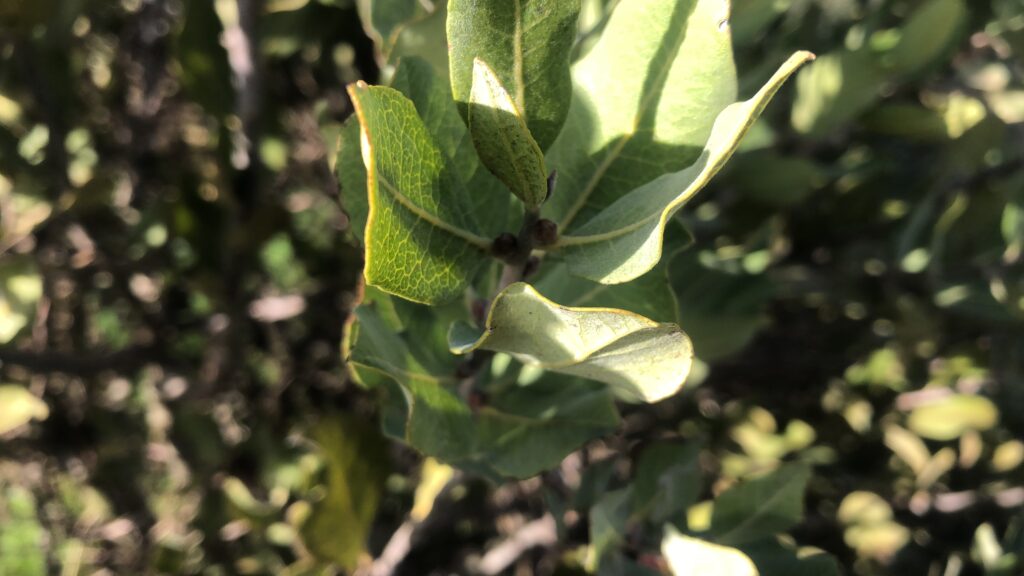
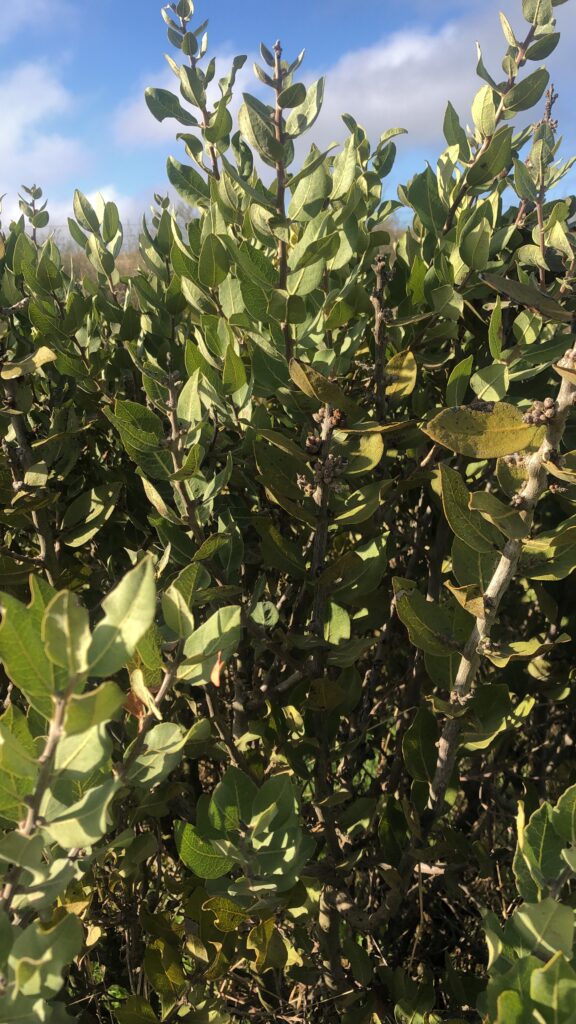
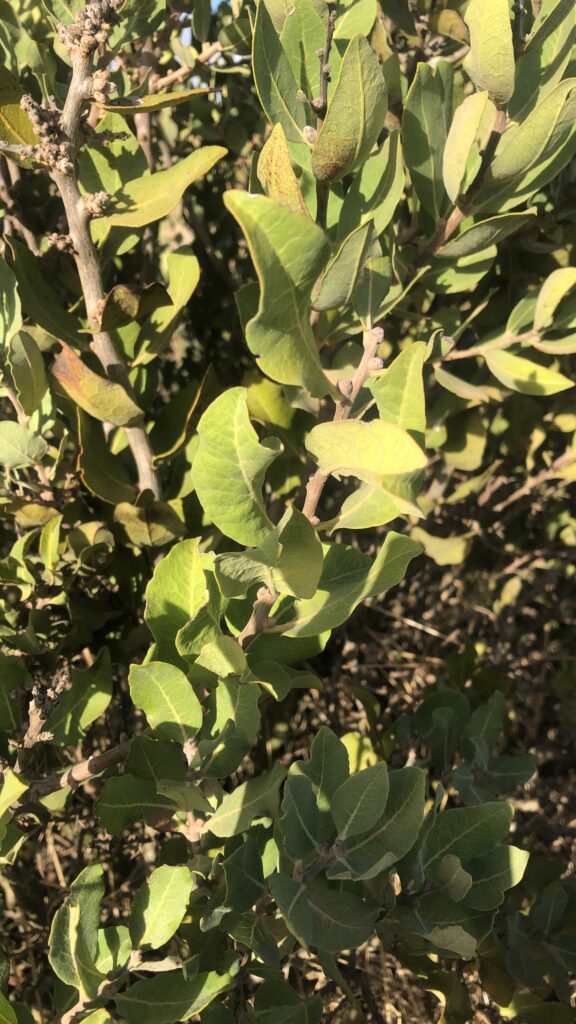
In early May, the Euclea bushes I found are also fascinating from the perspective of how the indigenous people could make use of them. Reading on the PlanzAfrica website, it became clear that not all the bushes have berries because Euclea tomentosa (see Ghwarrie bos earlier) is a dioecious species. This means individual plants are strictly divided into male and female sexes.
I can imagine the females going out to harvest these berries (Le Guin’s theory can be applied). Because these bushes grow close together in colonies, the Khoe-San women could systematically harvest high volumes of berries from the female plants. I learned that the roots contain a high concentration of dark tannins. When boiled down into a thick sludge, it creates a permanent jet-black dye. The Khoe-San used this to stain woven organic materials and to treat animal hides, making their leather cloaks and water bags resistant to rot. I do love to think of this space as a place where we can practice ideas of cohabitation and interdependence.
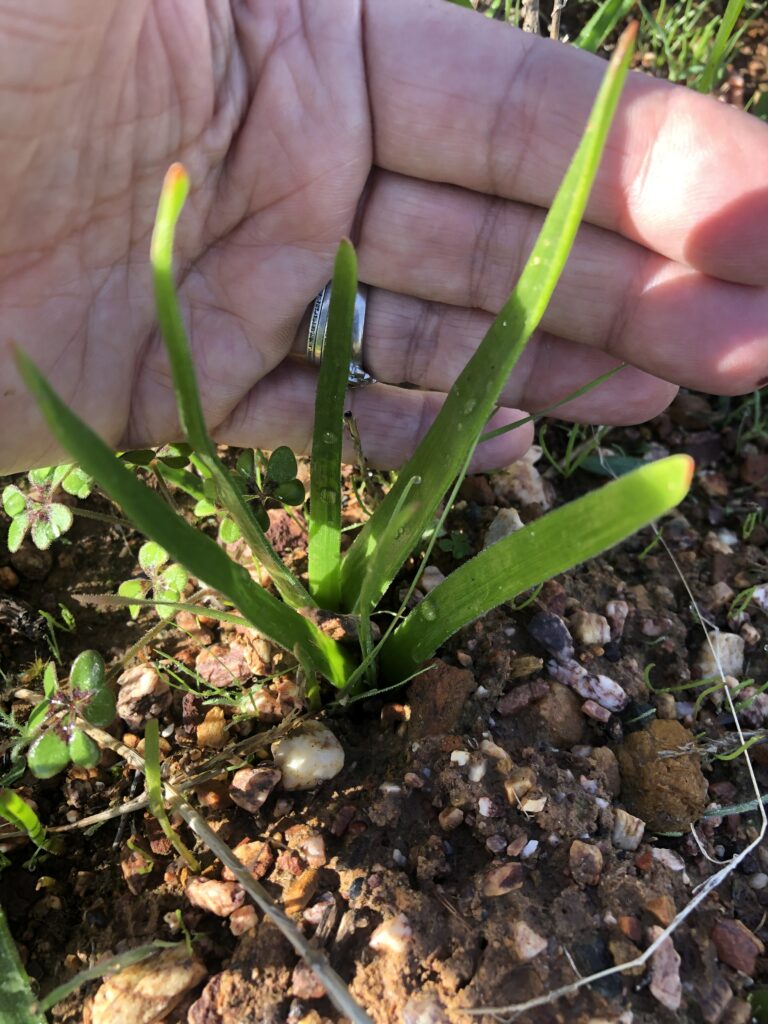
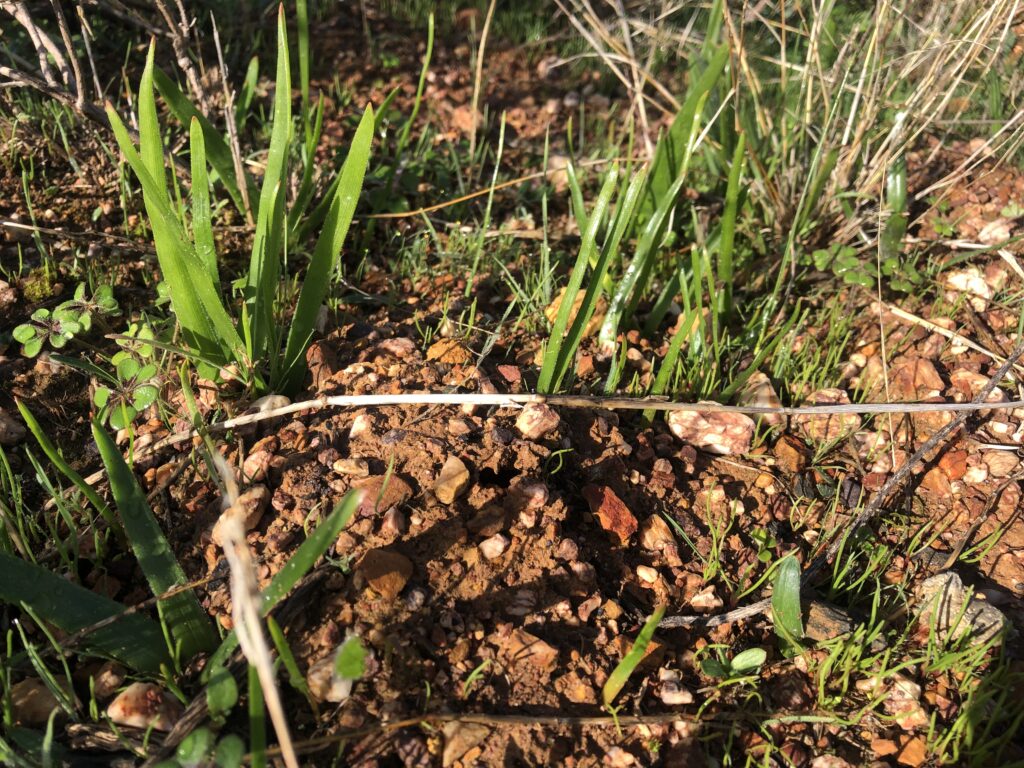

When visiting the rail line later, at the end of July, I was so surprised to find these bulbs starting to flower! Now I can share my images on iNature and have a positive ID. I learned on the SANBI website that: “This Swartland endemic has lost extensive amounts of its habitat to wheat cultivation and urban expansion of Malmesbury and Darling. The population is declining due to urban and infrastructure expansion. In addition, habitat degradation from alien plant invasion is ongoing. It therefore qualifies for listing as Near Threatened as it almost meets the criteria for listing as Vulnerable under criterion B.“
It seems we found Babiana odorata L.Bolus. According to iNature, this “is a perennial flowering plant and geophyte belonging to the genus Babiana and is part of the fynbos and renosterveld. The species is endemic to the Western Cape and occurs from Piketberg to Durbanville.” I learned that this is a hardy species and a member of the iris family. Its name alludes to the fact that baboons and porcupines are particularly fond of its nutritious underground corms, often digging them up in the wild. From the images below, one can see it is an attractive little plant with creamy-yellow, violet-scented flowers. I learned it is a geophyte which, like most of the Cape bulbs, grows actively in the rainy winter season and goes dormant in the dry summer season. I loved to see how they are growing abundantly in the clay soil along the rail. I learned that a good feature to look for when identifying this species is the ‘split’ inner bract.
Babiana odorata is endangered due to the urban expansion of Malmesbury and Darling as well as wheat cultivation in this area, which has led to substantial habitat loss, while continued alien invasion leads to further habitat loss. I do wonder about the rail line and how we as humans can assist this plant to flourish.


On close inspection, I found another interesting connection – I could see many areas where the plant seems to be dug up – something is foraging the corms here, and leaving some marks in the form of these dense droppings. My initial research (Claude Ai) into who is foraging here seems to indicate a Cape mole-rat. I have shared this on iNature as well, but it is understood not to be the mole-rat leaving these droppings; it could rather be earthworms after other animals, like porcupine or bat-eared foxes. The mystery continues (29/07/2026)


I went back to the same area on 1 August 2026 and found mounds that could belong to a mole – close by the Babianas


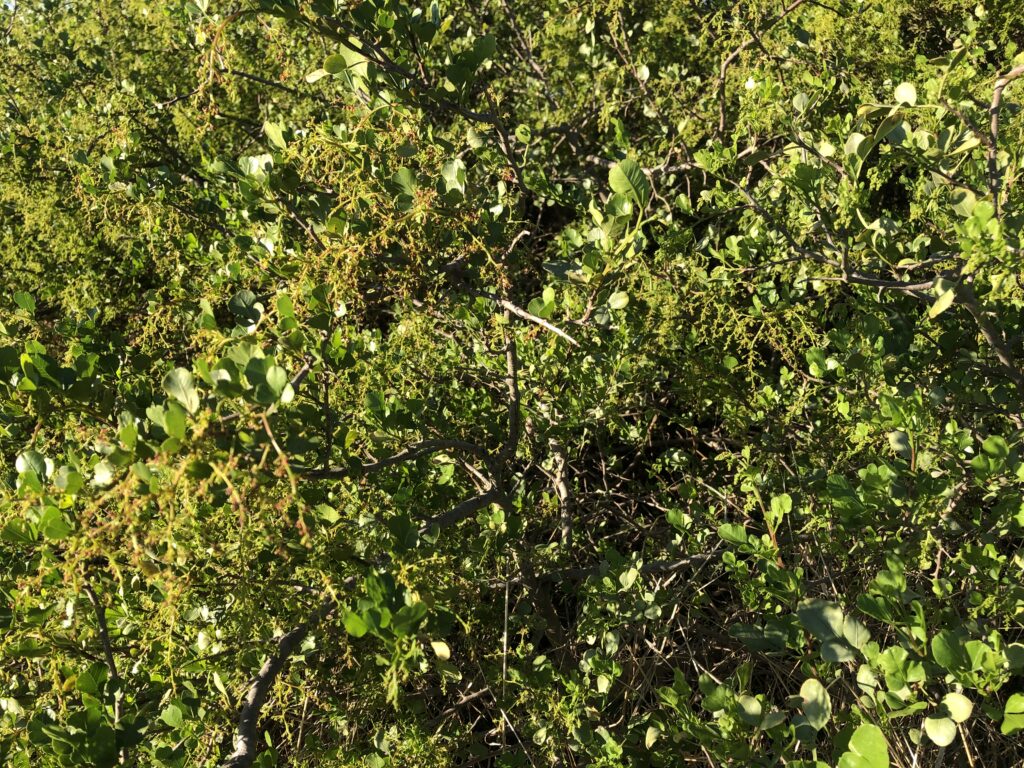
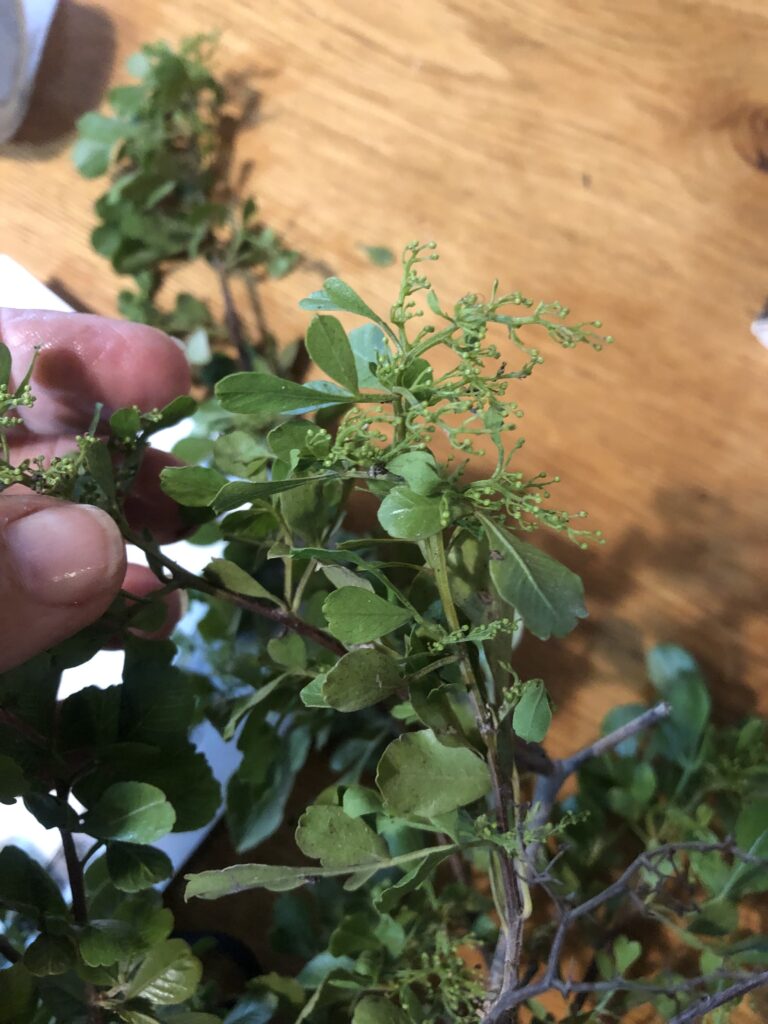
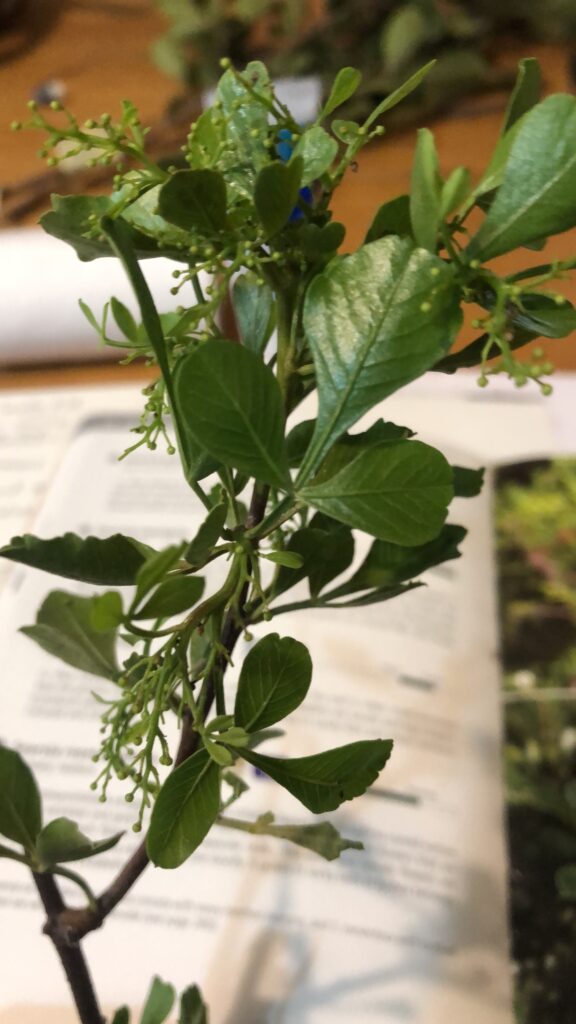
Just reading about the medicinal uses of the above Koenie bos made me very excited. https://ajfand.net/Volume25/No3/Maroyi25370.pdf
I also read that it is a member of the Anacardiaceae family, commonly known as the wild currant, sumac, or cashew family. Searsia undulata is often confused with other Searsia species (such as S. burchellii), but it is distinguishable by its wavy leaf margins (undulata) and waxy, bluish sheen on the leaves.
27 July 2026 follow-up walk around the plants along the rail
I invited my cousin and her husband on a walk – they are both botanical society members, support all Crew conservation work and have a passion for fynbos plants. (CREW stands for the Custodians of Rare and Endangered Wildflowers, a citizen science program that partners everyday volunteers with professional botanists to monitor and protect fragile plant species. It was launched in 2003 specifically in the fynbos-rich Cape Floristic Region.)
I will update my list above as the identification becomes research grade with iNaturalist


On this stretch of the old rail line — where the track cuts through Knolfontein’s wheat and vine country outside Riebeek West — the veld either side of the rusted line still holds onto its fynbos and renosterveld character. It was here, among the grasses and old sleepers, that I found Gladiolus watsonius, the Red Afrikaner or Suikerkan. ( the first two images above)
It’s a small plant to stop a walk for — a deciduous perennial bulb reaching only 30 to 60 cm high and 20 to 30 cm across — but its Orange flowers demand attention. Mike, my cousin’s husband, saw it first. In winter and spring, dense, sword-like spikes of red and orange push up through the undergrowth, unmistakable even from a distance. Finding it felt like a small privilege: the species is endemic to the Western Cape and now listed as Near Threatened on the Red List, one more small thing surviving in the margins between cultivated land and what’s left of the wild. Their starchy underground corms serve as an important food source for indigenous fauna, including porcupines, baboons, and mole rats.
It’s this kind of encounter that keeps drawing me back to these walks — the line itself has been decommissioned, but the ground either side of it hasn’t stopped working.


Alongside the Red Afrikaner, this same walk turned up a cluster of Lachenalias — though found in a very different pocket of the line. Where the Gladiolus grew out in the open margin between vine, the Lachenalias were tucked into a shale cutting, a section where the old line runs more enclosed, cut off from the cultivated land on either side. It felt like a different world within the same walk — cooler, more hidden, the vegetation noticeably different underfoot.
These small winter-growing bulbs, from the Hyacinthaceae family, are easy to miss until you’re looking down at just the right moment. I shared the images on iNaturalist and in the Facebook group Lachenalias of South Africa, where the ID came back as Lachenalia pallida — the pale-flowered lachenalia. It’s a winter-growing geophyte that disappears entirely during the dry summer months, only to reappear with the rains. Endemic to the Western Cape, its range runs from Piketberg down to Stellenbosch, favouring clay flats and Swartland Shale Renosterveld — ground exactly like the cutting where I found them, moist and heavy underfoot, shielded from the surrounding fields.
The plant itself is unassuming at first glance: one or two lanceolate leaves, sometimes roughening to a warty texture, reaching 12 to 30 cm high. But the flowers cluster along the stem in a surprising range of colour — cream, burgundy, mauve-pink, pure white — and where conditions suit it, L. pallida grows in large colonies, turning a patch of shaded clay into something quietly spectacular.
Two plants, two very different microclimates, both found along the same decommissioned line — it’s this kind of contrast that keeps the walk interesting, no matter how many times I’ve walked this stretch before.
Another amazing sight yesterday was Spotted eagle owls – one was sitting on the rail and flew up.

<figure class="wp-block-table"><table class="has-fixed-layout"><tbody><tr><td><strong>BOTANICAL NAME</strong></td><td><strong>COMMON NAME</strong></td><td><strong>RED DATA STATUS</strong></td><td><strong>GPS Coordinate</strong></td></tr><tr><td>Alxoon africanum</td><td>Kraalbos</td><td></td><td></td></tr><tr><td>Euclea tomentosa</td><td>Honey Gwarrie(male and female) Jakkalsbos</td><td></td><td></td></tr><tr><td>Searsia undulata</td><td>Koeniebos, taaibos, garra bos</td><td></td><td>iNaturalist verified</td></tr><tr><td>Olea europea ssp. africana</td><td>Olienhout </td><td></td><td>iNaturalist verified</td></tr><tr><td><a href="https://www.inaturalist.org/taxa/590996">Osteospermum monstrosum</a></td><td>eenoog monster</td><td></td><td></td></tr><tr><td>Pennisetum setaceum</td><td>Pronkgras</td><td><em>invasive 1b</em></td><td></td></tr><tr><td>Lycium ferocissimum</td><td>Slangbessie</td><td><em><span style="box-sizing: border-box; margin: 0px; padding: 0px;">invasive</span> 1b</em></td><td></td></tr><tr><td>Dicerothamnus rhinocerotis</td><td>Renosterbos</td><td></td><td></td></tr><tr><td>Rumex crispus</td><td>Krultongblaar</td><td><em>Exotic, naturalised</em></td><td></td></tr><tr><td>Trachyandra muricatandra</td><td>Veldkool</td><td></td><td>iNaturalist verified</td></tr><tr><td>Aspalathus hispida</td><td>Witertjiebos</td><td></td><td></td></tr><tr><td>Eriocephalus africanus</td><td>Kapokbossie</td><td></td><td></td></tr><tr><td>Lachenalia (palida?)</td><td>Viooltjie 27 Julie 2026 sien blom</td><td></td><td></td></tr><tr><td>Diospyros Glabra</td><td>Bloubessie met vrugte 5 Mei 26</td><td></td><td></td></tr><tr><td>Babiana Odorata</td><td>Oldspice bobbejaantjie 27 Julie 2026 sien blom</td><td>near threatened</td><td>iNaturalist verified</td></tr><tr><td>Pelargonium xerophyton</td><td></td><td></td><td></td></tr><tr><td>Hermannia</td><td>Poprosie</td><td></td><td></td></tr><tr><td>Prosopsis glandulosa</td><td>Suidwesdroing</td><td>Invader</td><td></td></tr><tr><td>Gladiolus Watsonius</td><td>Red Afrikaner/Suikerkan</td><td>Near Threatened B1ab(i,iii,v)</td><td>iNaturalist verified</td></tr></tbody></table></figure>