The blog post I want to share is about my realisation that the shadow is not the enemy of the mapping process; it is its soul.
The thing I love about this walking project is my struggle to create a marriage of Industrial and Colonial history (old station, the Krupp stamp, the rail, the 1948 ghost) and my own personal intuition (a changing landscape, the plants, the drawings, the ink wash, walking, and the Solnit-inspired “pace of thoughts”).
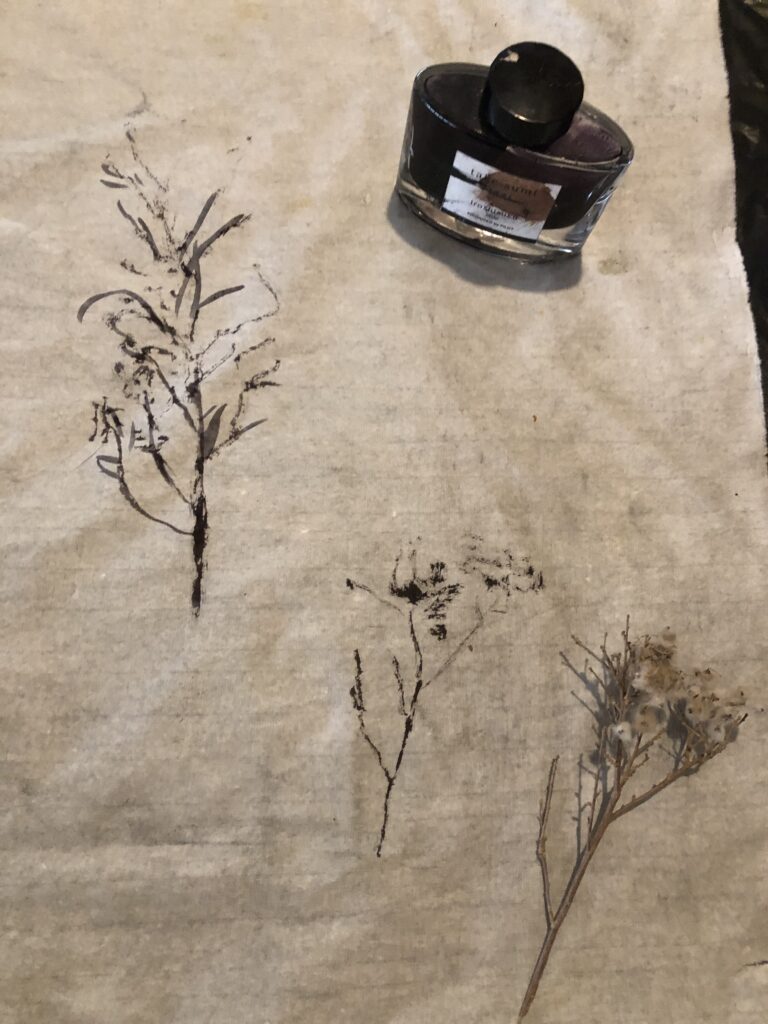
I found berries on a wild Olive tree next to the rail and a little research showed that Wild olive berries (Olea europaea subsp. africana) in South Africa are primarily used by wildlife as food, while traditionally they have been used by people to make ink, treat diarrhea, and provide foor for livestock – it is bitter but edible to humans as well. I love that it provide food and nesting for many birds. I stood here for a while and made a sound recording of birds I could hear: cape canaries, sugarbirds, fiscal shrike, bokmakierie and doves were around. I found a big flock of francolins as well as guinnea fowl. Later when driving home, I saw a Gray Heron in a dam, a Lesser Kestrel and a Black shoulder Kite sitting all puffed up on the old telephone line and near our home, two bokmakieries flew over the road. If I think of all these natural living creatures I can imagine they have been before the rail.
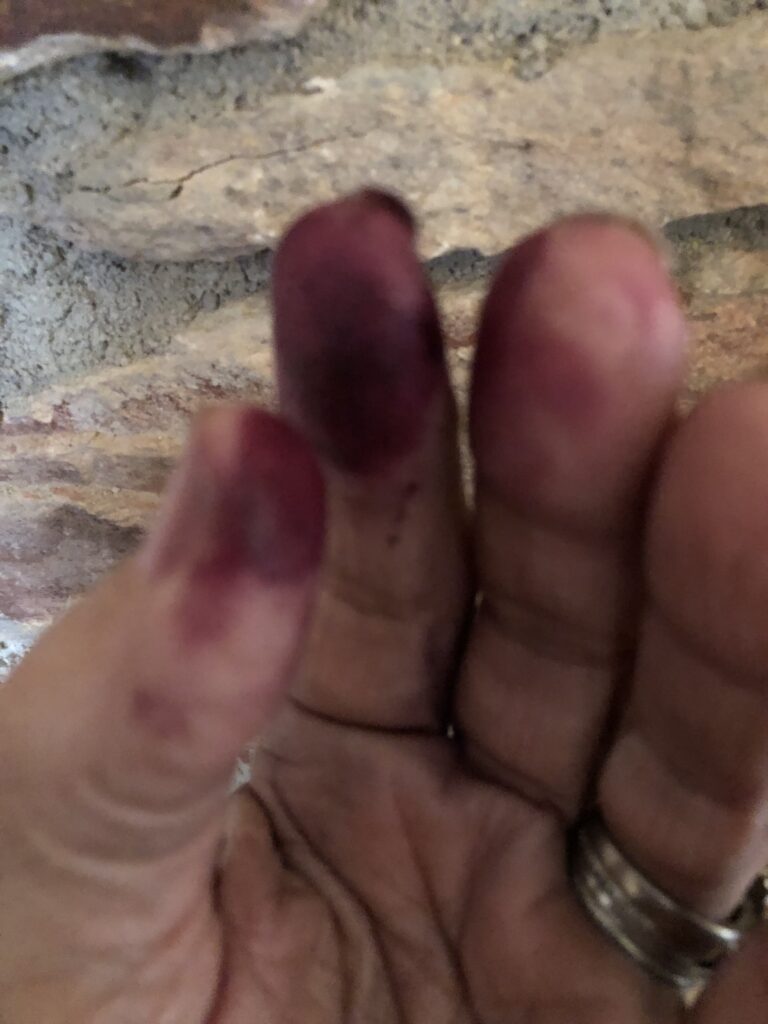
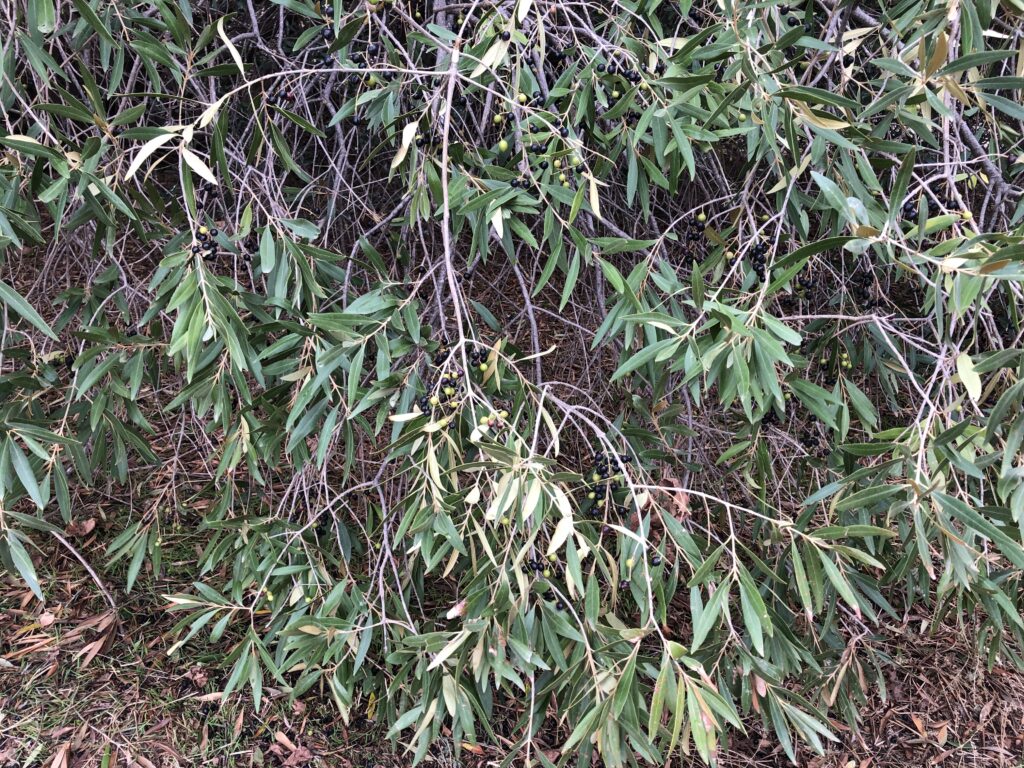
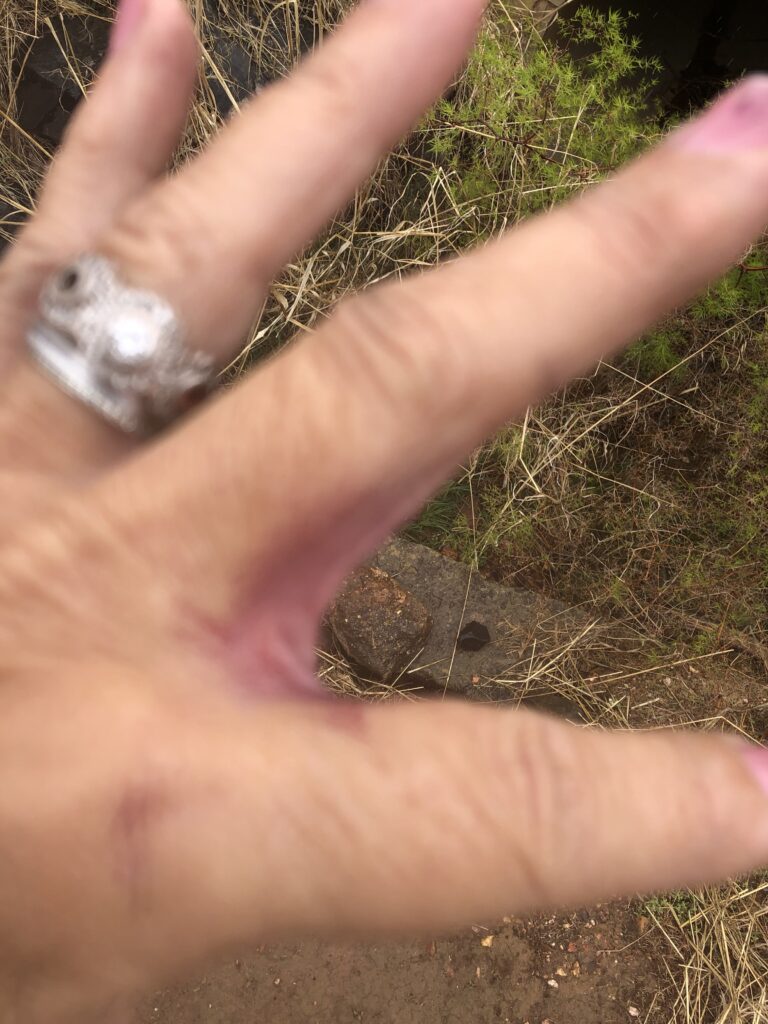
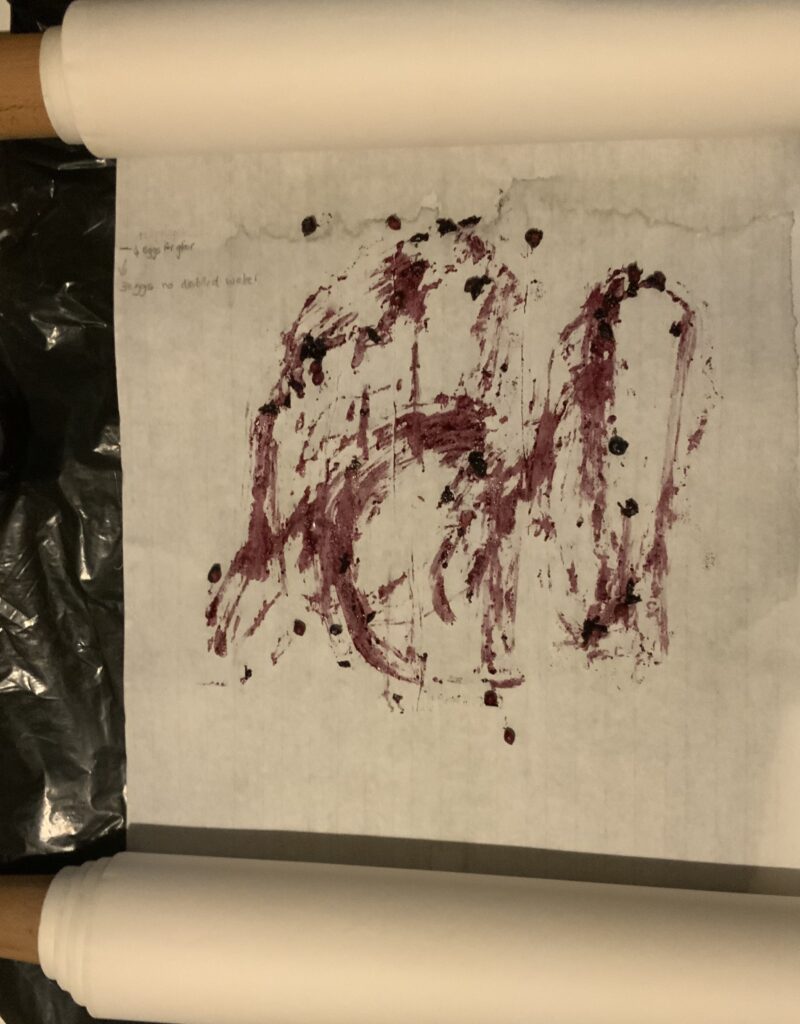
Back in my studio I decided to make olive ink with the ripe berries. It seems that the Olea europaea subsp. africana is naturally rich in lipids (oils). I consider to add a few drops of liquid Gum Arabic to give the ink body, help it adhere to the paper fibers. I might also get a slight sheen that could mirror the waxy leaves of the Wild Olive. To preserve the ink it was suggested I use a pinch of salt and a teaspoon of white vinegar can act as a traditional preservative and “mordant” to help set the colour into the paper.
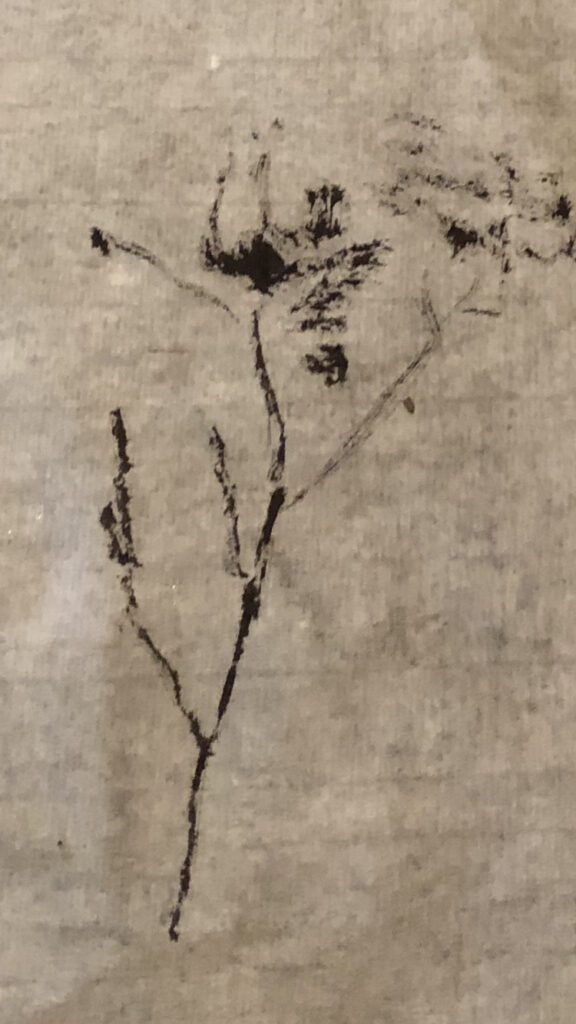
Below is a fingerpainting with the crushed ripe berries, directly onto the scroll. as well as an image of a rubbing of a branch of the tree.
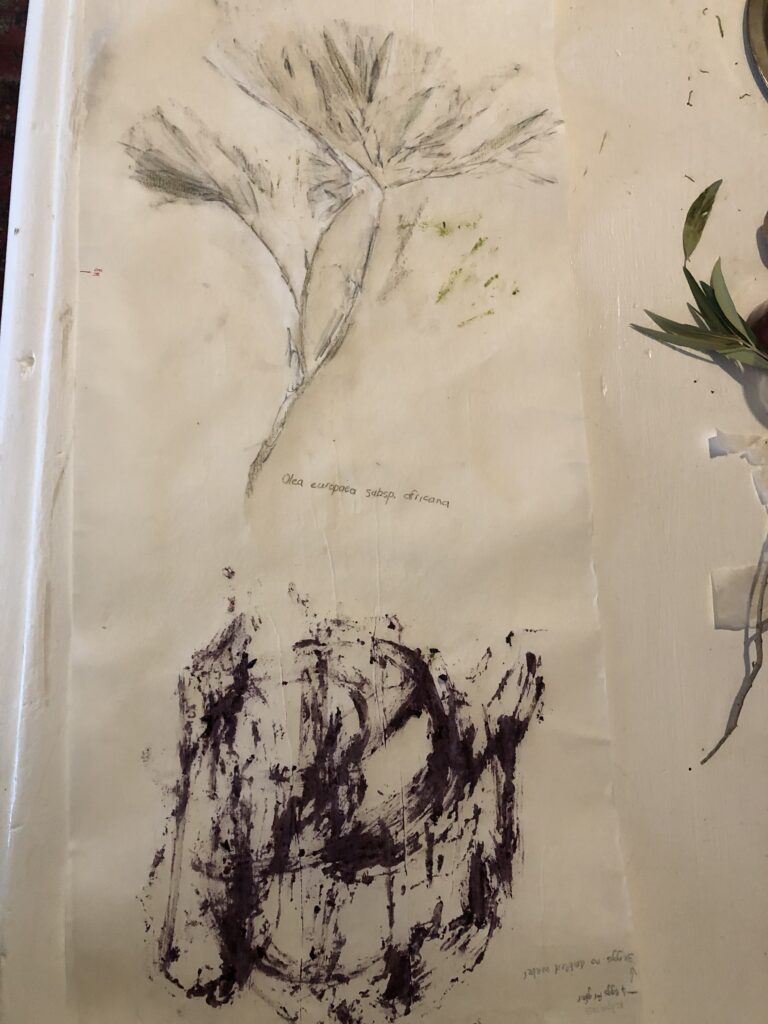
Whilst walking I have been thinking about the act of rubbing or frottage, and wondered if it has the power to force the audience to use their own imagination and see the real thing. When I looked at the work of artist Qu Leilei and in the context of his philosophy, rubbings becomes my ‘unsayable’ mark, because it is a direct indexical trace of the object, yet it remains hauntingly abstract. I feel this is a physical dialoge with texture in walking. With these ‘drawings’ I say that I touched this, and it touched me back.
The rubbings on the Krupp rail or the bark of the wild Olive tree shows more than the object, it shows the texture of it’s survival over many years. I also think as a drawing being monochromatic and grainy it asks of the viewer to reconstruct form in their mind. They see a ‘ghost’ of the rail, and their imagination fills in the missing meters of the rail.
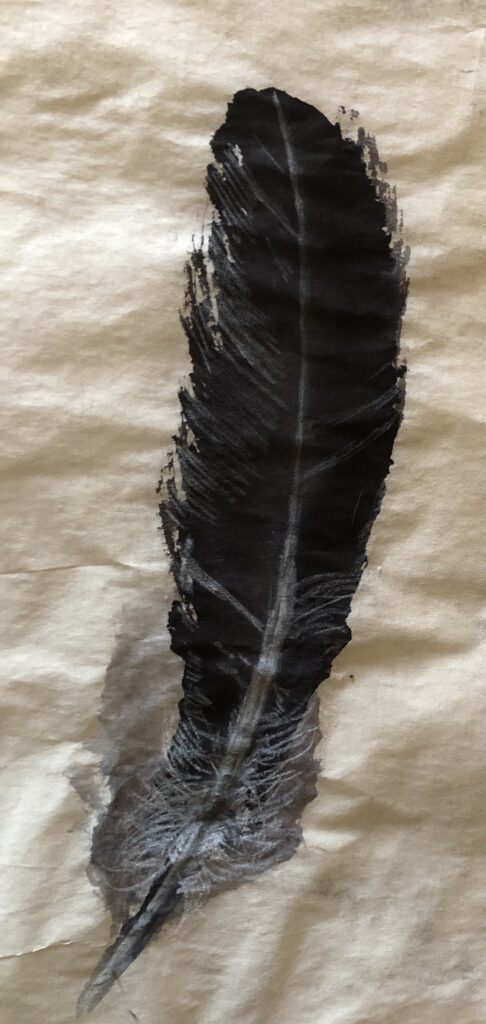
After seeing the method of aritst, Qu Leilei, I look at the surface at the back of the scroll as the ghost. I also think it implies the absence of the tree I found, which is still growing alongside the trail rail. I can also refer to it as the shadow of the tree. The more I do it the more I see it as a bridge between the ‘forensic hand’ and the ‘shadow truth’. The images below will share this ‘two-sided truth’.
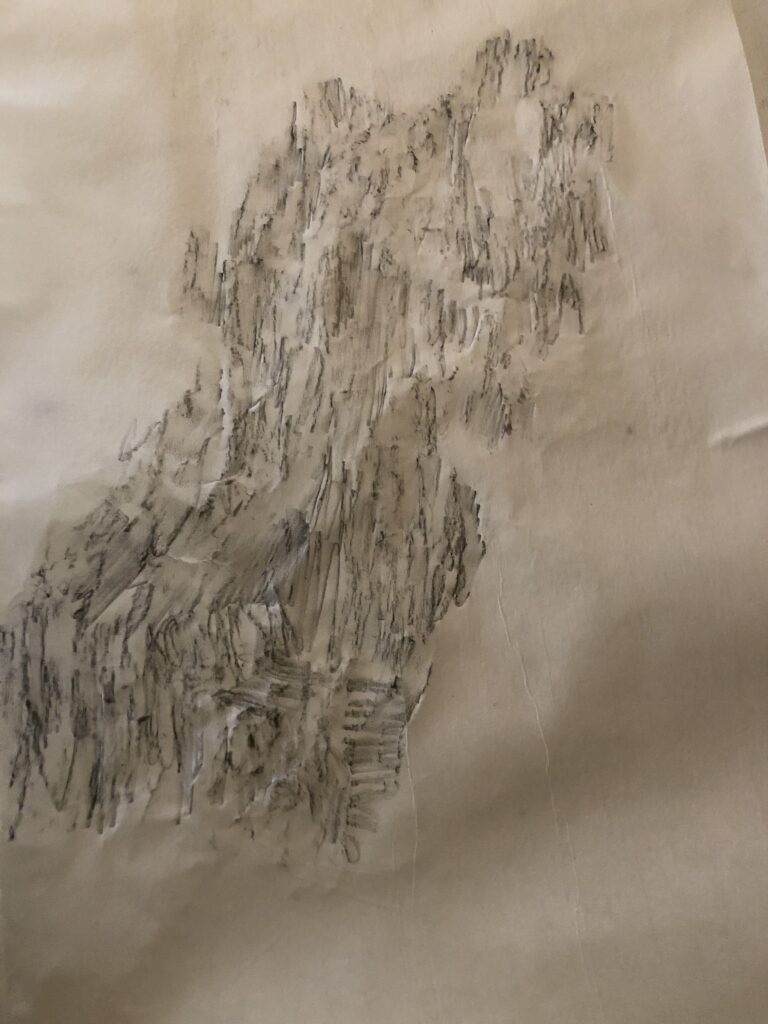
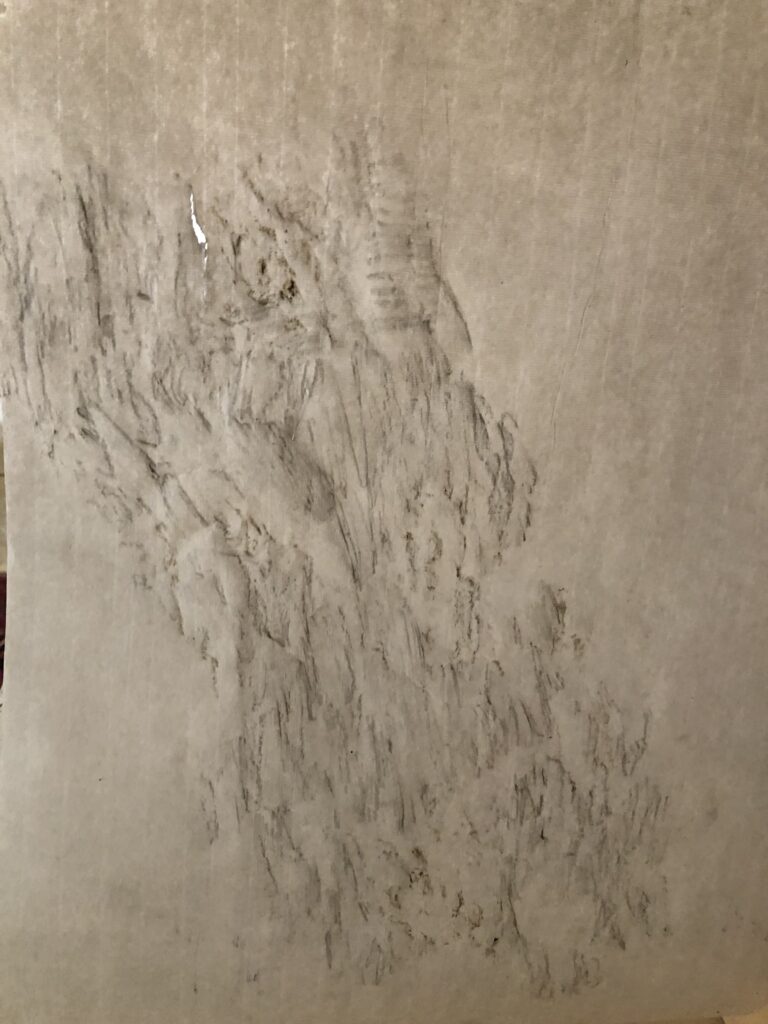
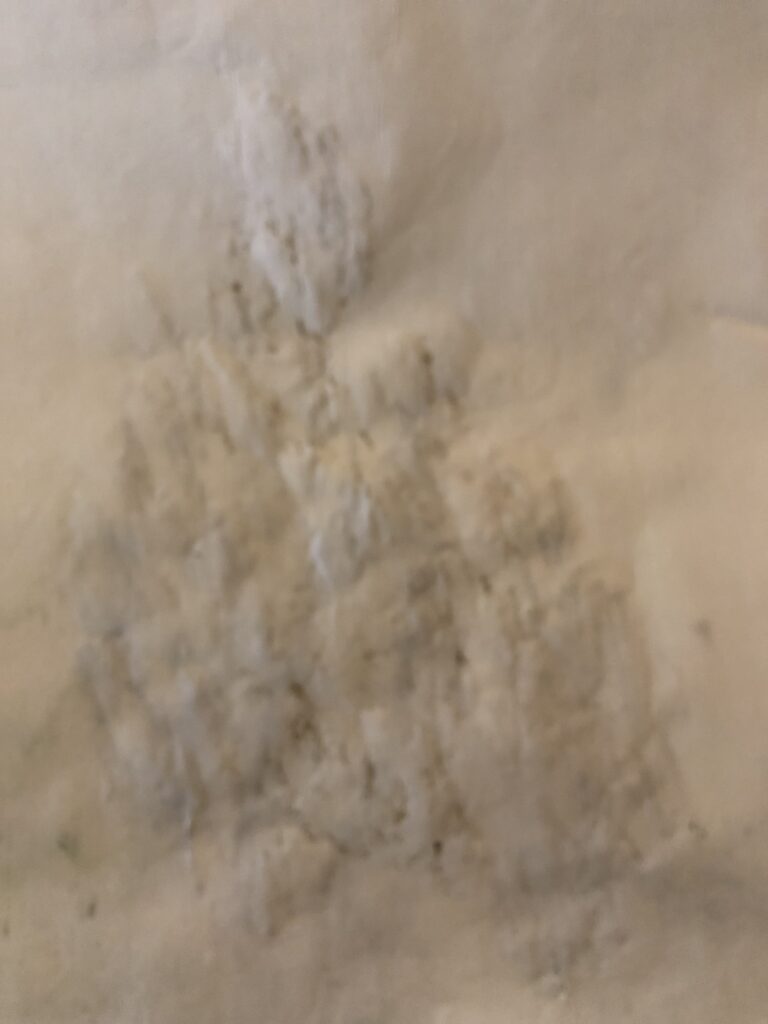
In the “active imagination”( My Jungian part), touching the object through the paper is an act of intimacy. The rubbings are a tactile memory of my walk, but also a point where the investigation becomes an embrace
The 10.55-metre scroll is scaled against the standardised length of early rail sections, yet remains slightly out of register—its length shifting through heat, handling, and movement, closer to a lived measure than a fixed industrial unit.