The recent blogs I have been writing are part of my way to position walking as part of my artistic practice. I learned that this practice has become relational and ecological. I became aware that I want to trust the duration of the walk rather than the finished “picture.”
There is a specific kind of artistic ‘high’ that came when I stopped trying to make the work “correct” and start making it honest, messy and often melancholic. I have learned that to wait for inspiration and perfection is not the best choice; I just have to do the work, even if it feels flawed. In my case, this closes a gap between taste and craft. So it is about letting go of perfection and choosing volume so that I get closer to the real and authentic expression I need. In making the work, I have to focus only on the section in front of me and trust that the 10.055m rail lengths will provide their own rhythm.
My walk along the rail became a walk into the psychology of a landscape.
I am wired to find the beauty in the missing pieces. Jung suggested we must eat our shadows to become whole; on this line, I am feasting on the decay, and it is a beautiful noise. As soon as I stopped looking for the glory of the old steam engine and started looking for the shadow it left behind, I felt energised by the project. I am drawn to the things that are no longer there.
I want to record the paint and rust that peels like skin and the Genet’s midden where garra ferments in the heat. Can this become the ‘Prima Materia’ in my work?
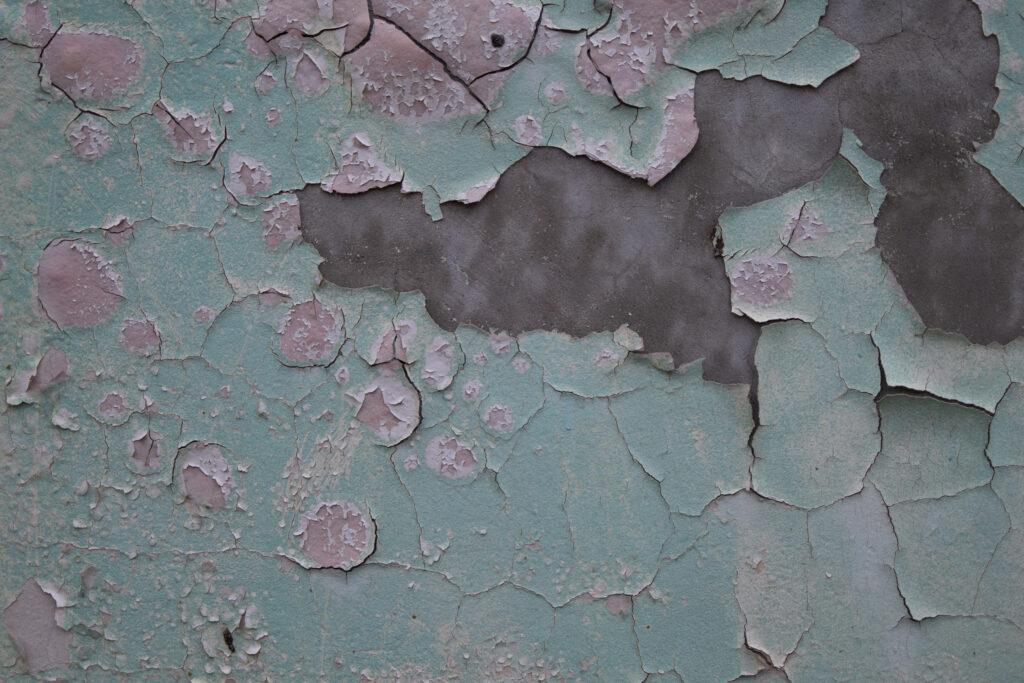
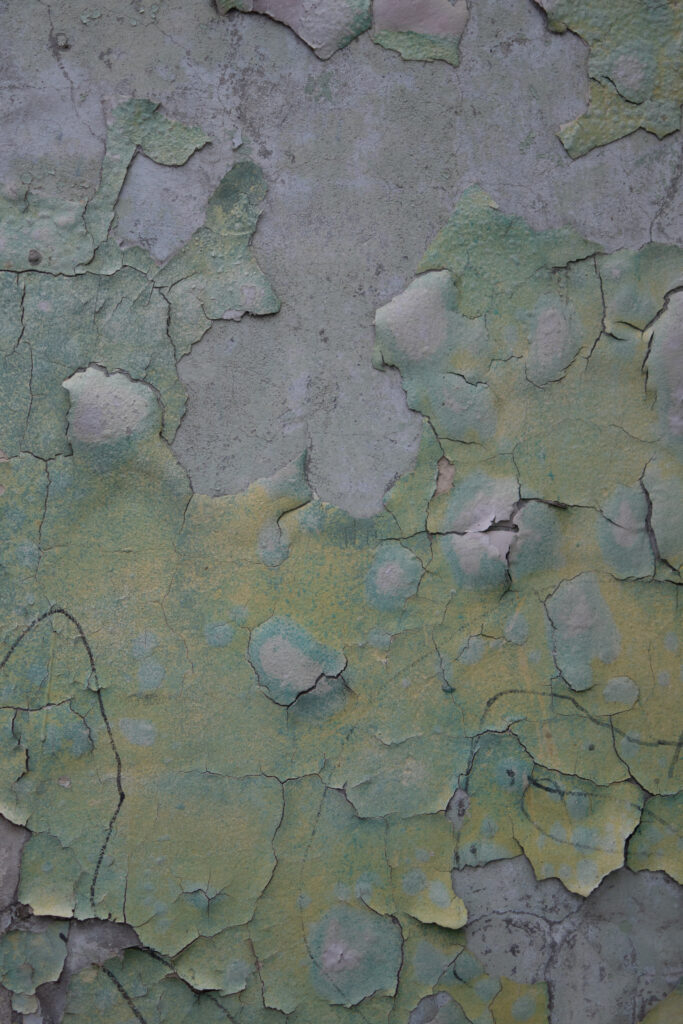
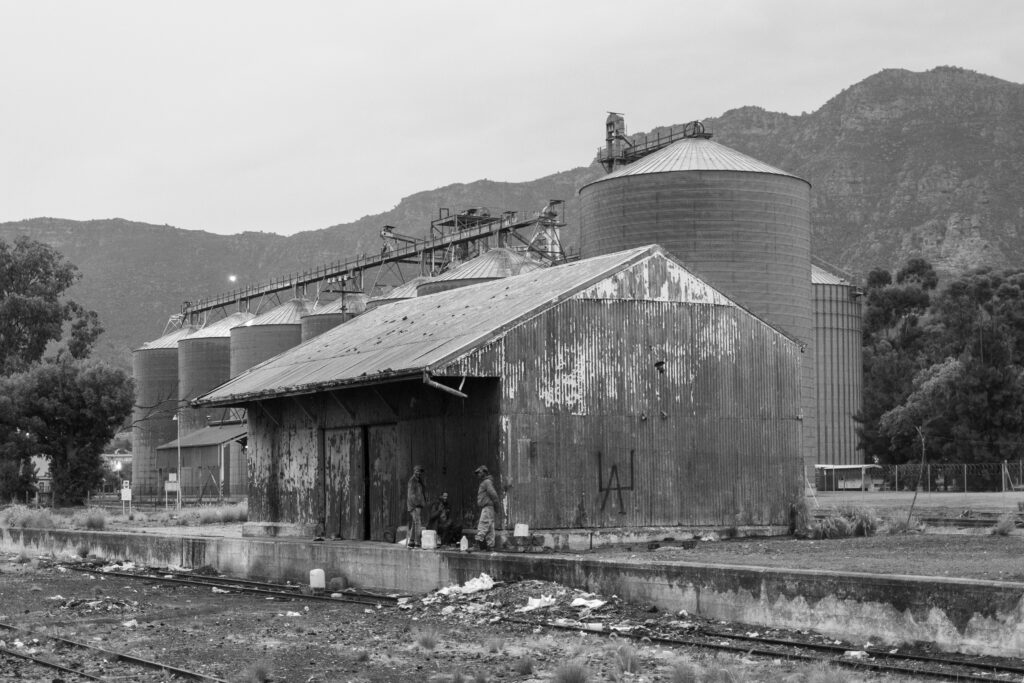
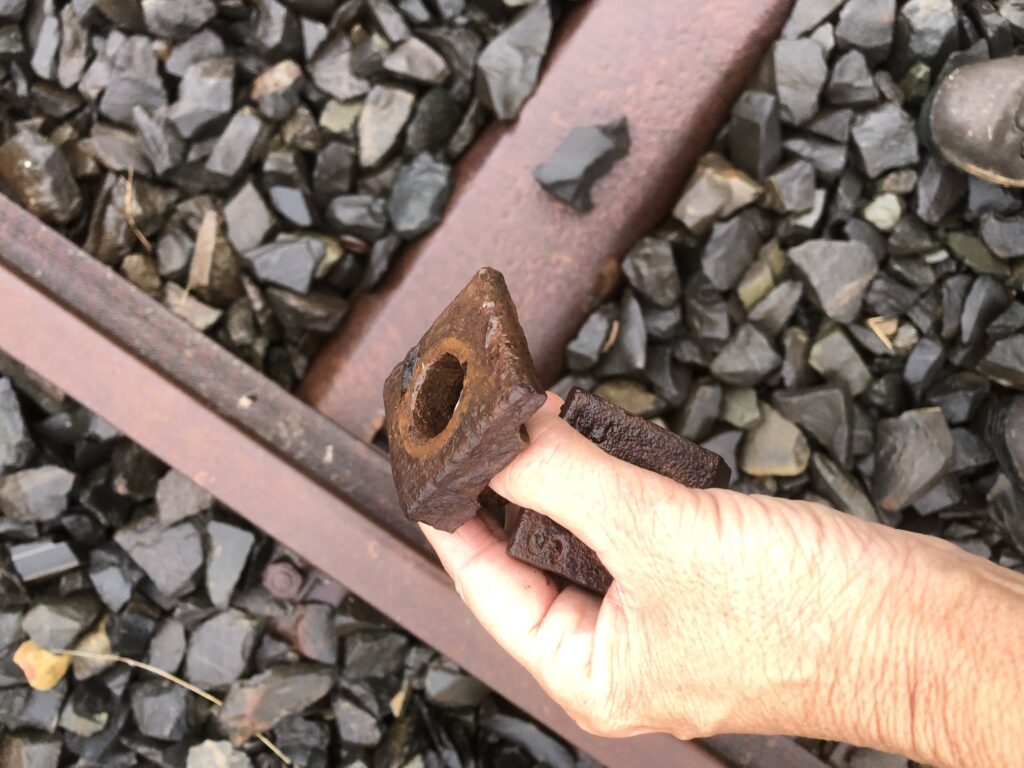
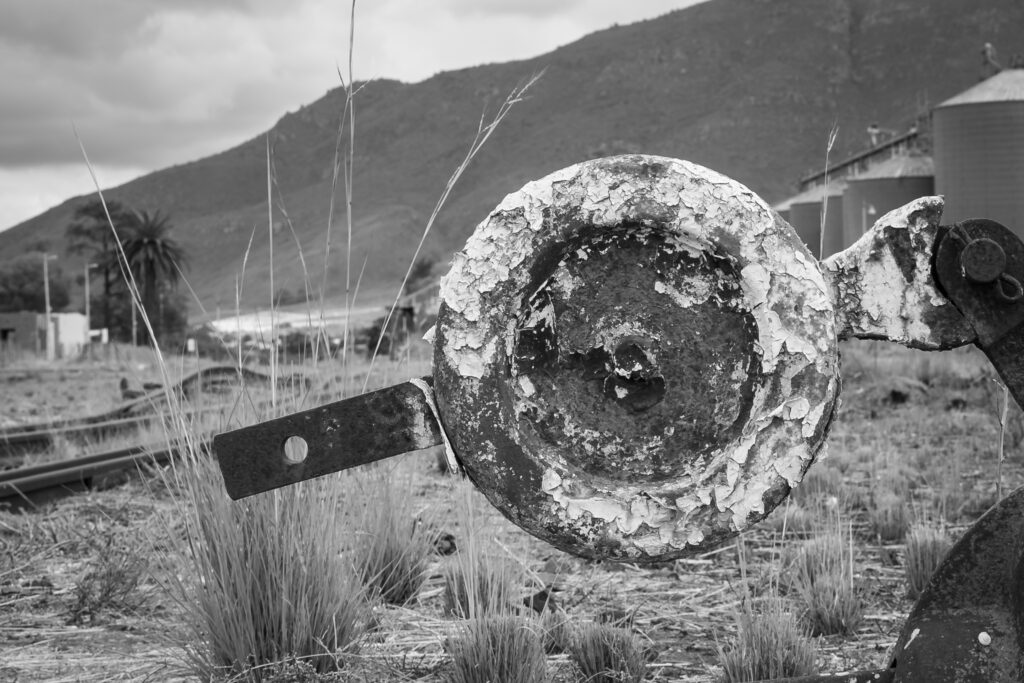
As I walk the Ghost of this line, I envy the order, the precision and strength of the steel rails, but there is a vitality (as in alchemy?) in the way nature has been reclaiming it. (which I think this rigid world could never have) I discovered that decay is a form of life, and rigidity is a form of death.
(In alchemy, the “Prima Materia”, or the starting point of the Great Work, was often described as “filth” or “dung.”).
Notes to start with the scroll
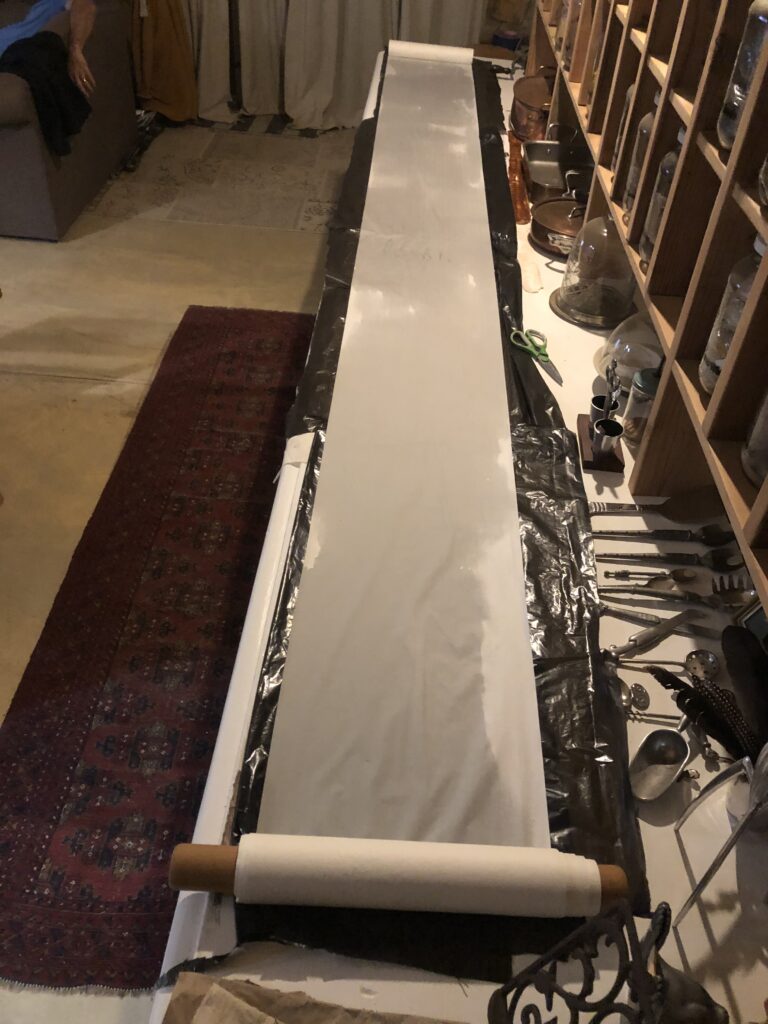
14 April 2026: The scroll is now ready to use – glair is applied and dry. I have used the white of 11 eggs to make the glair. The total length of this scroll is 13.030meters. I have been looking at traditional Japanese scrolls and would like to follow some of the customary procedures and design ideas when thinking about how I will display the scroll.
I need to consider how to make the title strips (harifuda) and where to place them on the outside of the scroll. This will serve as an external identification label, and when the scroll is properly rolled, the harifuda remains visible on the outside of the cylinder. (Currently, I have pencil and red pen marks on the scroll to indicate length and glair batches.) I have ordered a red Japanese ink which will arrive soon. In the traditional scrolls, the addition of each owner’s seal to the beginning and/or end of a scroll was used to designate ownership, authority, and authenticity of that artwork or document. I want to use the Krupp seal on my work.
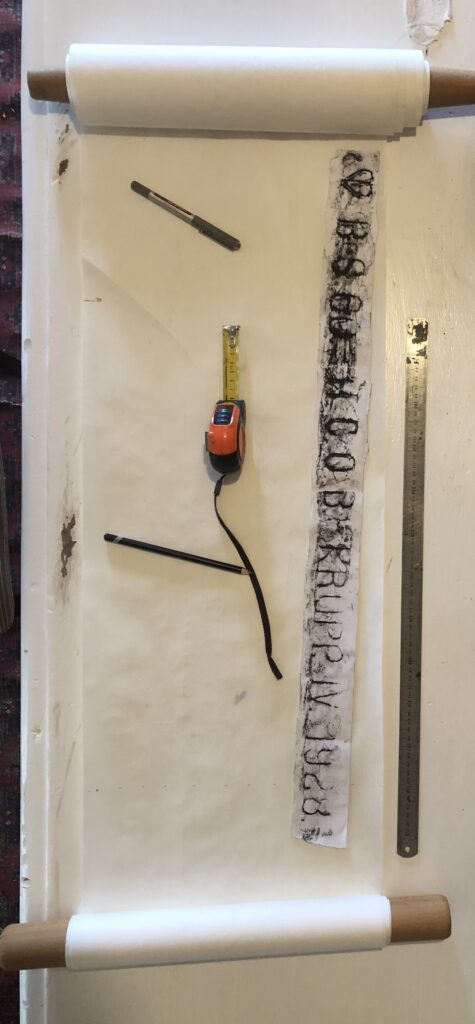
I cannot wait to start at the old abandoned station and see if I can take a direct rubbing of the wall. The cracks and flakes will create an intricate, map-like texture that mirrors the geography of the Swartland.
Confession: By relentlessly recording the 10.055m increments, I will burn away the ego’s need to be “special” and arrive at the authentic expression that was hiding under the expectation of starting this work.
The Shadow of the Shoulder: Walking as Privilege and Necessity (18 April 2026)
I am so aware of the current walking practices of labourers and poorer people in our area, who collectively walk many kilometres daily: to work, to town, to school, to shops, to friends, to church. I walk with the privilege of being a witness, but the paper and my thoughts now add a record the path of the worker. The 13.040 meters is not just my journey; it is a fraction of the miles walked by those whose labour built this line, but also the daily walks of the labourers walking the barley road-shoulder or the rail-servitude are moving through a landscape that was designed for the transit of capital (trucks, cars, trains), not for the safety of the human body. I feel I have to name this shadow of the South African landscape in my own environment: the structural inequality that dictates who walks for pleasure and who walks for survival.
In the Riebeek Valley, the lack of pedestrian infrastructure is a form of “spatial violence.”
When I started planning the walk, I had to consider my safety and plan around that. For a woman walking, a child walking, an elderly or disabled walking, or a labourer walking, “being moved from within” isn’t just a poetic feeling—it’s an act of scanning for threats. My bodily experience on the rail isn’t just about the scent of the Kaneelbol or the wild Rosemary; it’s about the tension in the shoulders. Can I say that I am “sharing” the space in a way that acknowledges the many walks of the local labourers’ presence as a reference to the primary users of the land?
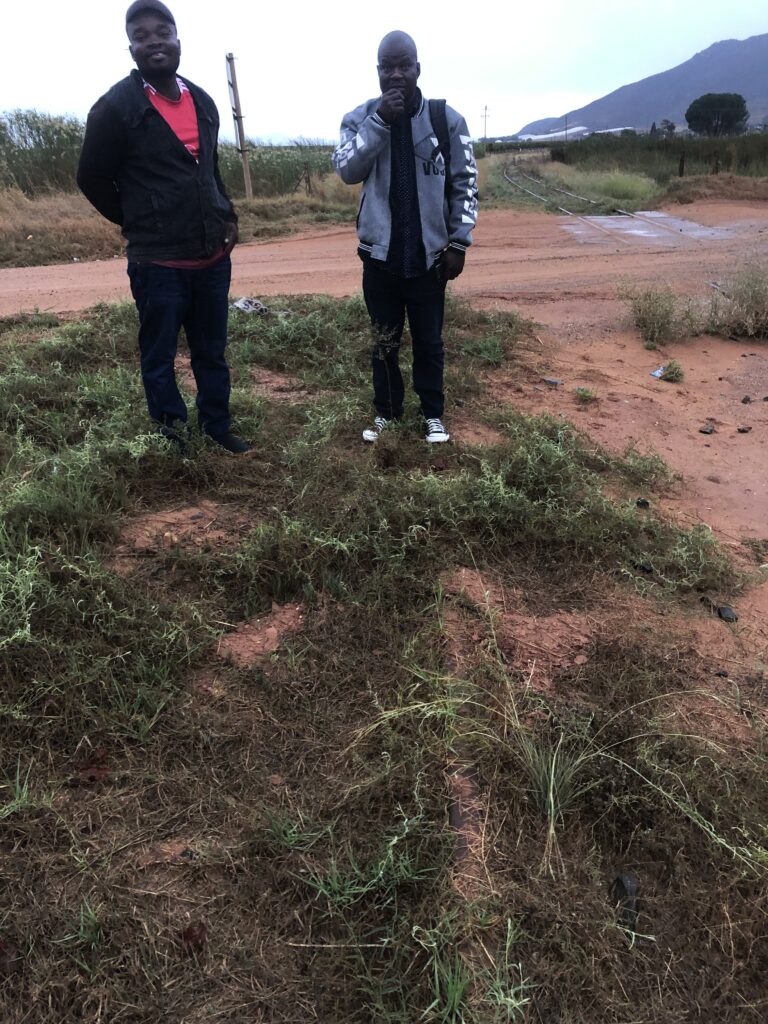
I am thinking of the two men I gave a lift to town last week on my way to my walk. I could add it onto the scroll notes: Passed two men heading to town; they have 4km left to walk. Gave them a lift and they shared that they have fond memories of taking the train from Hermon to Cape Town “ Does it share a specific history within my artistic archive? In the image below, they stand on the ‘ghost’ line, where I shared my story of walking the line with them. I also discovered they are from Malawi and have been working in South Africa for the last 20 or so years. They permitted me to share their story, as I also made a video of our conversation.
How might it feel to walk the line at night, or completely alone? I remember reading about an author who likes to spend time alone in the wilderness. She shared statistics of assaults on woman in national parks in the USA, it was shocking to read, but how does this compare to normal life in my own area?
19 April 2026: After my son made a drone video of the walk, I came back to this blog: From the air, the colonial design is perfect and straight. On the ground, it is a place of struggle and survival. My scroll is the space where these two realities meet. I would like my scroll not be a tombstone for a railway, but rather a census of transformation which recorded the beautiful noise ot the world reclaiming its own.
19 April 2026: Rebecca Solnit writes in her book Wanderlust: A history of walking, that the mind moves at about three miles an hour (roughly 5km per hour). Anything faster (cars, trains) outpaces our ability to “process” the landscape. My scroll should be a ‘Wanderlust’ of the Riebeek Valley. It is not intended to be a map of where the rail goes, but a map of where the mind goes when it follows the rail. By building the box for the scroll and placing the harifuda, I am creating a home for these thoughts, ensuring they don’t blow away in today’s storm.