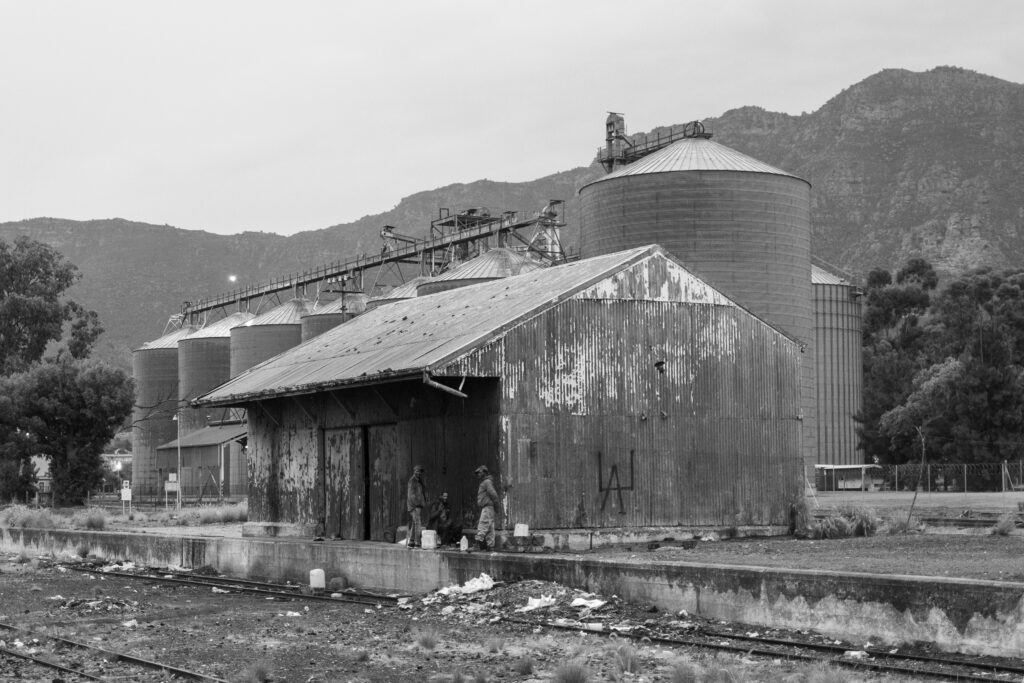
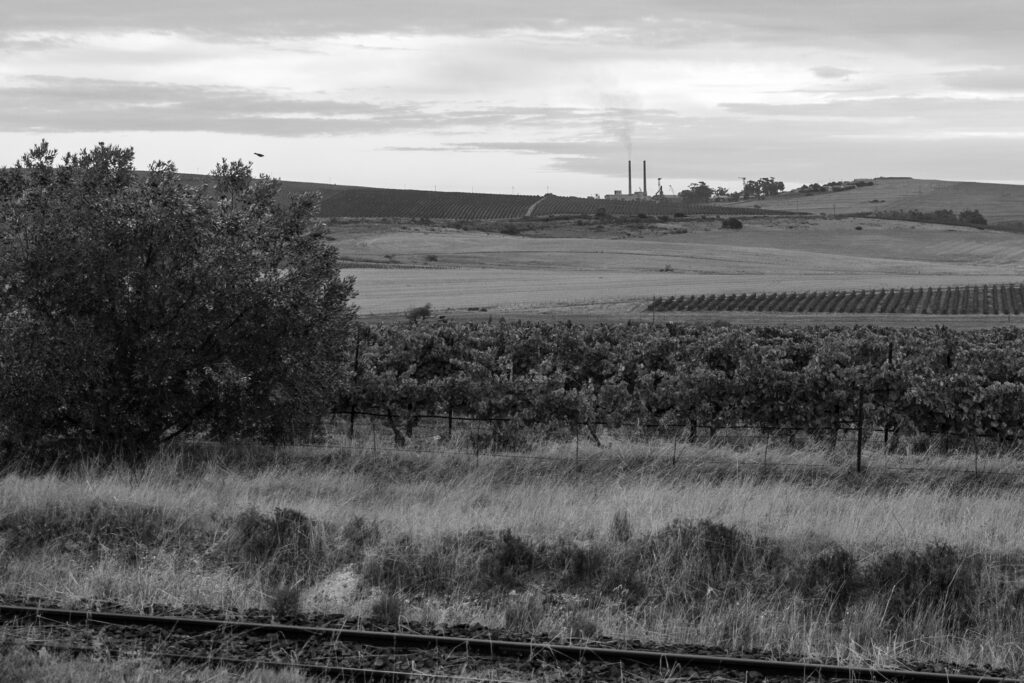
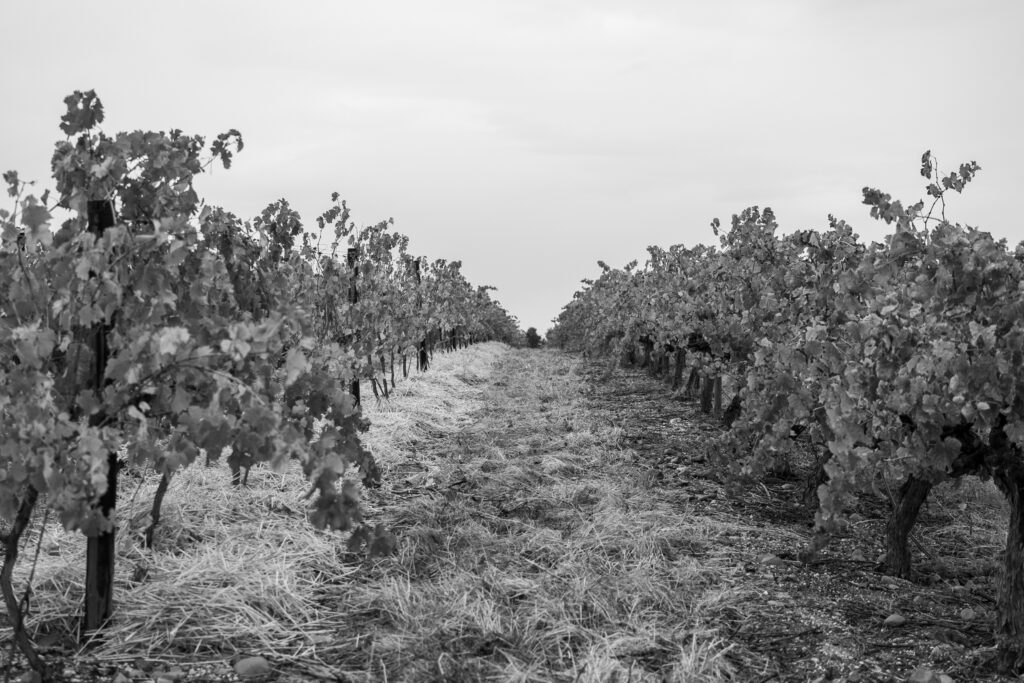
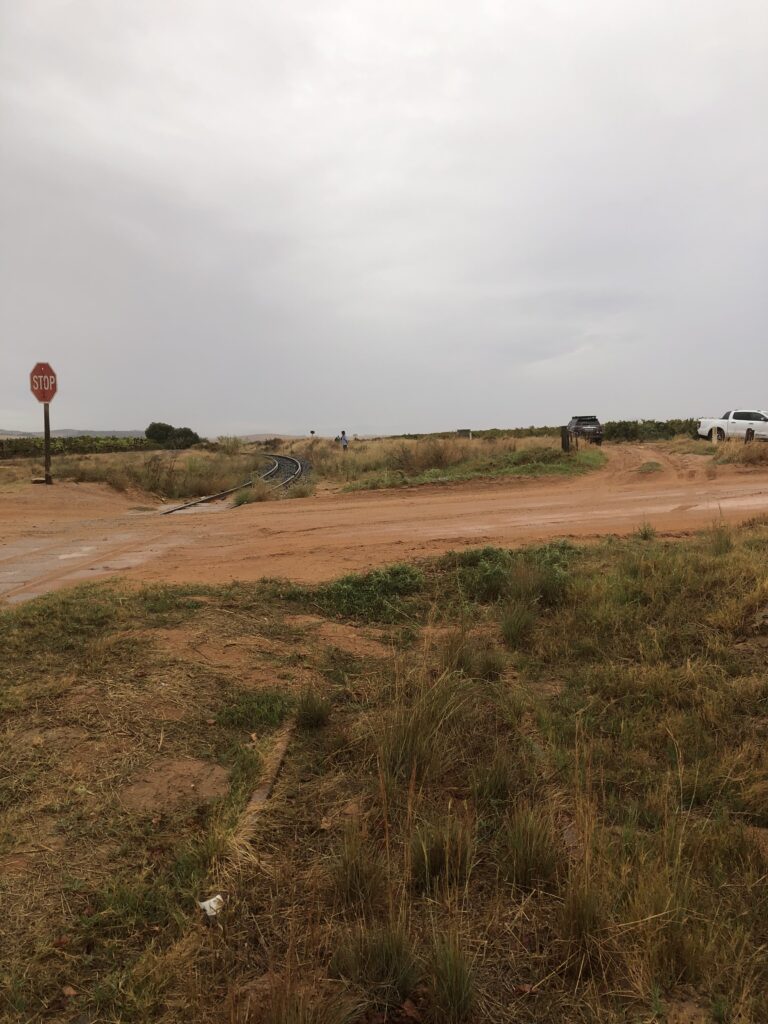
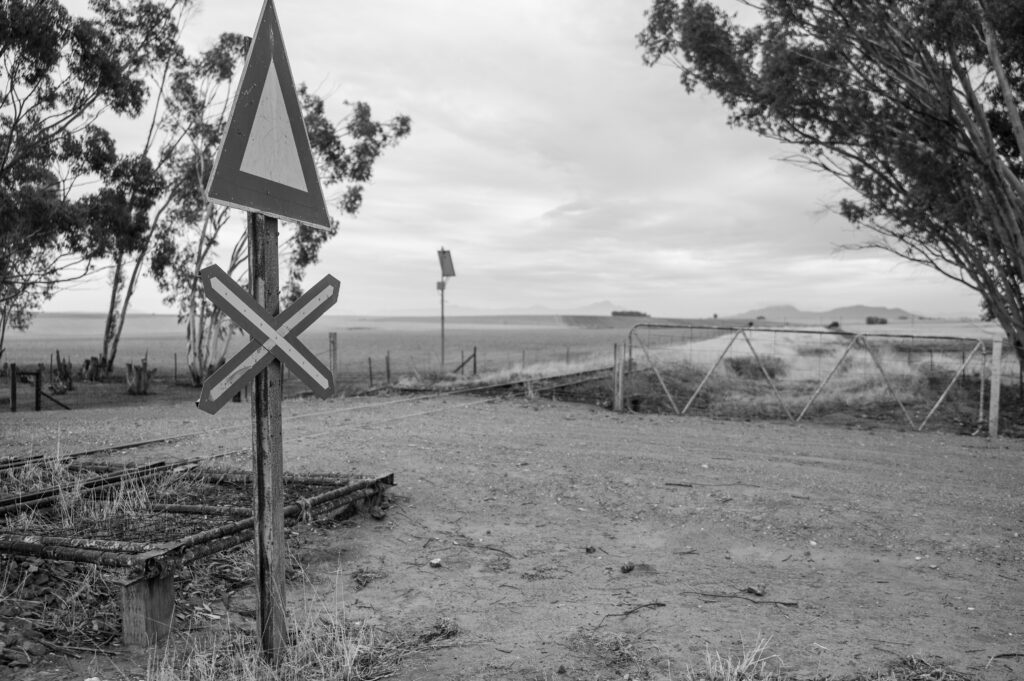
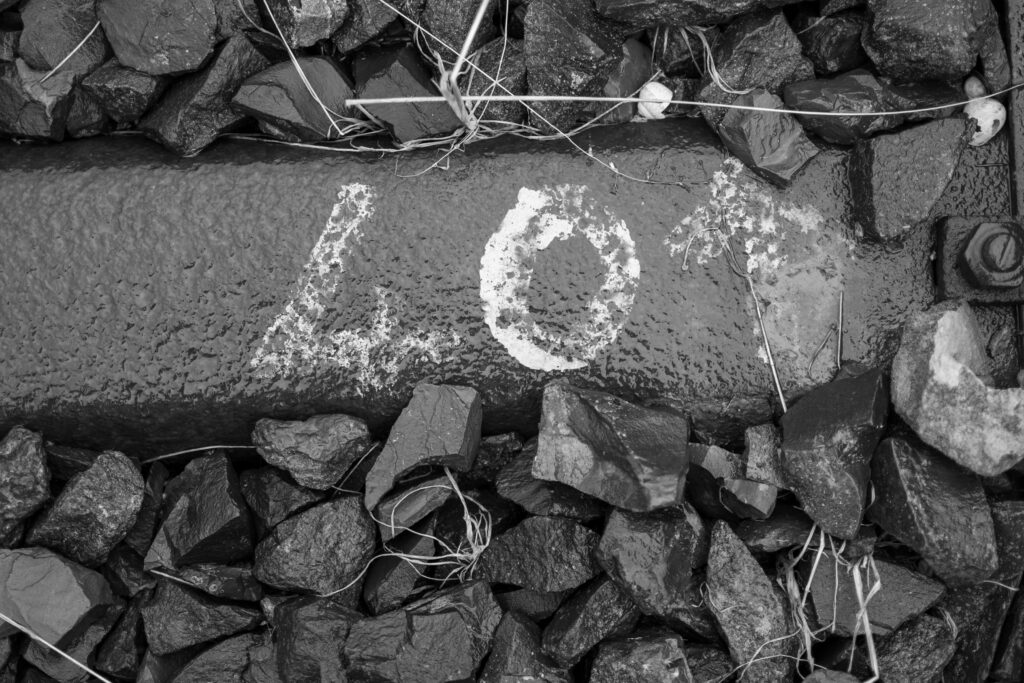
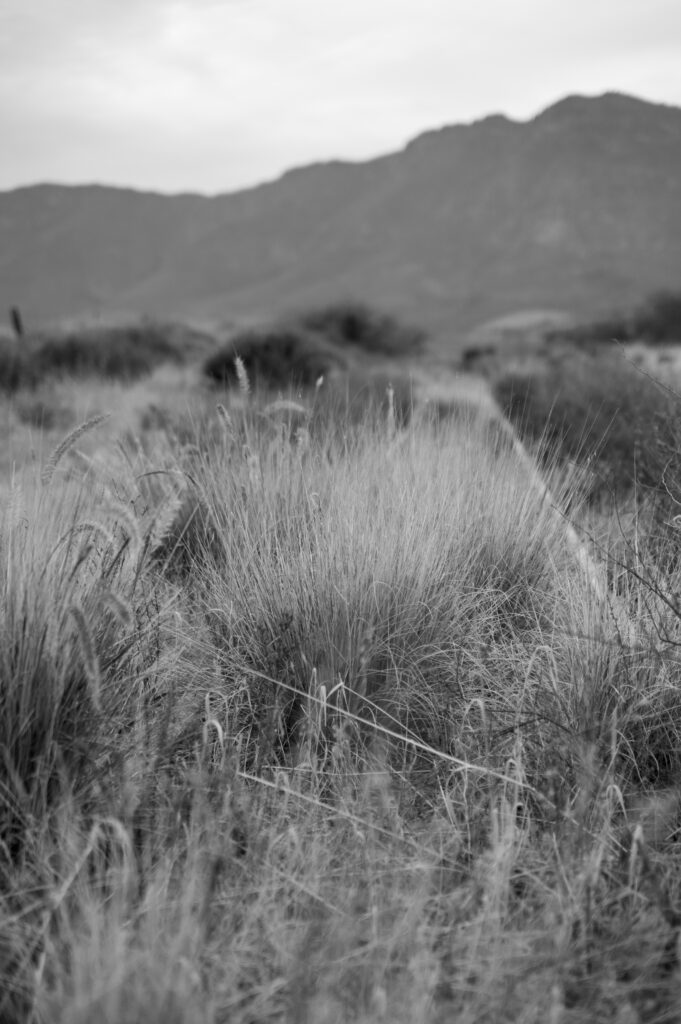
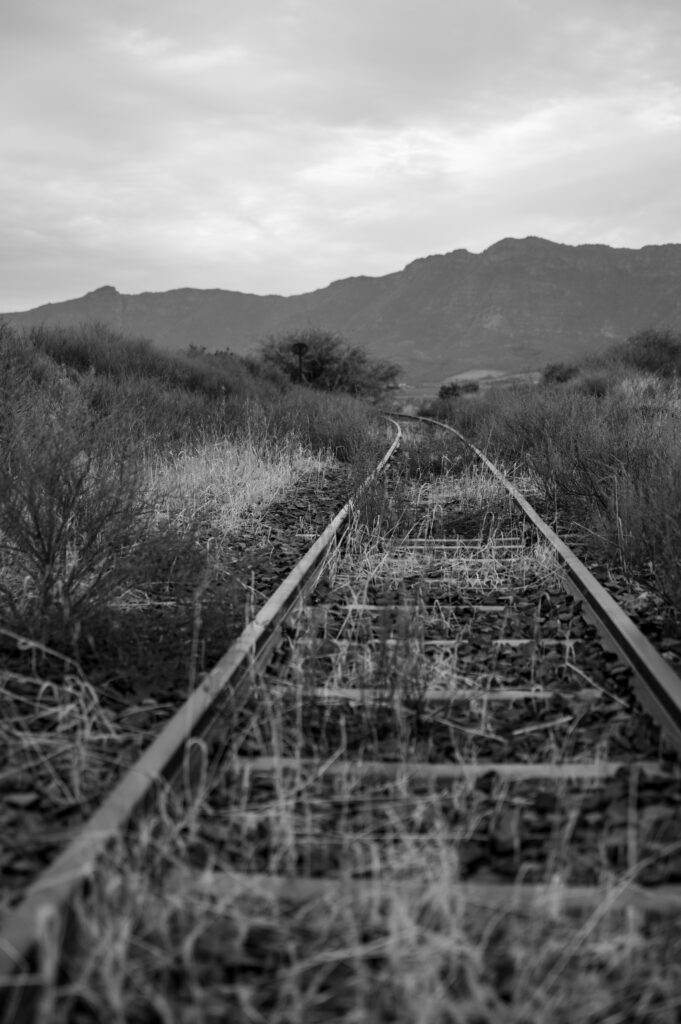
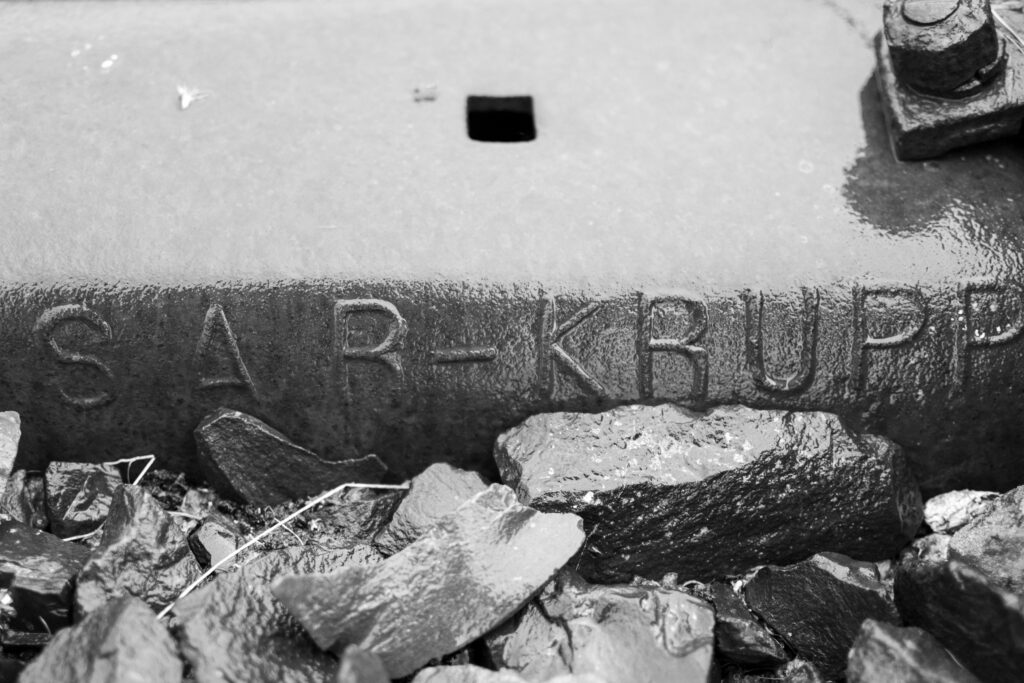
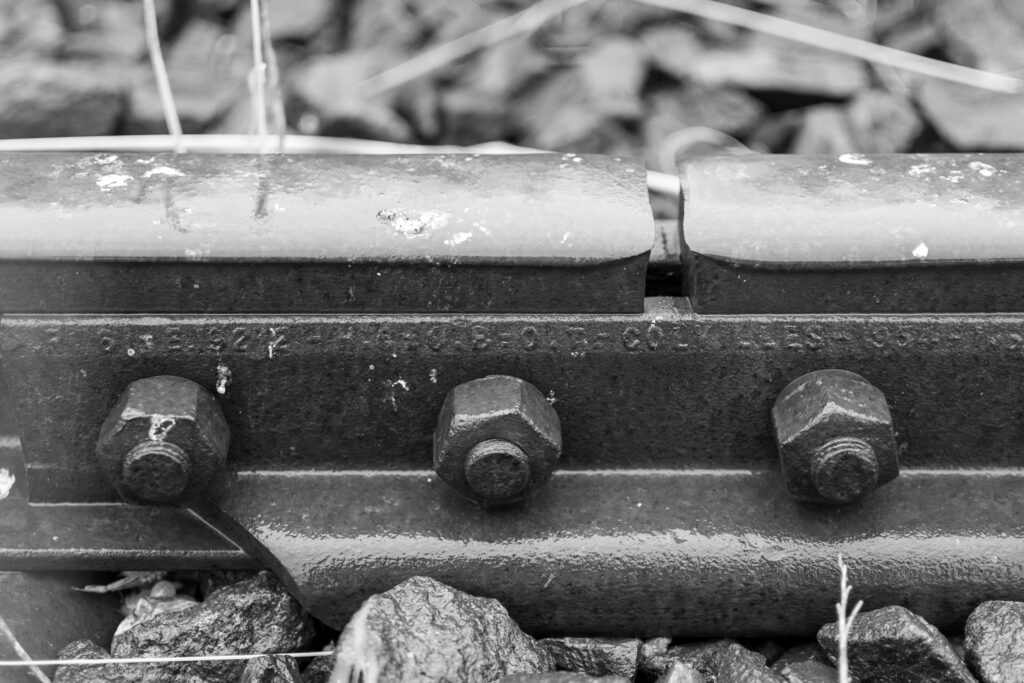
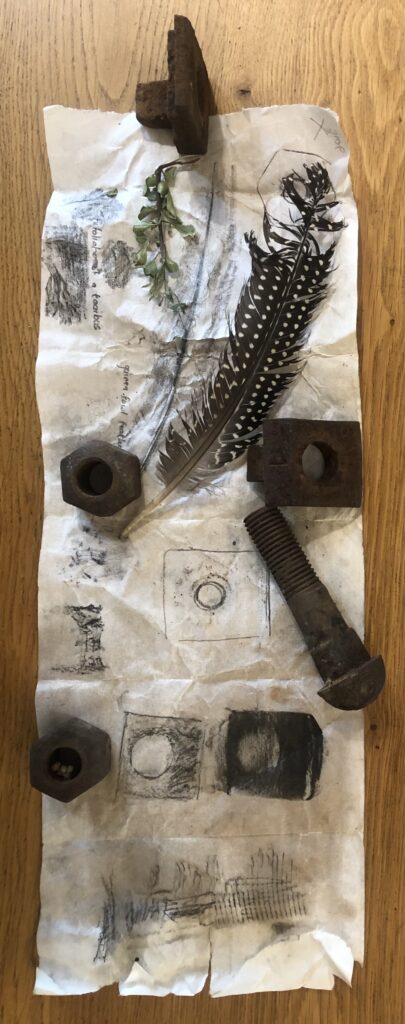
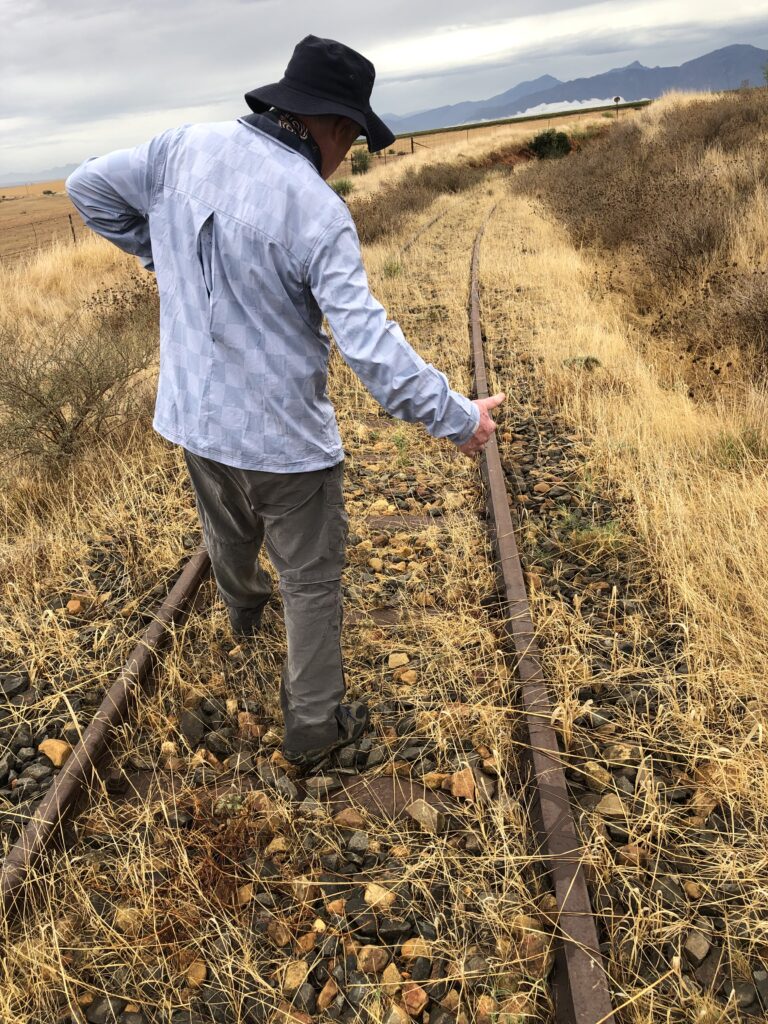
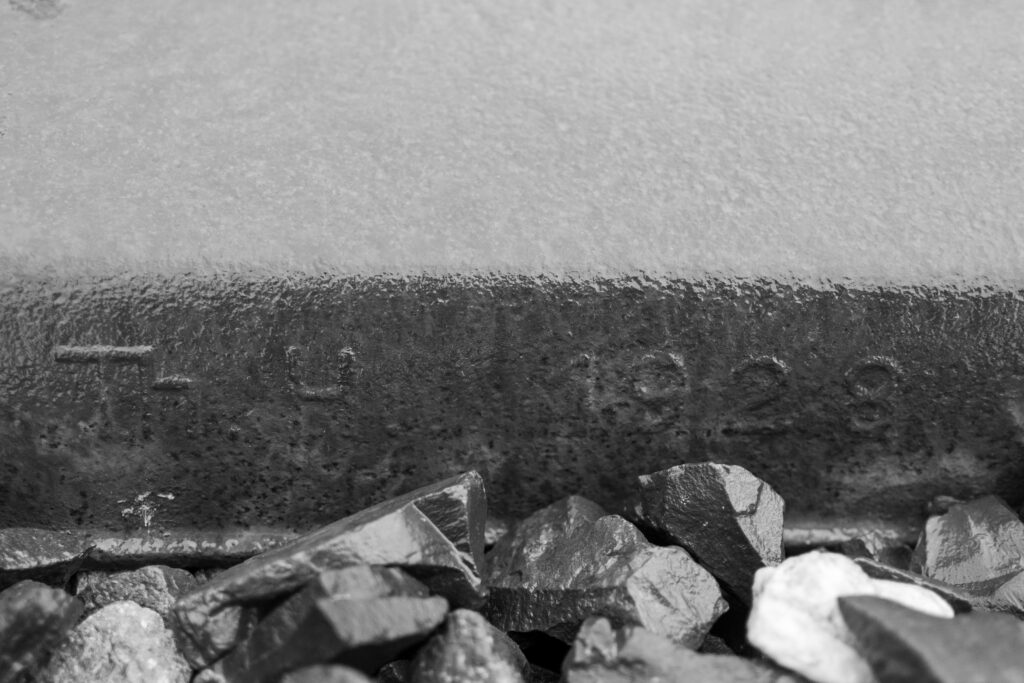
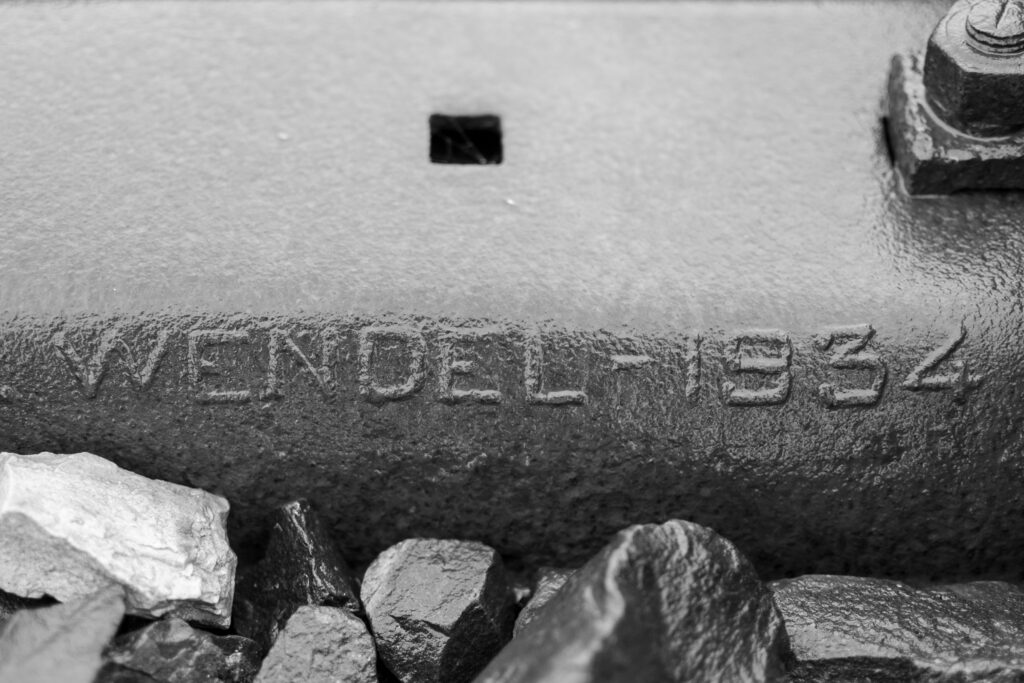
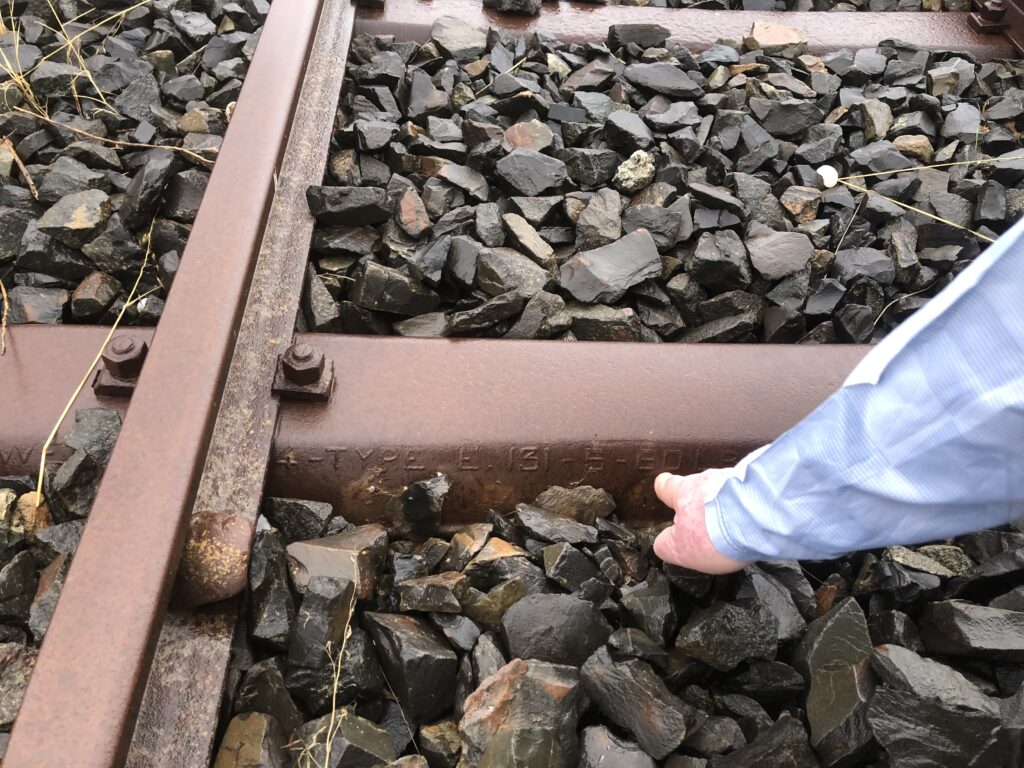
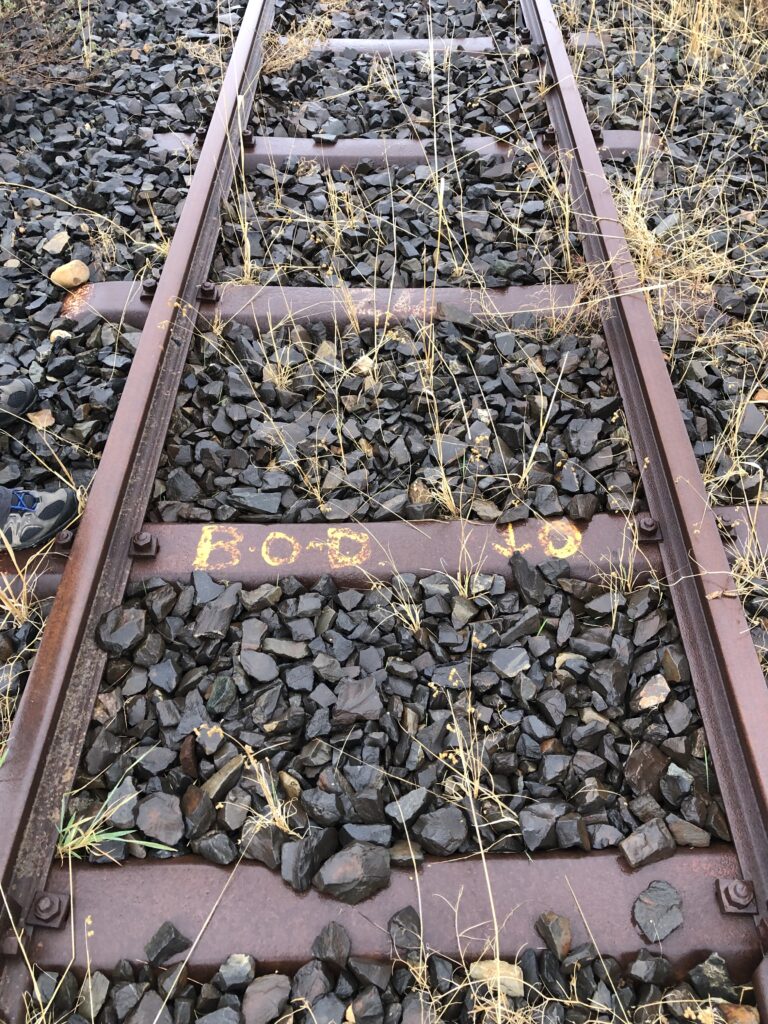
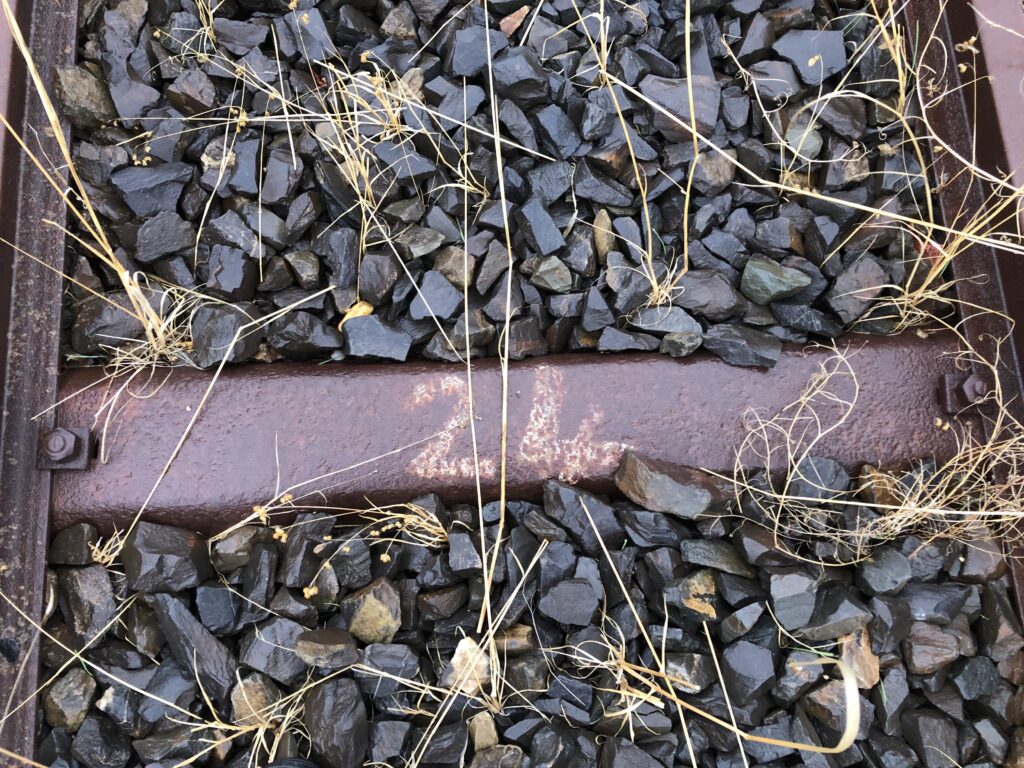
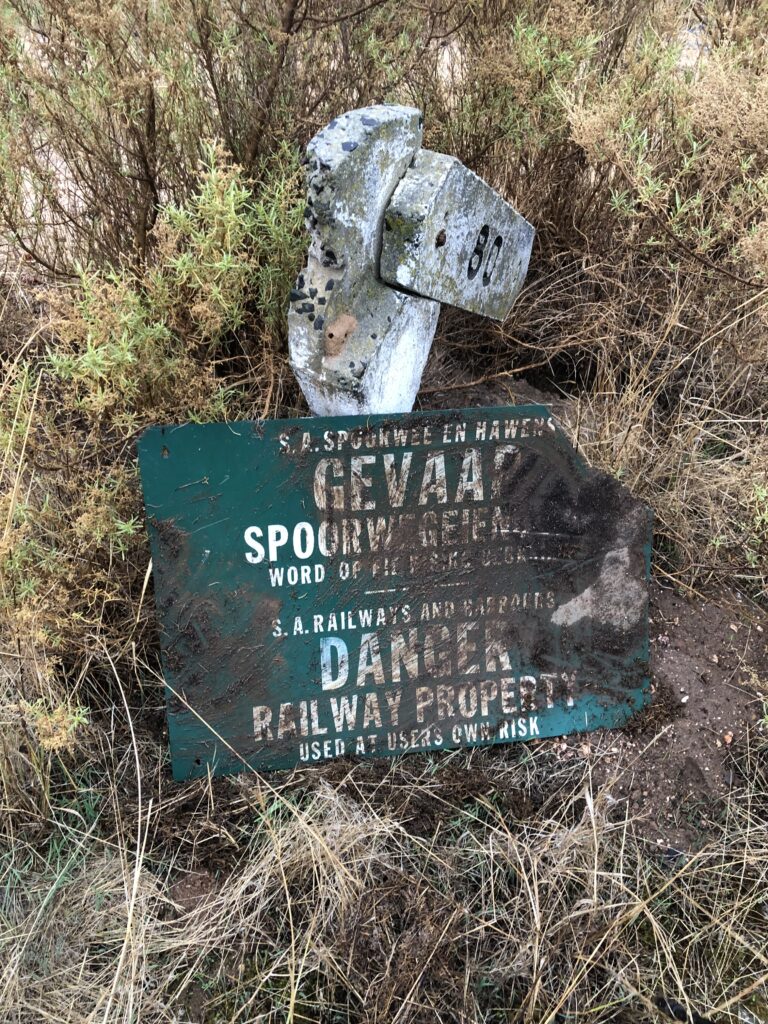
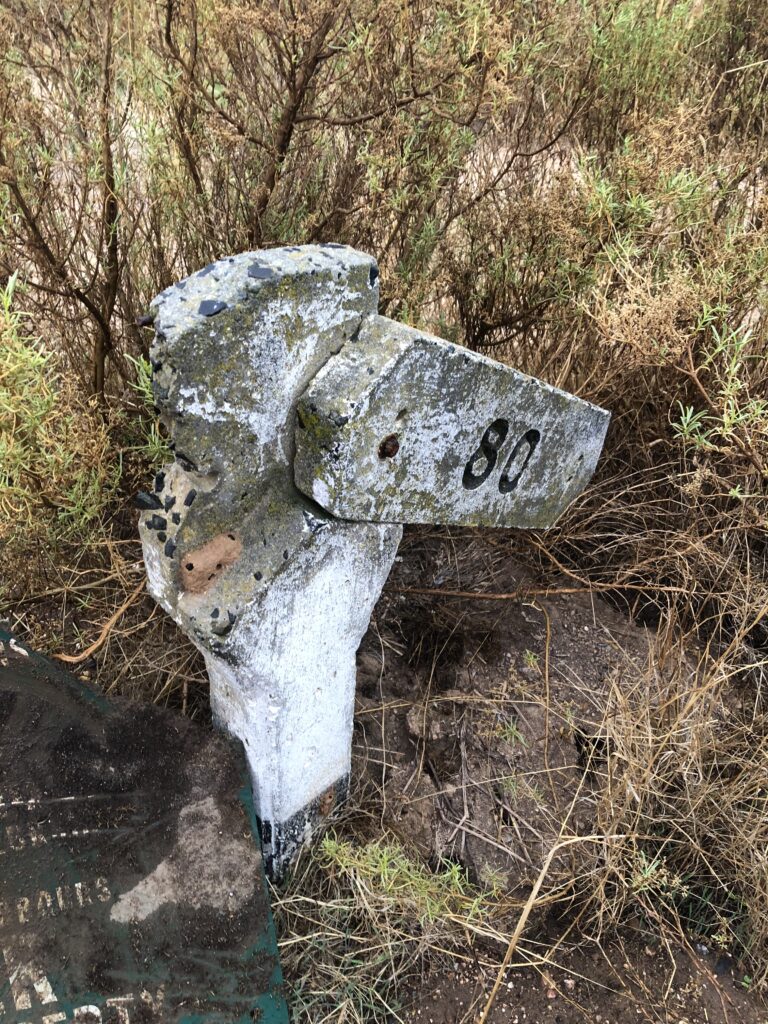
The above monochrome images belong to Maarten Venter (a photographer and friend), and me, who added the colour images, taken with my cellular phone.
Saturday 11 April 2026:
The walk was scheduled to start at 07:30, but (again) rain fell overnight, and we suggested rescheduling, but Maarten, a local photographer and friend, had other plans – he wanted to do the walk in the rain. We trusted the weather forecast, indicating the rain should stop soon. I was surprised to find fellow walkers from town, insisting on walking along – persistent to walk (Dave with a recent knee replacement, to mention but one reason to stay in bed on such a gloomy Saturday morning)
When Maarten later shared his photos of the morning with me, I could not help but be so grateful we took the chance on the weather and did the walk. We agree that these images can raise awareness about preservation and conservation. As walkers, we are privileged to take in the views of this beautiful landscape and reflect on how the rail was once an important lifeline for farmers. As we walked, I was more convinced that it is actually still very much alive – we found animal traces, overgrown parts filled with grasses/trees and plants. An owl watched us from the overgrowth, and a grey duiker crossed our path, all reminders that this forgotten corridor is very much alive.
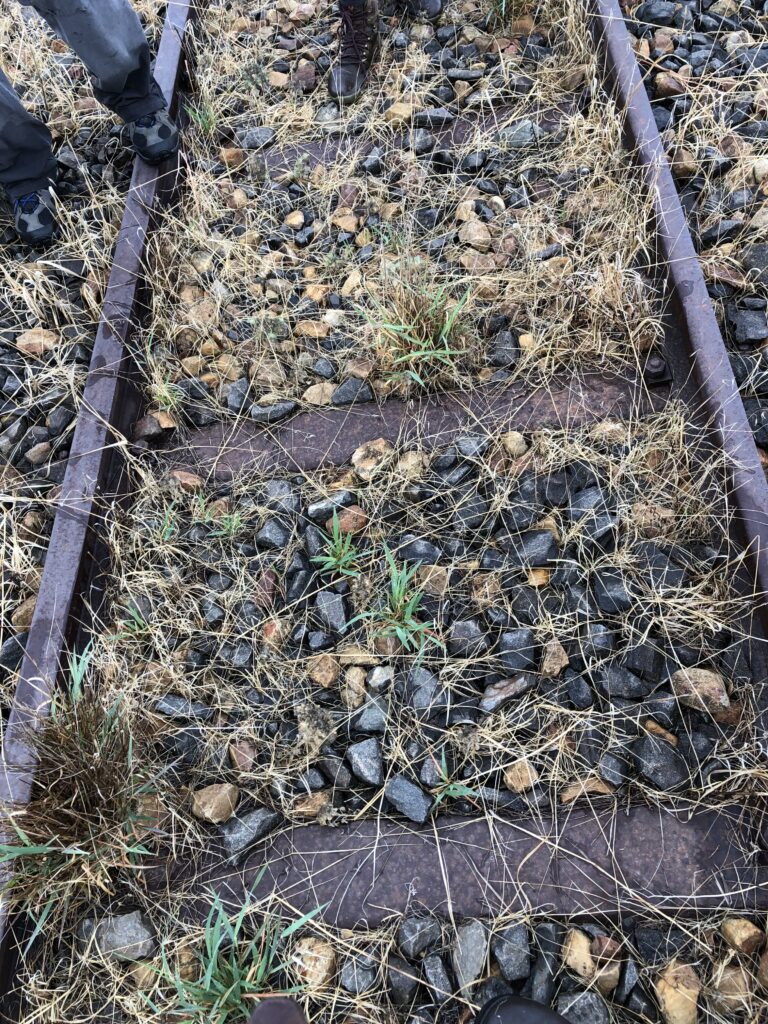
The rails were too wet for rubbings today, but the moisture brought out the deep, dark history of the steel rails: the archive is growing. Barry helped me to measure a rail – we found it is 10.055m in length. This “industrial seam” is shown in the last image of the group photographs below. I would like to work with a 10.055m scroll and started preparing the scroll to take it along on the next walk. My friend Maarten shared ideas around Naturalia. I understand that that is the moment the machine stops, and the earth resumes. On the Knolfontein line, the 10,055m rail is no longer a path for engines; it is a skeleton upon which the Swartland is growing a new skin. Later, I learned that traditionally it would have taken a gang of 12 to 16 men to lift and “walk” a single 10.055m rail into place.
I carried some test trips of my scroll paper, covered with egg glair, and made the following little assemblage of the walk back in the studio. Here are bolts, screws, feathers, and plant material rubbed into the scroll paper I plan to work with in the next few weeks.
It is so that the same hand that recorded the hexagonal bolts goes back to the studio and record the fragile geometry of a Guinea Fowl feather. The archival duty has shifted. I am no longer just recording a railway; I am taking a (biological)census of the residents who stayed behind. I became aware how nature is reclaiming this rail. I am gratefull to the ones walking alongside – they picked up little details, shared valuabel insights and info and became part of my inspiration to continue this walk.
In the end, the ‘Invisible Line’ is not empty. The hand that records is now writing the names of the owl and the duiker. We are witnesses to a silent takeover—a peaceful reclamation where the biological present is slowly, beautifully, burying the industrial past.
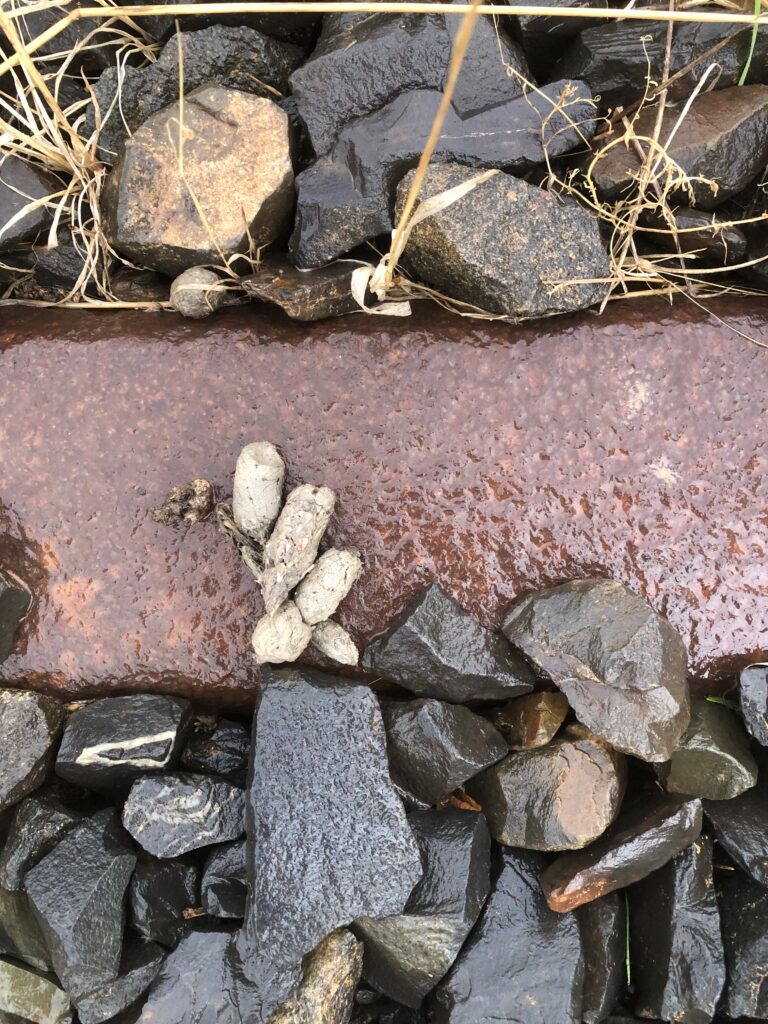
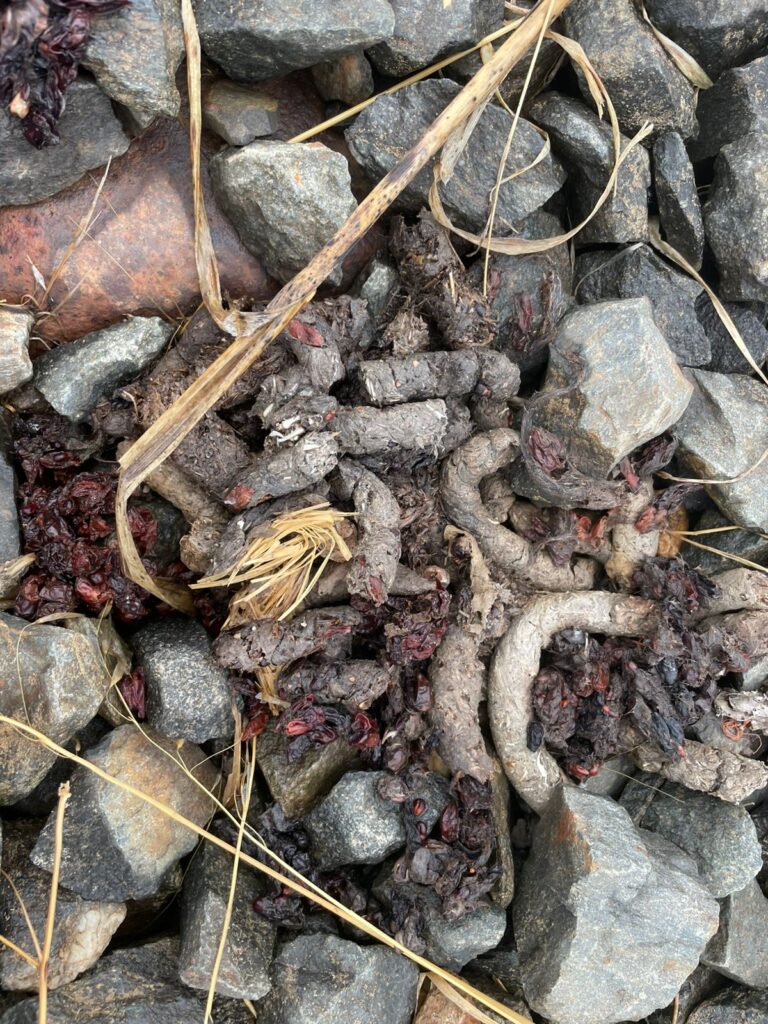
Around my experience of looking at the rail, the landscape, it felt as if there was a moment when the “vibration” changed. It was almost going from the hard steel to the “soft” evidence—the feathers, the mongoose scat and gennet (?) still need to identify the heap/latrine site as shown in the image below, the wild grasses, plants, the owl, the grey duiker, and other remnants of wildlife, along the way.
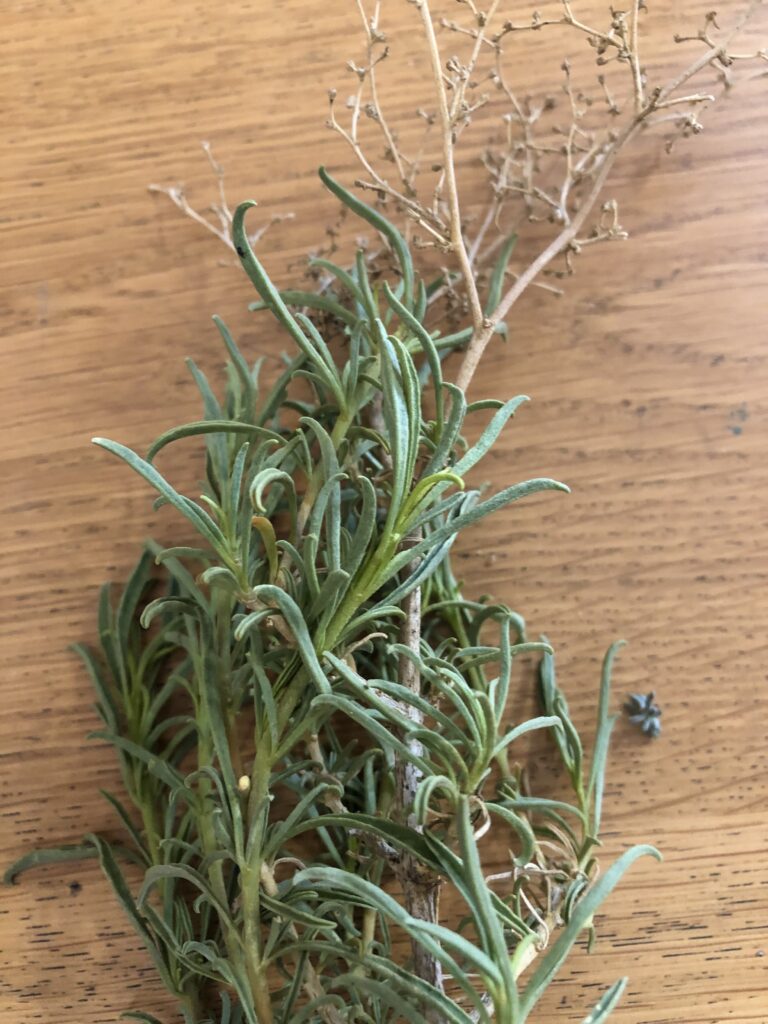
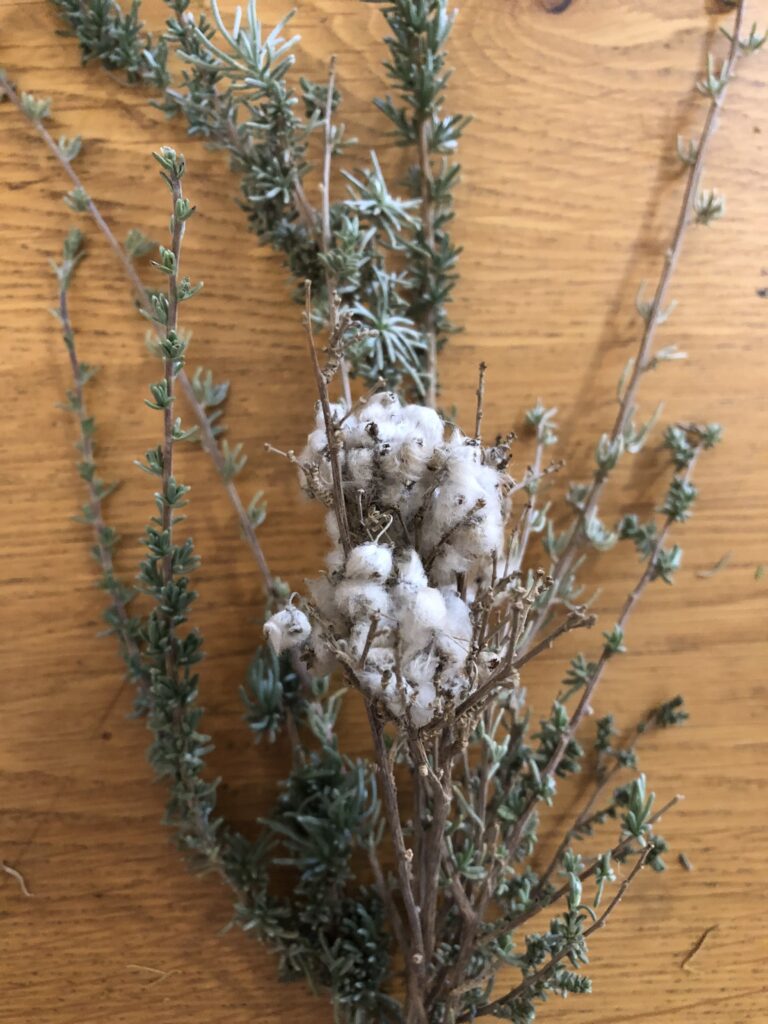
Above are the plants I really enjoy, indigenous to the Renosterveld ecosystem: Eriocephalus africanus, locally known as Kapokbos or Wild Rosemary, and Pelargonium lobatum (Kaneelbol / Cinnamon Bulb). Both are aromatic plants; when you crush the leaves between your fingers, they give a pleasant herbaceous scent. The Kapok bush is also covered with white, fluffy bundles, why it is also called Kapokbos (reminds of snow). I learned that the early settlers used the fluffy seedheads to stuff pillows and mattresses. It was also lovely to hear and see birds in these bushes, though they moved away from our presence. The Pelargonium has a distinct cinnamon scent and the flowers have unfortunately dried.
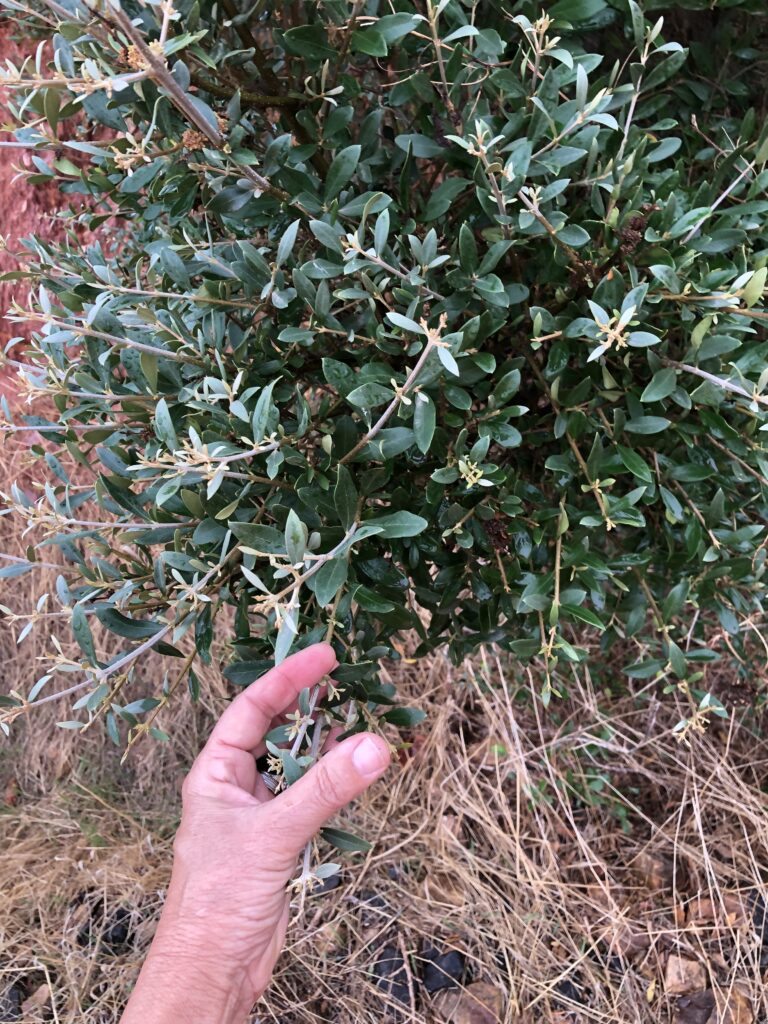
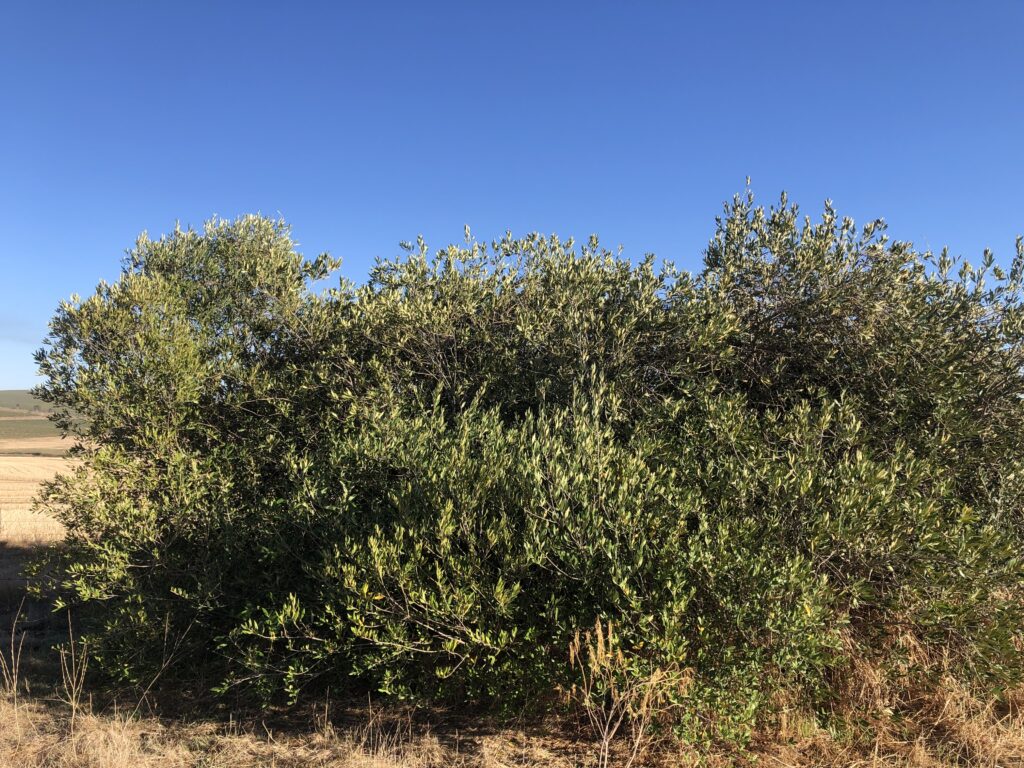
Wild olive
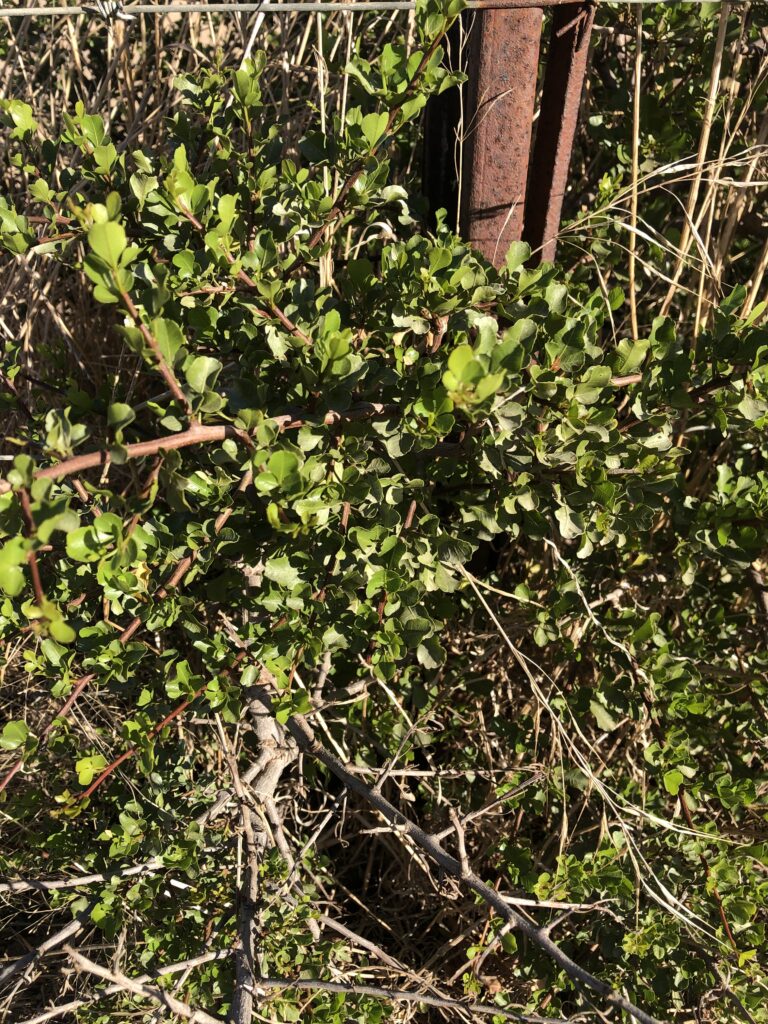
I went home to identify one of the Rhus family plants and was intrigued to learn in Food from the Veld that the Garra, or taaibos berries, are eaten as a relish by people in the Swartland district. I am now more convinced that the berries in the scat below belong to this little shrub called Sersia undulata, commonly known as the Kasteelberg Kuni bush or Namakwa koeniebos. We also saw species of Rhus lancea, the Karreeboom – a smallish tree that also has edible fruit.
It is interesting to see how the local flora has embraced the old industrial site. I identified a smal ground cover called a wild asparagus or in the Afrikaans language, a Krinkhout – can just imagine a bakoorjakkals eating here. I think I might have the perfect palette for the Taaibos by using Graphitint Port of Aubergine to match the colour of the fermented berry skins in the midden above. (seeds of garra)
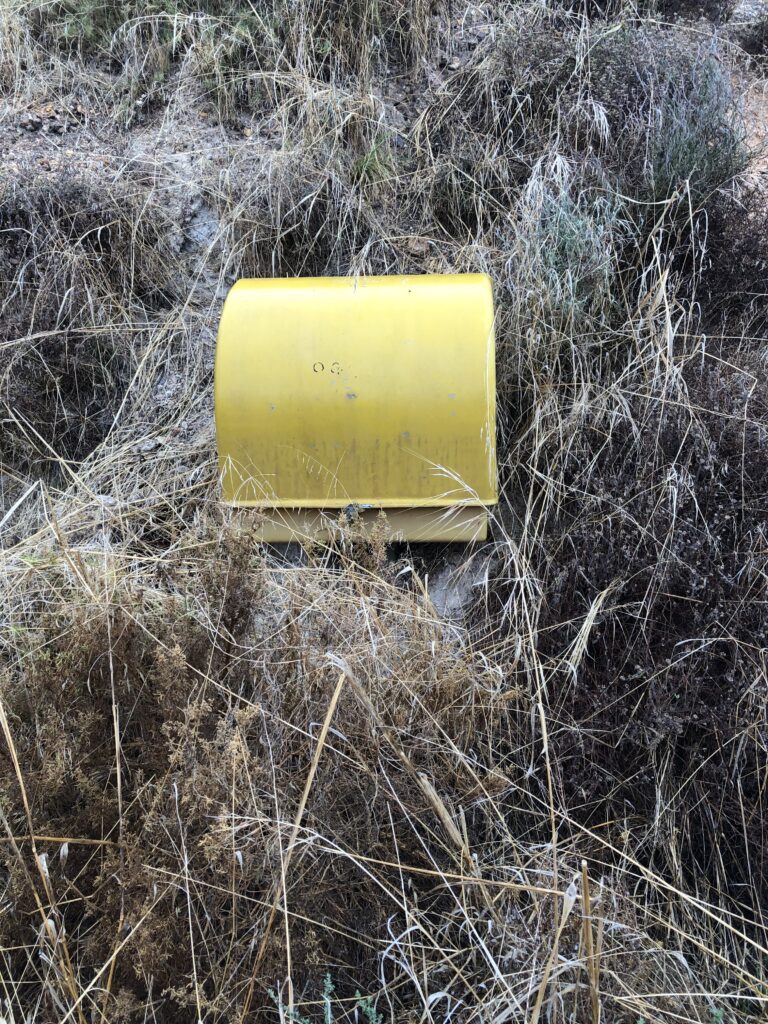
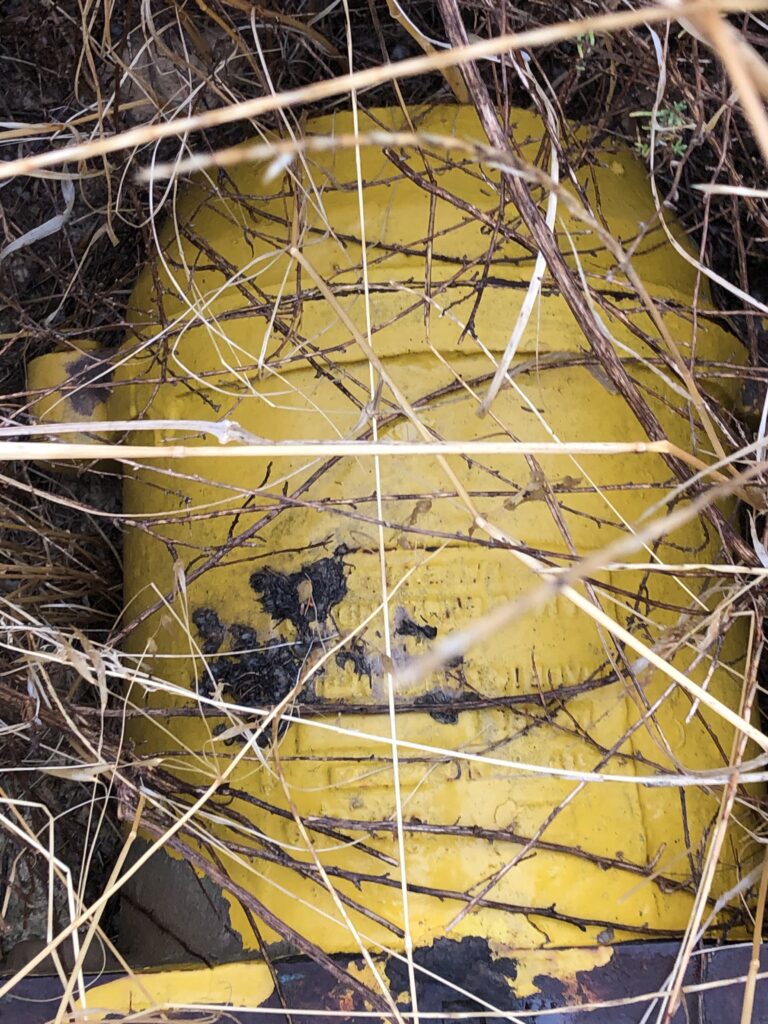
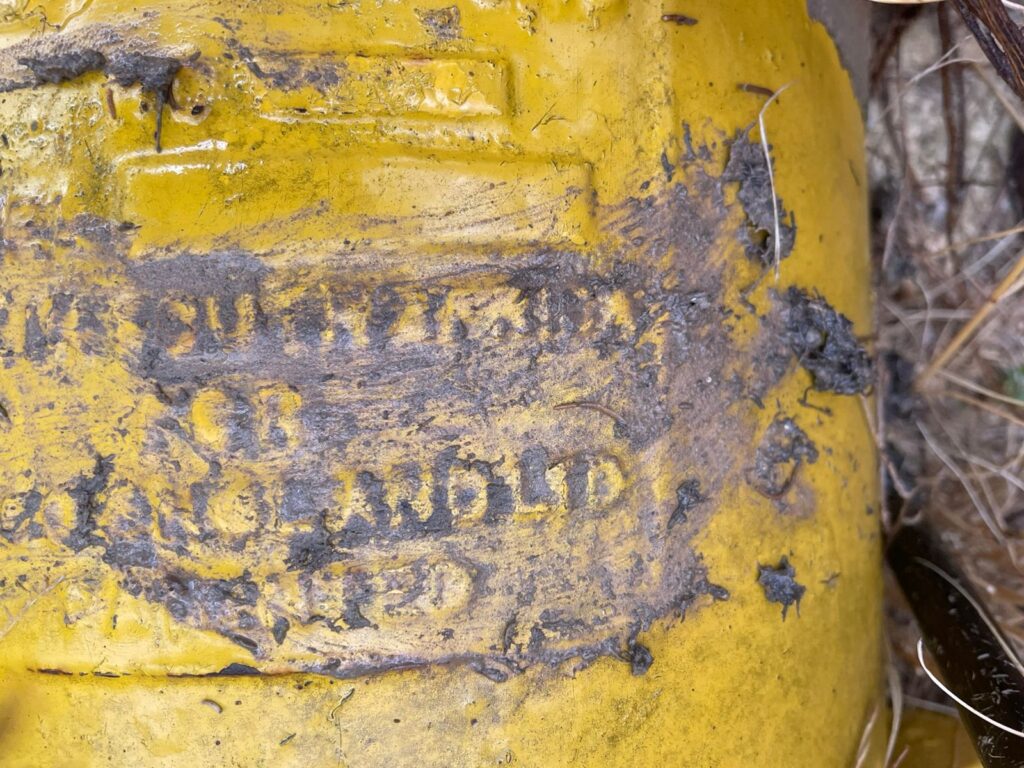
With the help of social media friends and Gemini AI, I was able to identify a few interesting objects along the line as shown below.
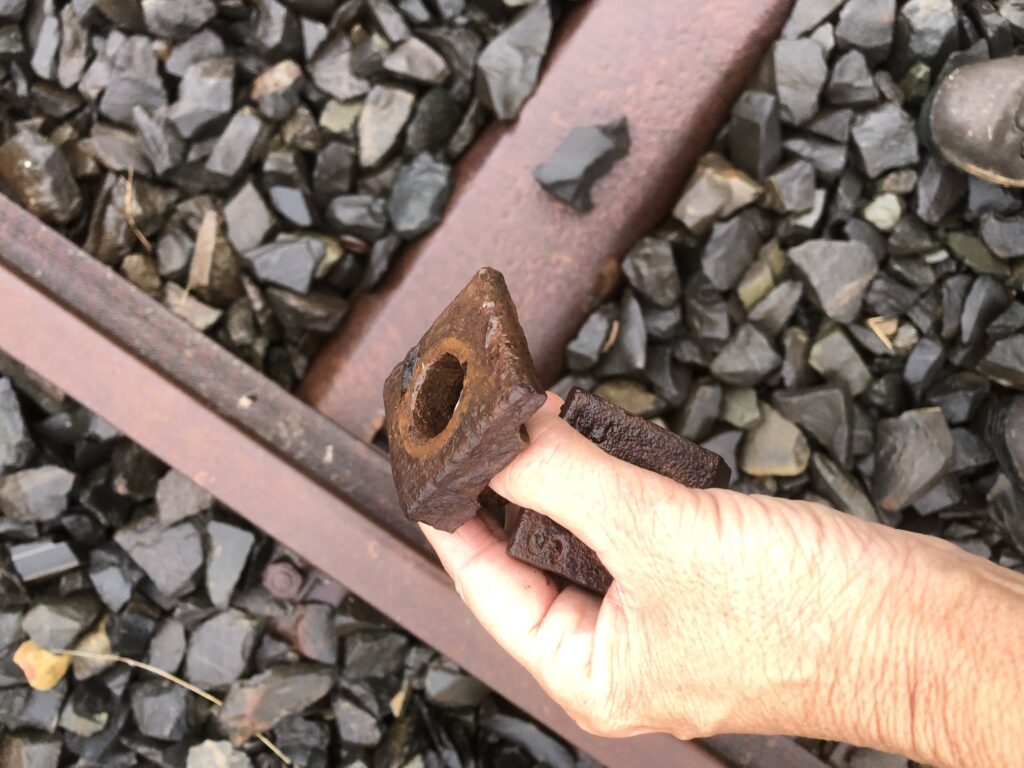
All these images are part of what I would call the ‘engineering relics’ I have been discovering on the walk. It seems these have to do with mechanical lubrication of the rail, which would be used to crease the tracks to reduce friction and possibly noise as well. They were close to a curve (where the owl flew out from the higher part of the embankment), and it seems that when a train would pass over a specific point on the rail, its weight or the vibration would trigger the pump, and the wheels would pick up a small amount of grease. I can imagine this grease, especially around the curves, would prevent excessive wear and tear on both the wheels and tracks.
In hindsight, we thought from looking at the rails that they were starting to bend.
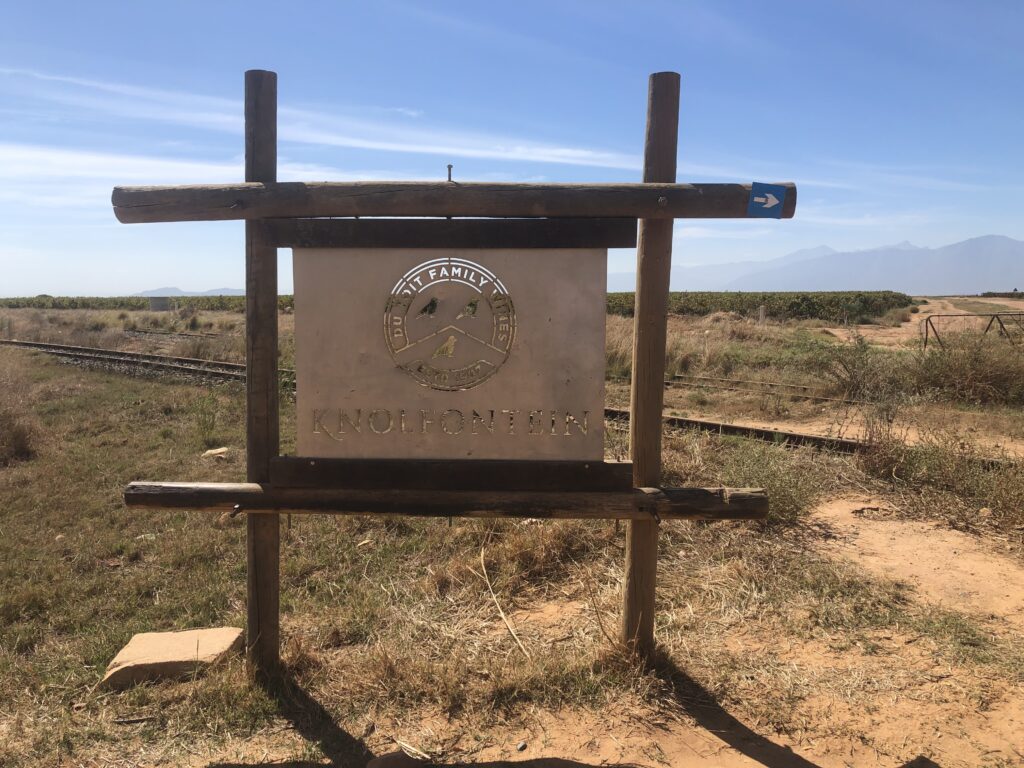
The walk left me with many questions regarding the trails/marks I still need to learn to ‘read’. I thank Maarten, Walid, Hanti, Barry and Dave for walking alongside today. And a big thank you to Pieter du Toit winemaker/farmer/owner of Knolfontein where we made these amazing connections.
Notes to myself
earlier this morning, I heard a Neil Diamond song: Beautiful Noise, and a verse stuck with me:
“…..It’s a beautiful noise Goin’ on ev’rywhere Like the clickety-clack Of a train on a track It’s got rhythm to spare….“
To me, this “clickety-clack” isn’t just noise; it’s a rhythmic count of the 10.055-meter sections passing beneath the wheels.
The scroll is currently being prepared with a layer of egg glair. I work in sections of 1.8m at a time, and for the first batch of egg glair (4 egg white) I covered m of the scroll.
On our walk, I found sleepers with the names Belval, Colvilles and Wendel and learned this refers to the famous steelworks in Luxembourg (specifically the Société Métallurgique des Terres Rouges or later ARBED) as well as David Colville and Sons in Scotland and the Wendel group in France. Finding these marks on sleepers next to a “Krupp” rail is like finding more signatures from the same era of European industrial dominance. I learned that Colvilles was nationalised into the British Steel Corporation (BSC) in 1967. I also wonder about the decisions of making use of different suppliers, and then learned that in the early 20th century, a European cartel controlled steel prices. Railway authorities often imported from various European firms to avoid relying on a single source and to secure the best prices.
I talked to two local farm workers who were born in Malawi and shared stories about taking the train from Hermon to Cape Town.
I have learned the name for the fruit in the midden: it is Garra. It is a Khoisan word for the drink made from the Taaibos berry. For centuries, people have gathered to mash these berries into a ferment. Today, on this walk the Genet is the ‘last brewer’ on the line, leaving its own version of garra on the steel. The track is not just a path for trains; it is a site of continuous, ancient consumption.
A few years ago I read some of the writings on walking by Rebecca Solnit, and what comes back to me after the walk with my friends and walkers from our village is that walking is more than a solitary thing for me, it has also become something I can do in groups whilst holding conversations. I was reminded of the peripatetic philosophers for whom walking extensively was a habit. It is said that Aristotle, for example, would often teach while walking. (later in an OCA EU walking session with tutor Dr M Whiting, this was again emphasised)
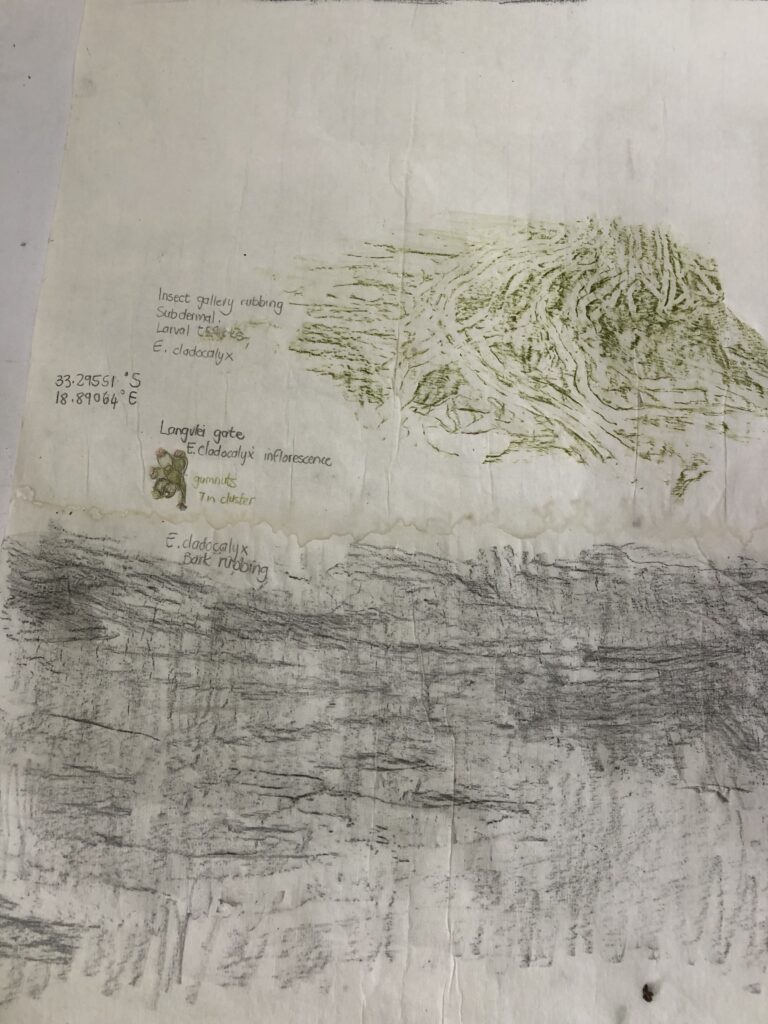
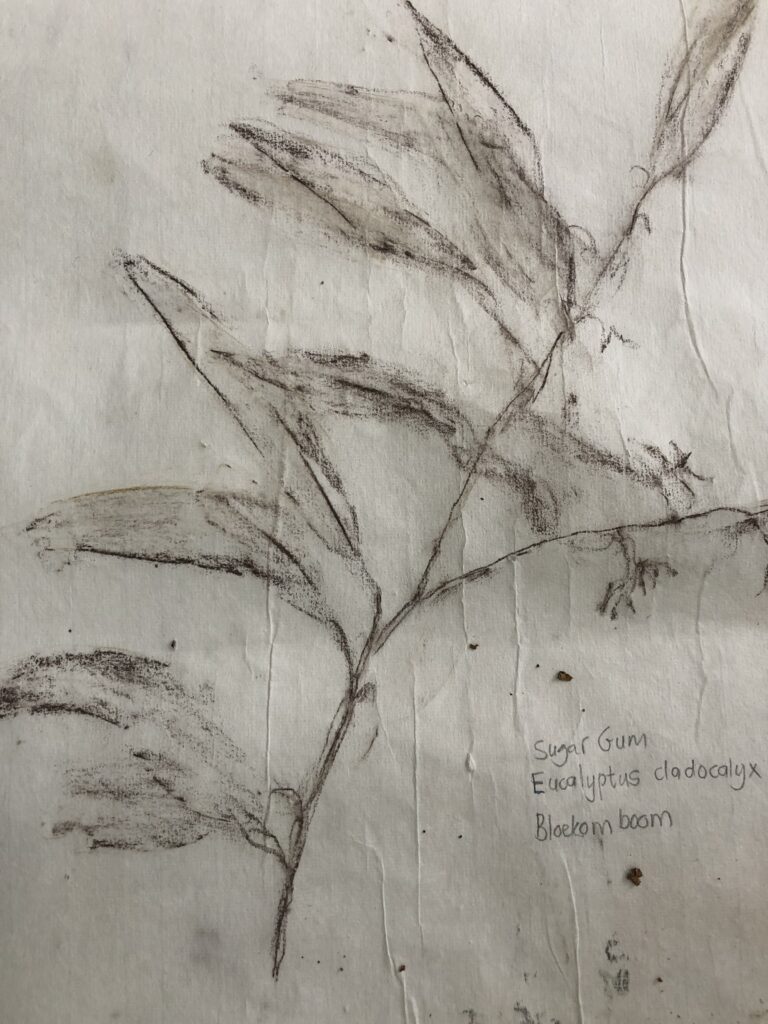
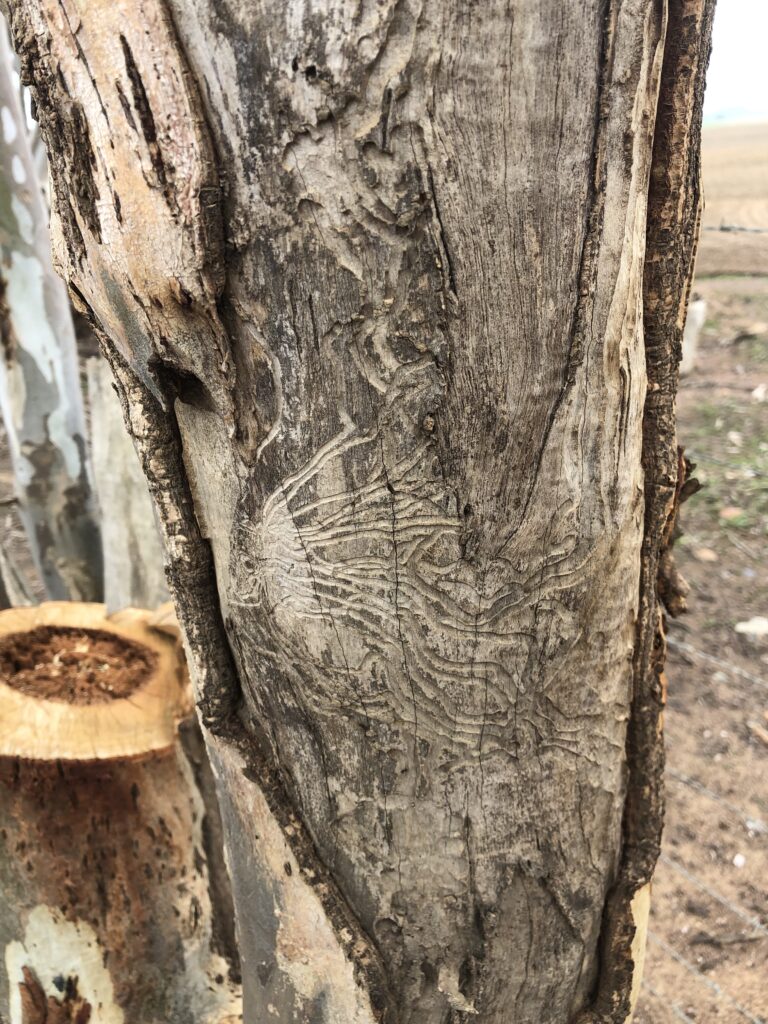
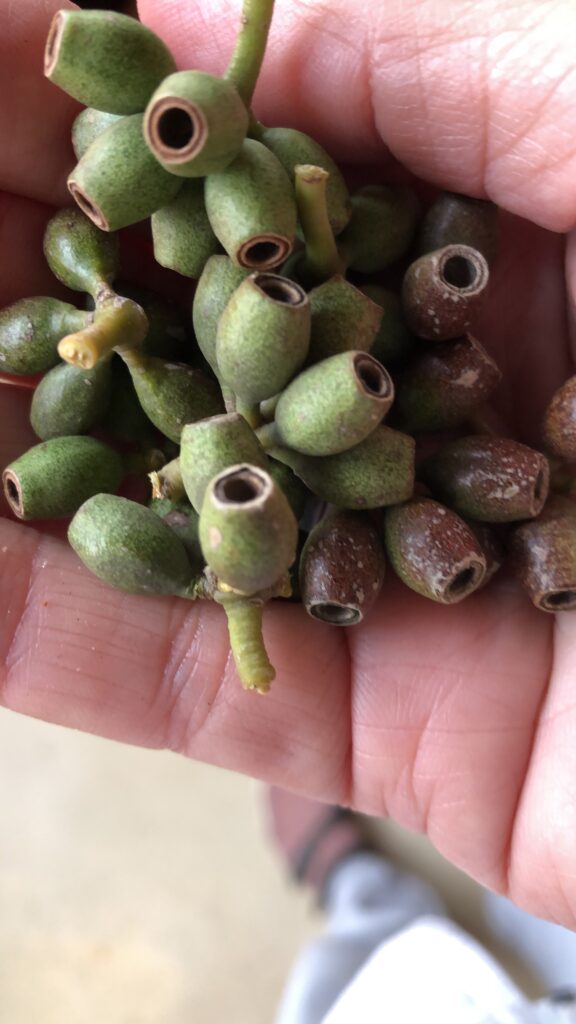
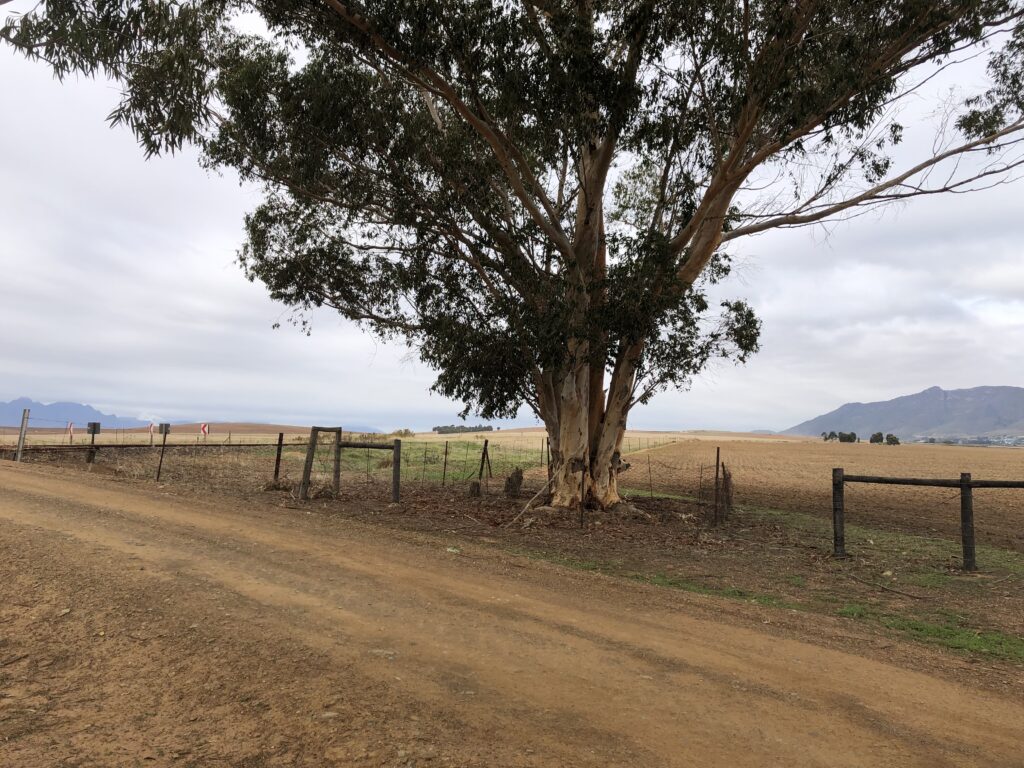
At Langvlei, the rail meets a group of Eucalyptus cladocalyx trees, also known to be used as windbreaks along the rails/roads. We have a long line further down the roads on the farm. In Afrikaans, these trees are called bloekombome; they are also classified as Category 1b invaders.
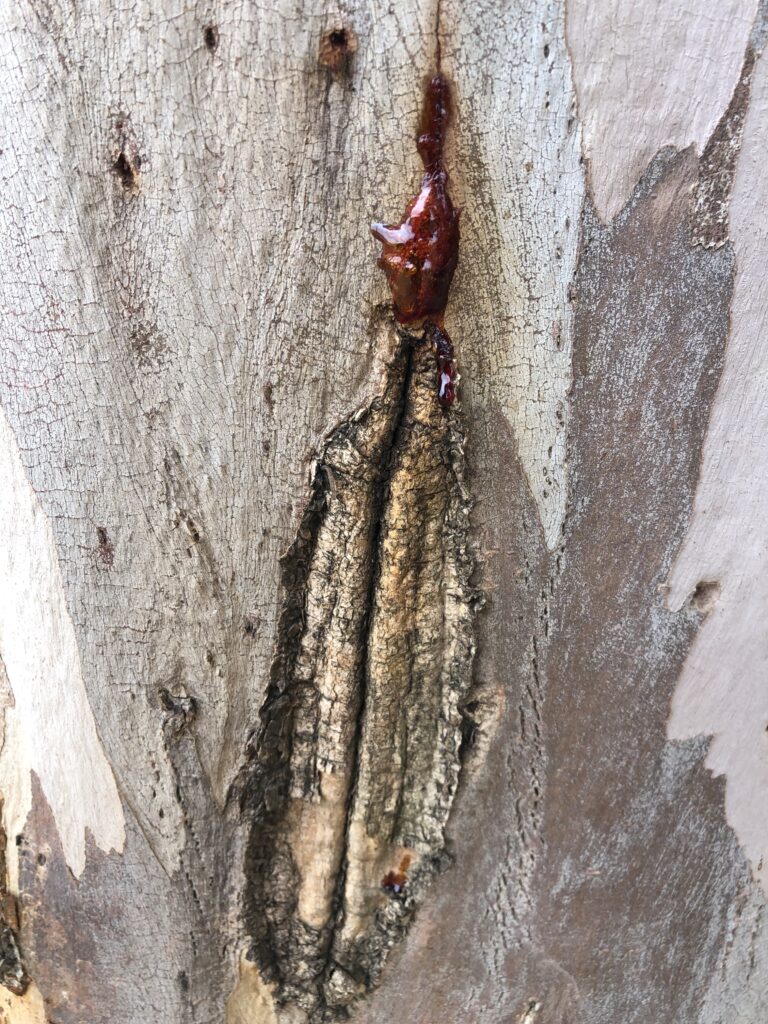
On May 1st, 2026, I took rubbings of the bark and the leaves. An interesting find was a small piece of resin on one of the trees at the gate. I learned that this polyphenol-rich resin is called kino and that the Aboriginal people call it ‘red gum’. I will try to grind it into a pigment and use it on my scroll. I also found some that are still sticky.