On Friday, 3 April 2026, I planned a commemoration walk to celebrate the opening of this line on 3 April 1949. The plan was to start the walk from the now-abandoned Riebeek West station, walk 2-3km out on or alongside the rail, and then turn back to the station.
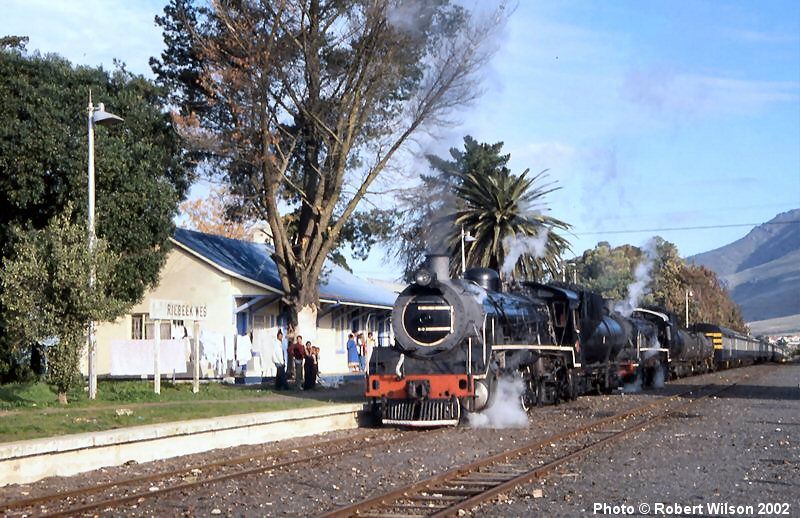
I decided to share my walk on social media, and members of the local walking group joined in. The scheduled time had to be changed due to rain, so we met at 14h00 on Friday afternoon. I shared my vision for the walk with the members, that it would be mainly a commemoration and a way to reflect on this event and how it might have affected the village at that time, as well as to consider whether it was still running. I wanted to use the opportunity to hear stories, take photographs (a local photographer also joined this group of 7 walkers) and explore the line.
The images below are of the buildings around the old station and were taken by photographer Maarten Venter
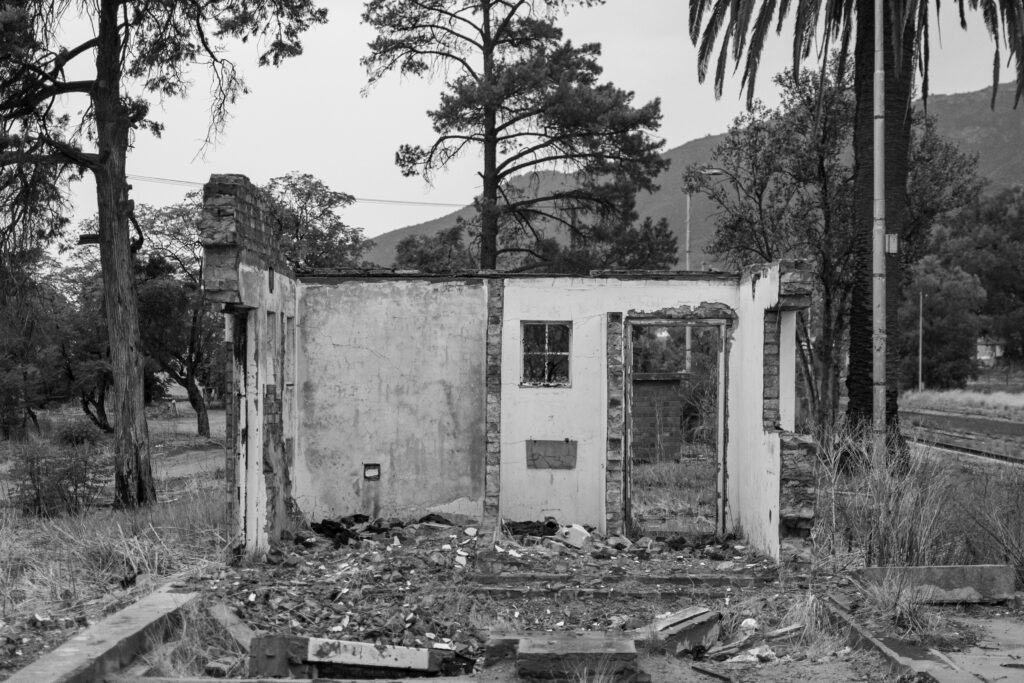
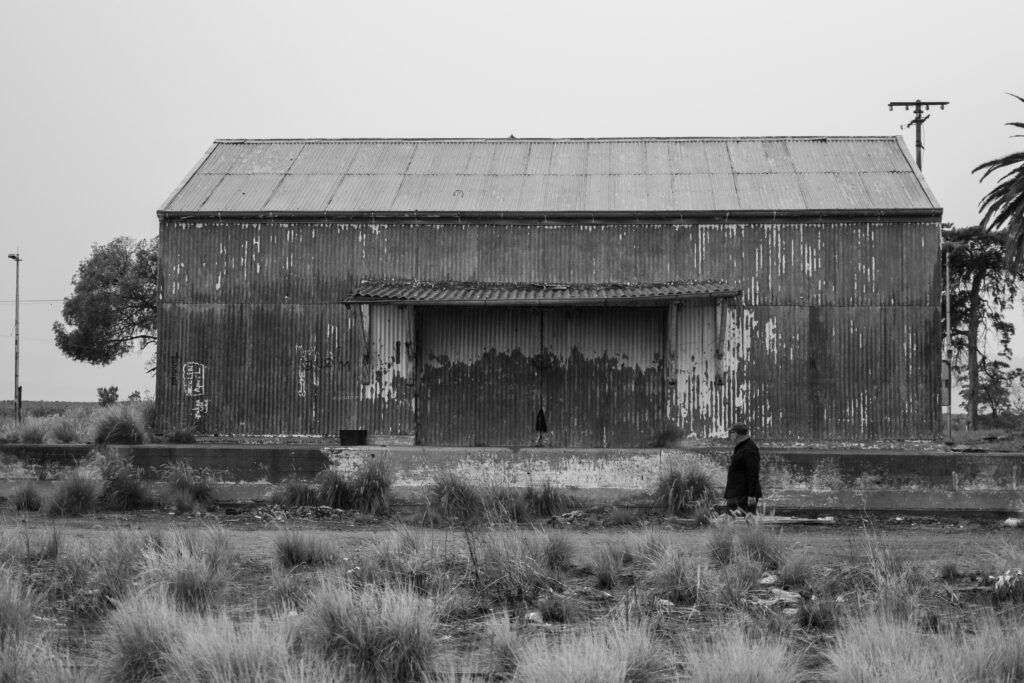
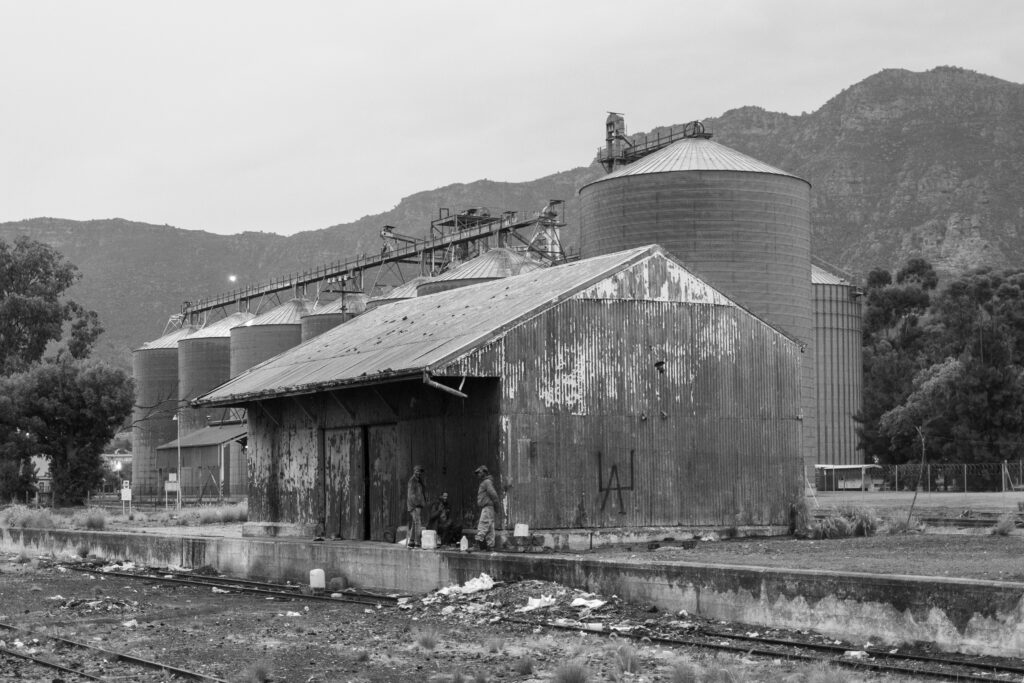
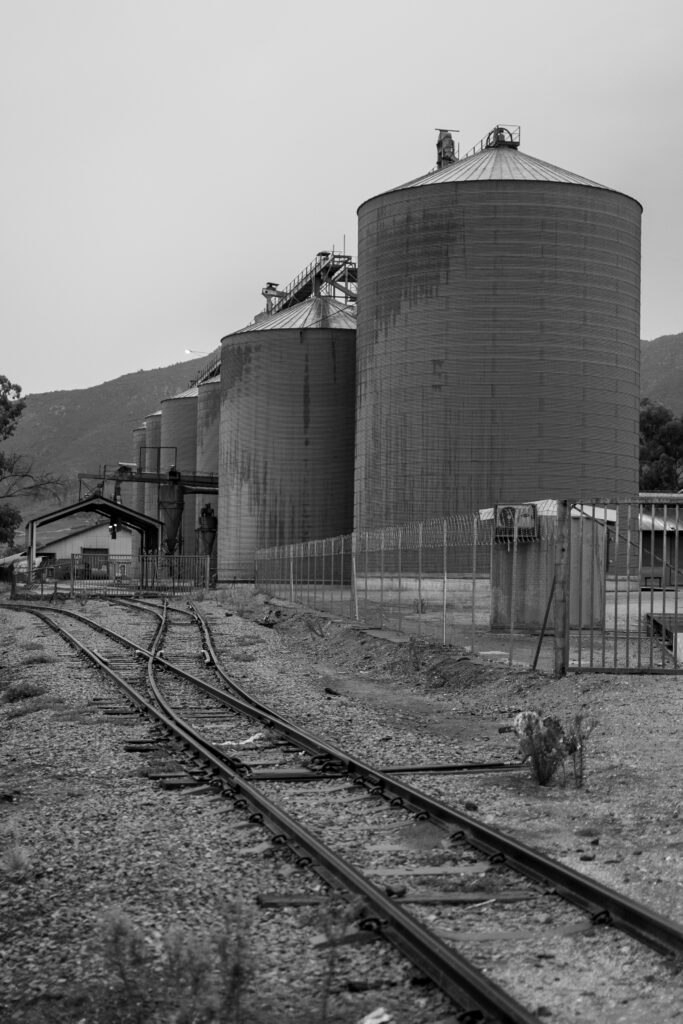
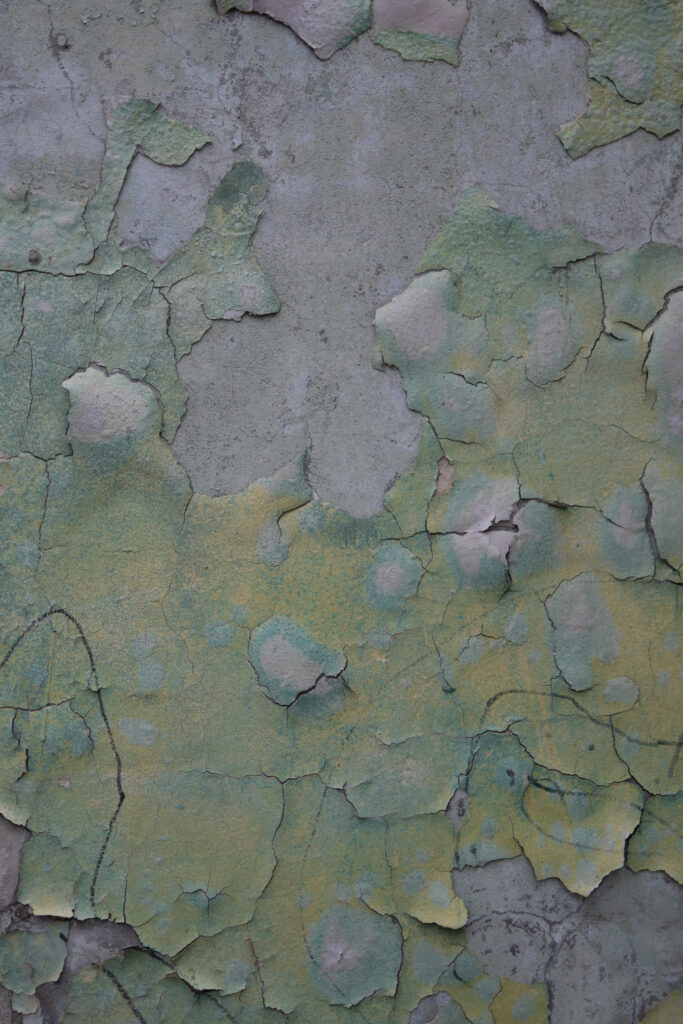
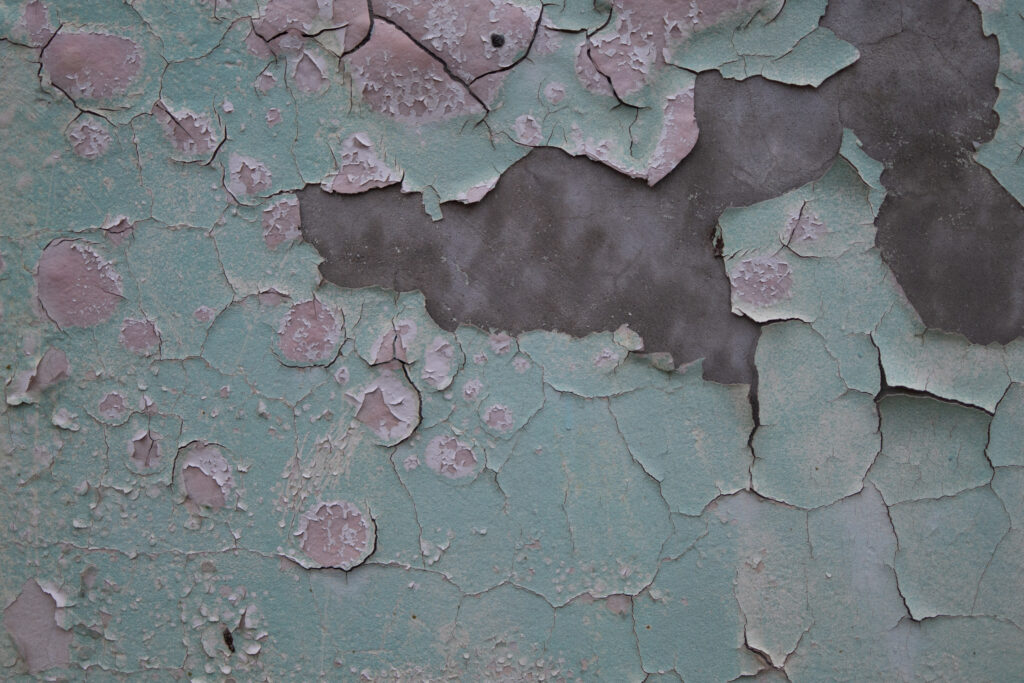
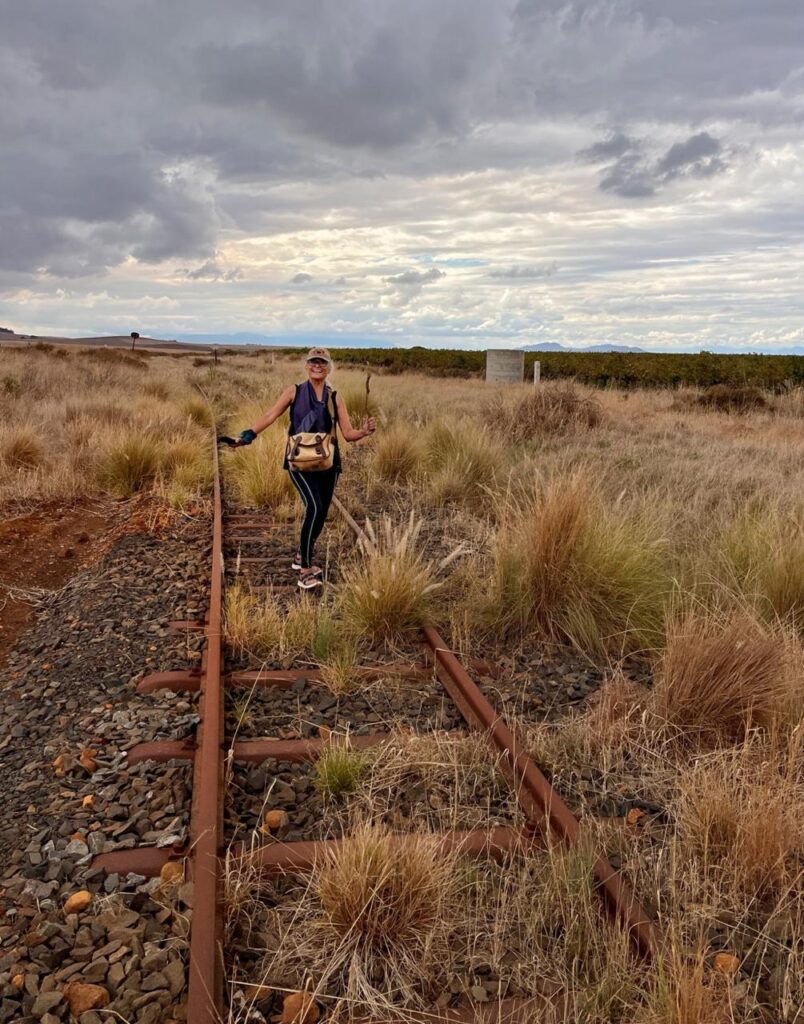
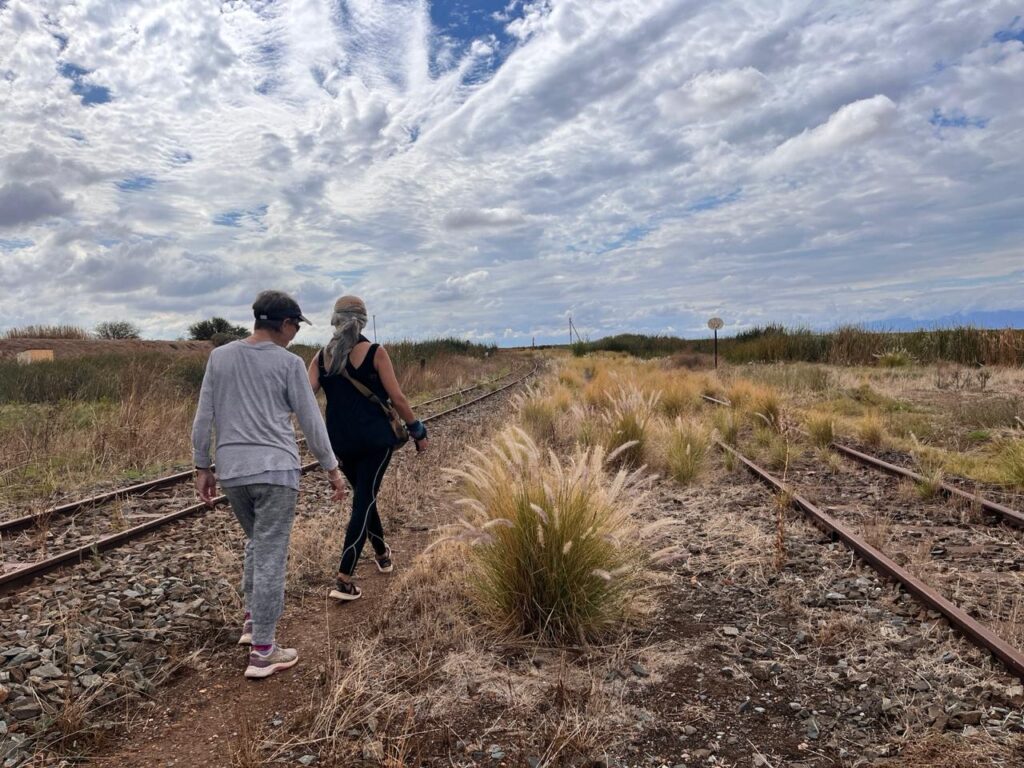
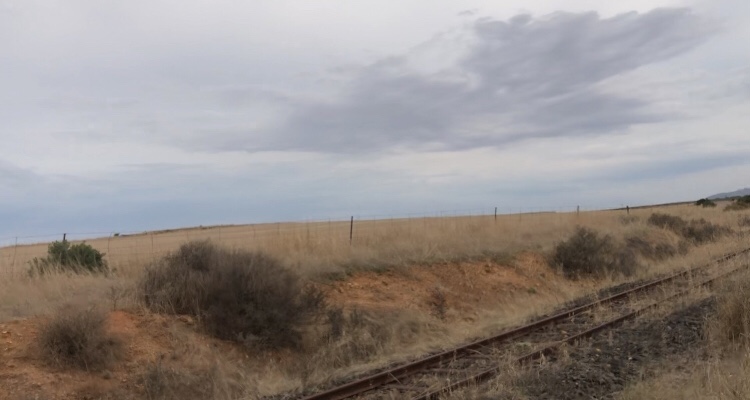
As soon as we started, we were fixed on ‘markers’ we could see of these now mostly forgotten traces being left between the rails. A short walk took us to the crossing with Station Road and onto the Knolfontein farm, where we followed the line. Little did we know that we were on the wrong line – after 2km or so, we called a halt, and after some map consulting (Google Maps), we were now convinced we were not on the line to Porterville, but on the more maintained line to the PPC Cement plant. The rain was starting to come down again. Close to Station Road, I caught a glimpse of the line we were looking for – it was very overgrown and completely invisible. We realised how we got ‘side tracked’ and walked back to the station, making plans to do the walk again, this time considering starting from Langvlei Farm and following the track to the station.
As we walked back, rain softly started again – it was a lovely walk-about! I learned about being side-tracked, and cannot wait to go ‘find’ the old ghost line.
Thank you to my companions on the walk, the stories you shared and the hopes you carry forward. These rails were made to last another 100 years – they need some care and maintenance, like any infrastructure in our beautiful country does.
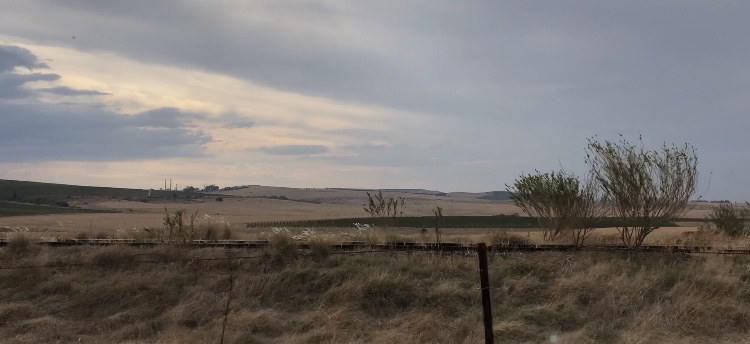
I hope to share some photos soon. Below are some photos I took with my iPhone. The bigger image shows the line (to the left) we were supposed to follow. Here we were returning, and close to Station Road, I started looking for signs and then, suddenly, it was there.
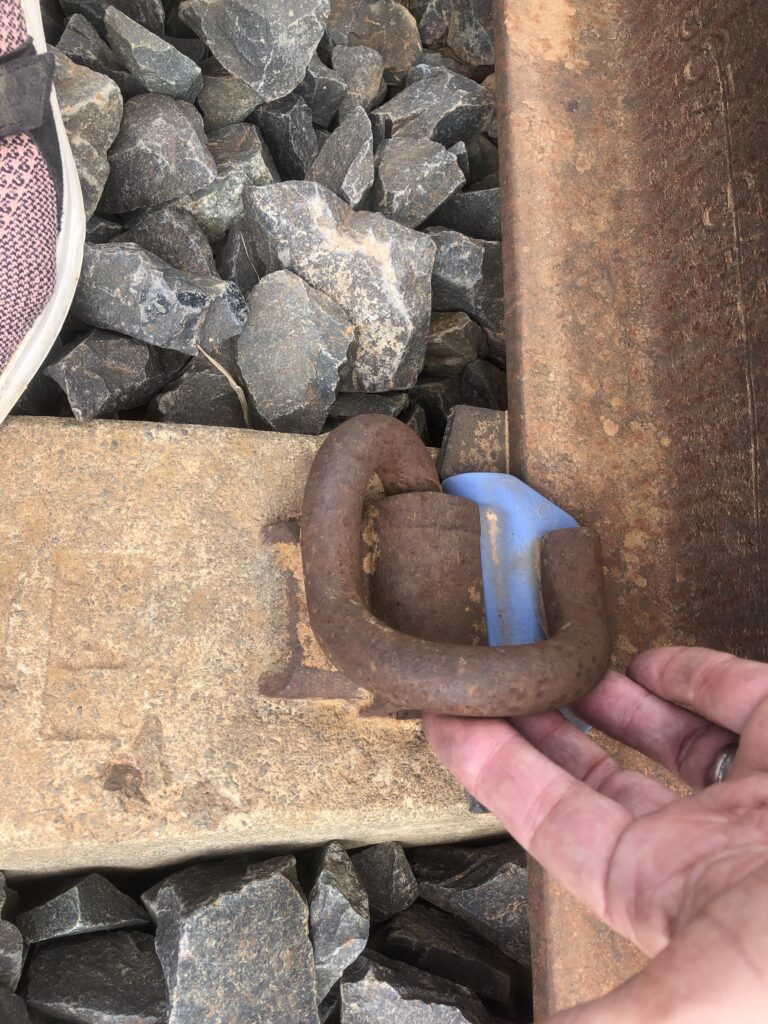
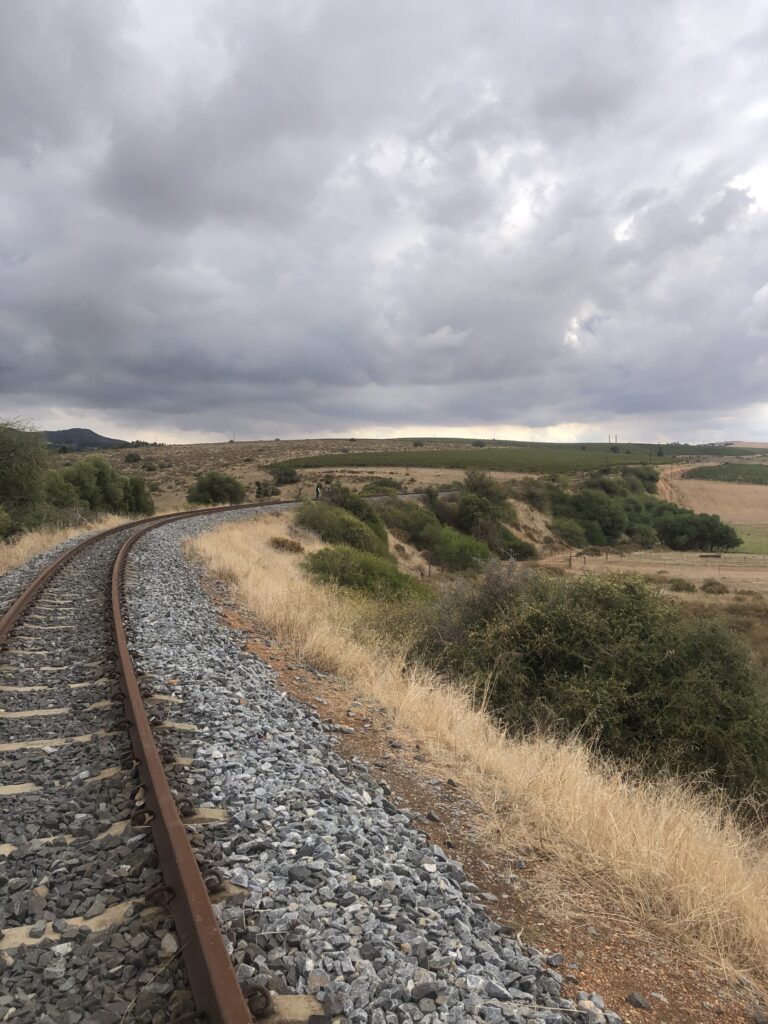
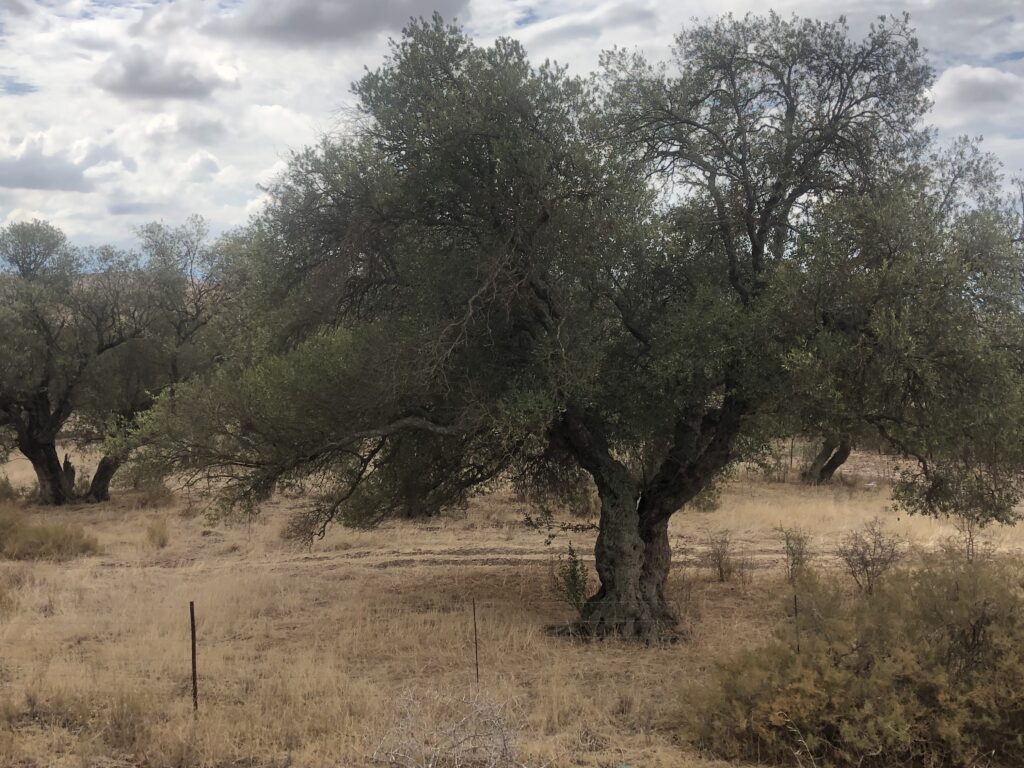
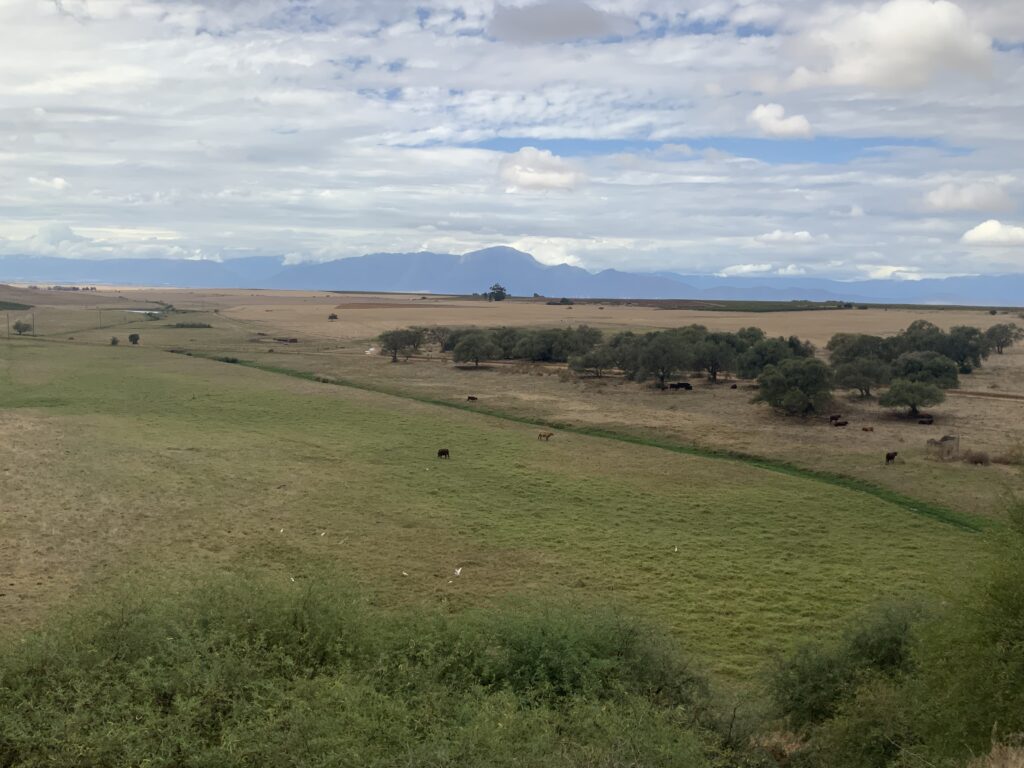
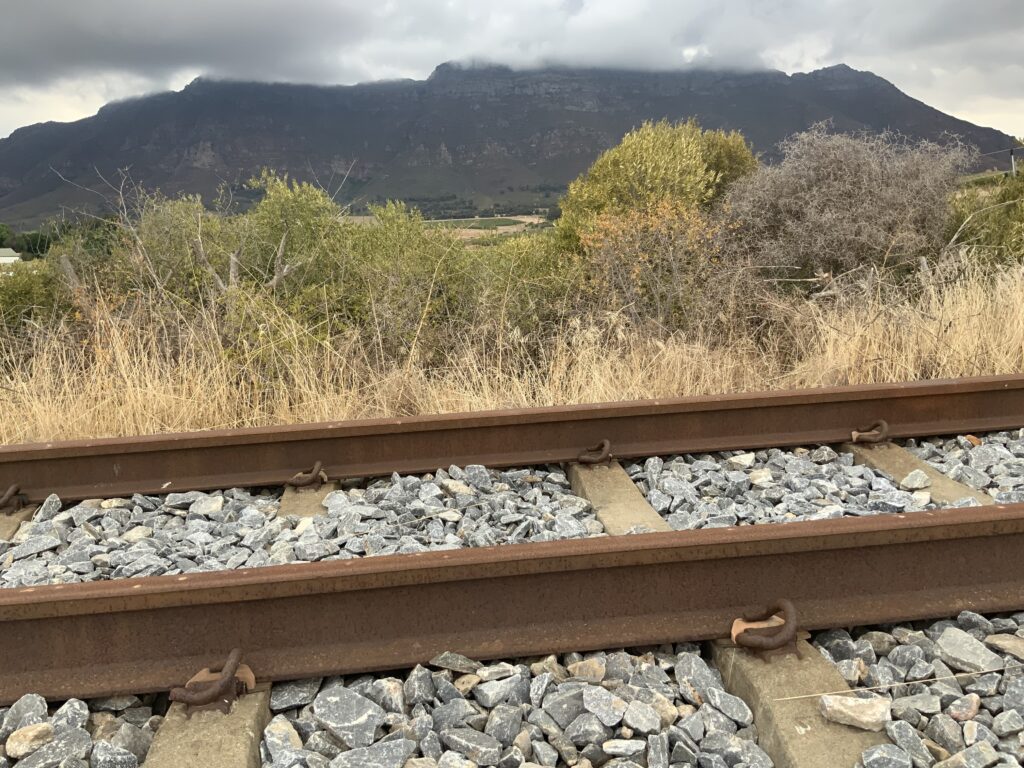
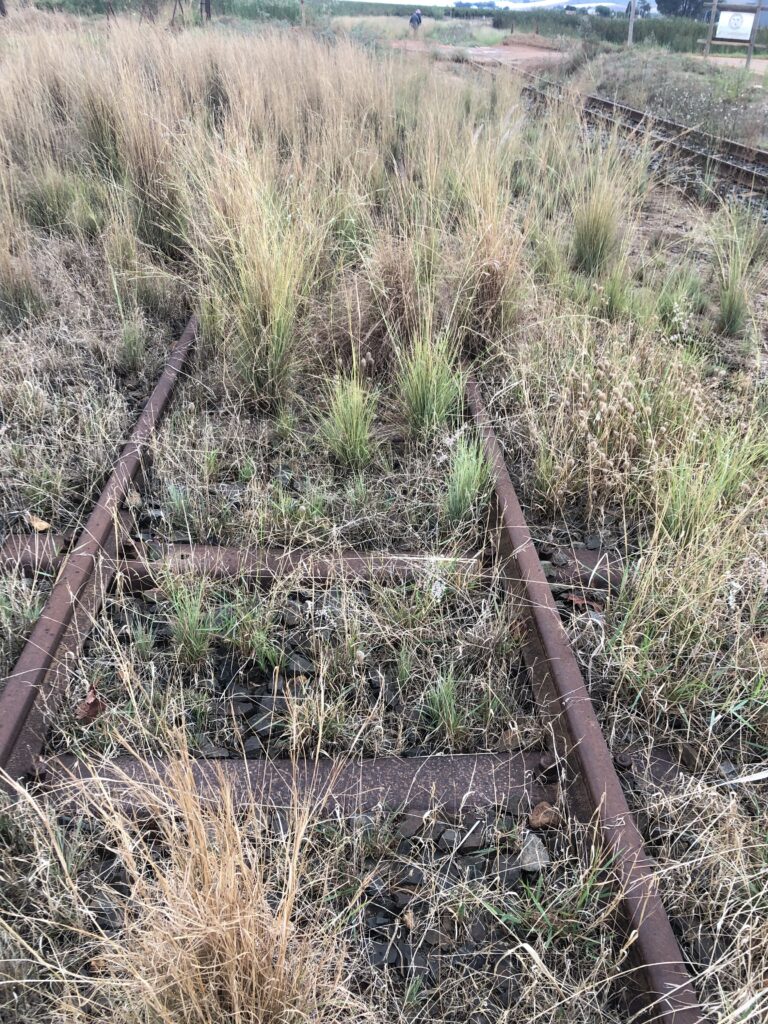
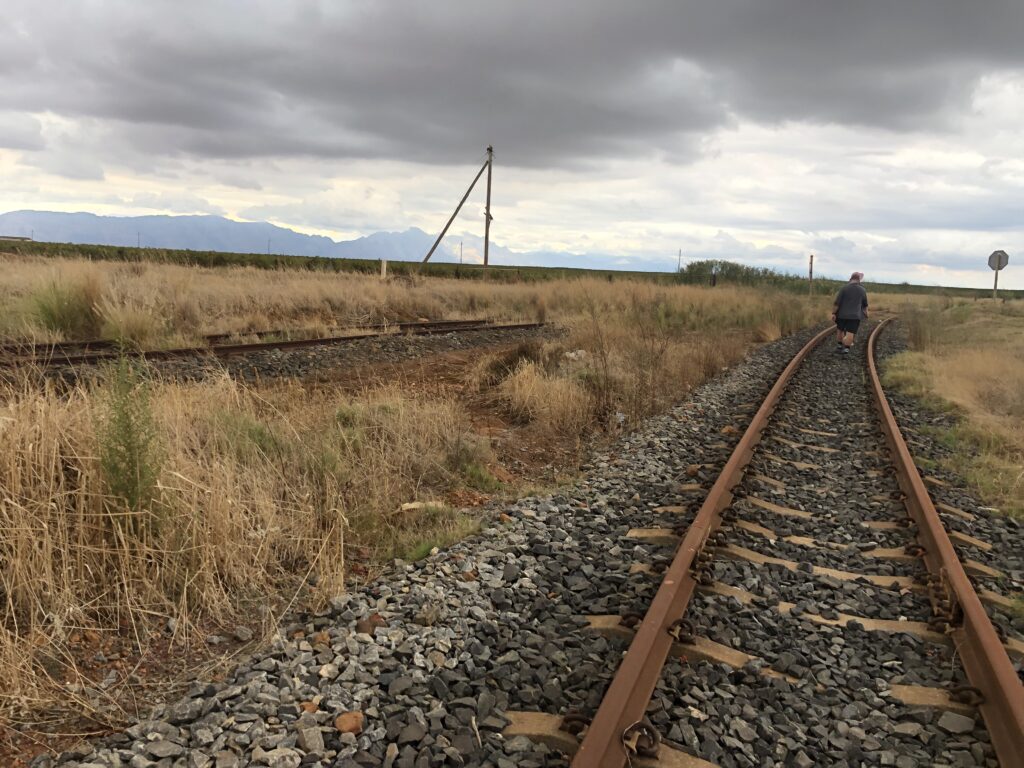
Erkenning aan plaaslike fotograaf, Maarten Venter vir die onderstaande fotos, geneem op 3 April 2026.
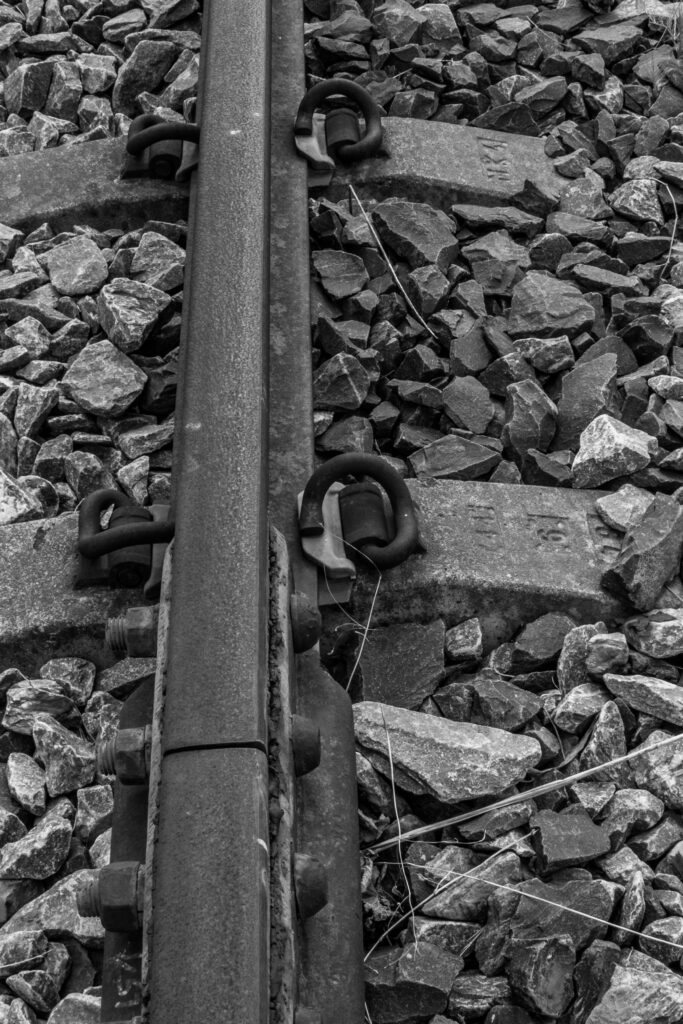
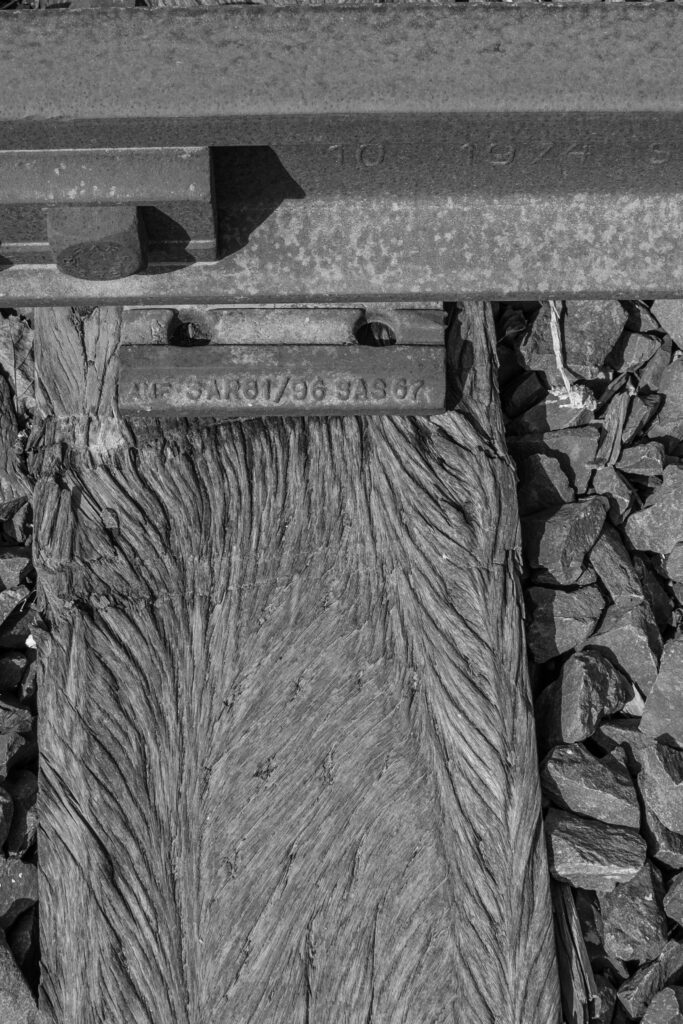
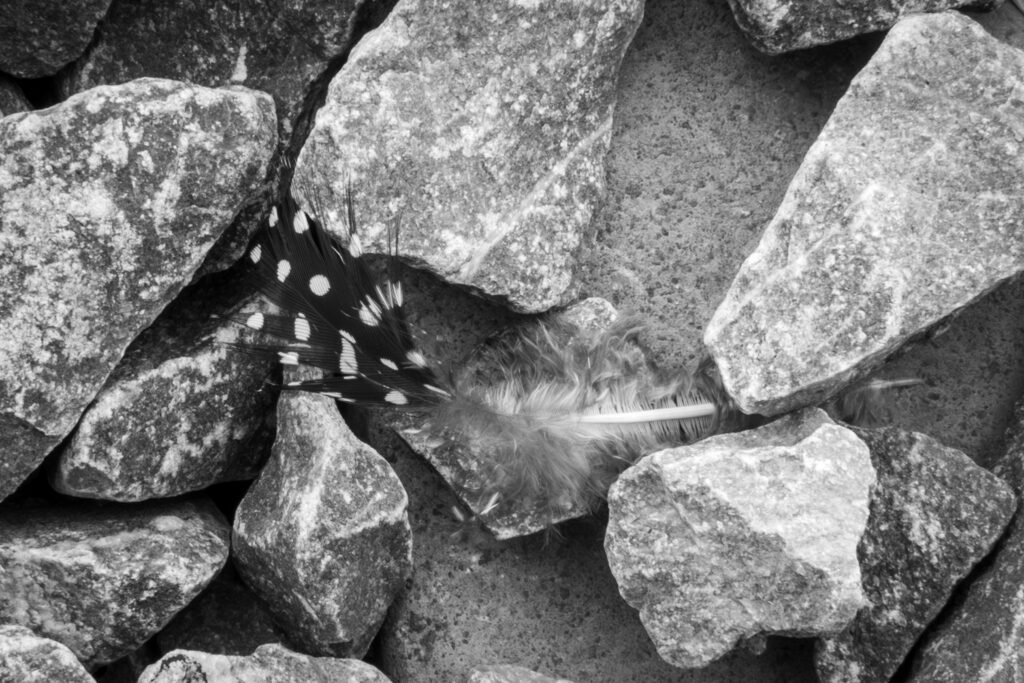
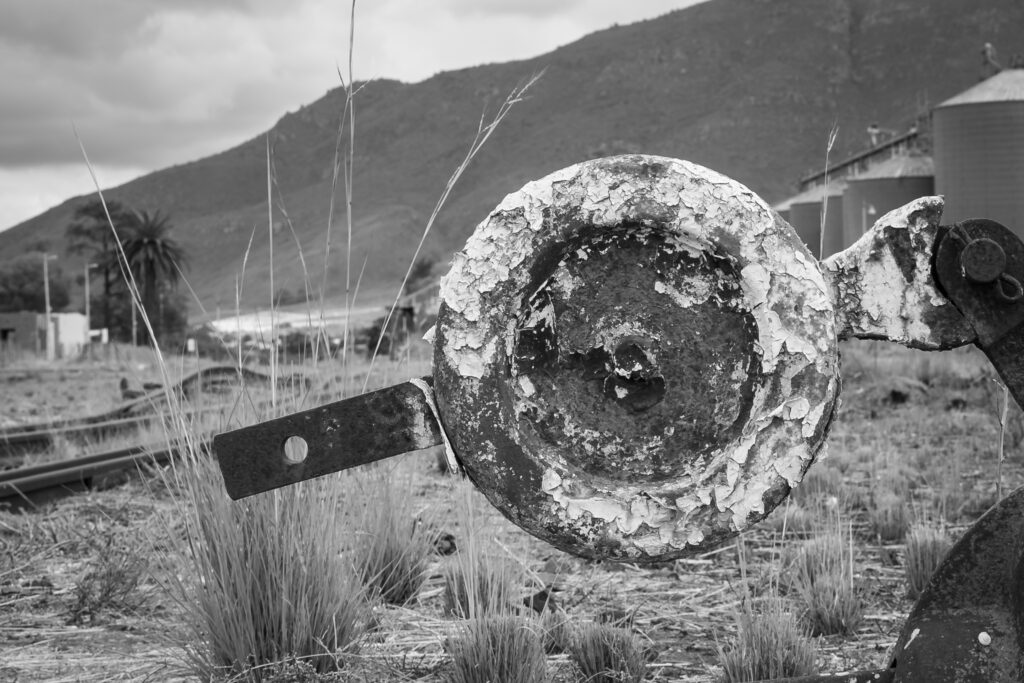
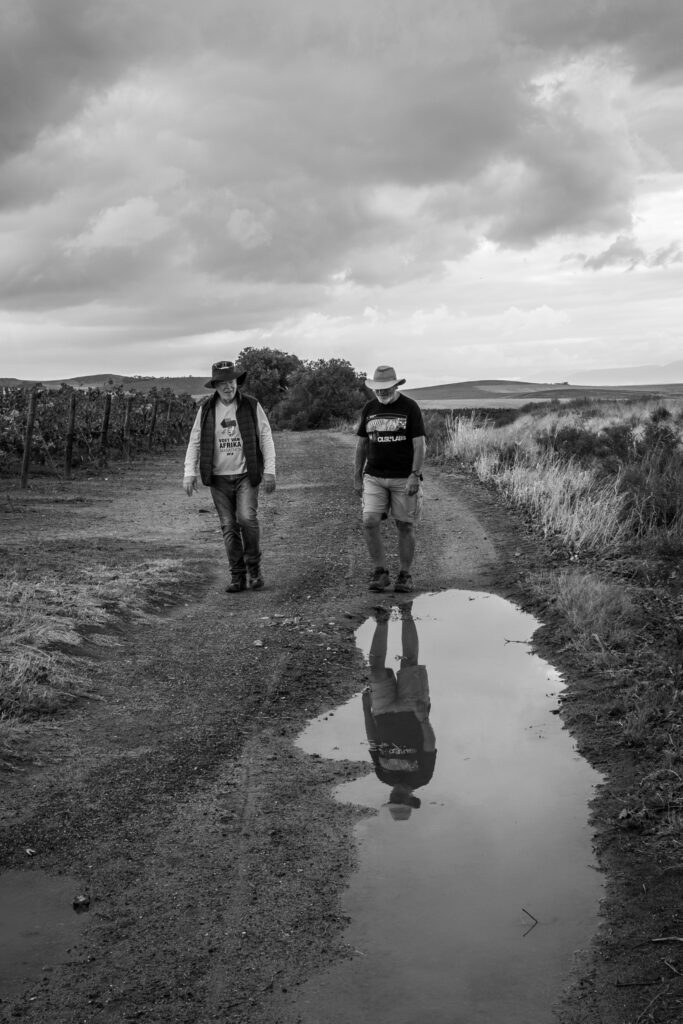
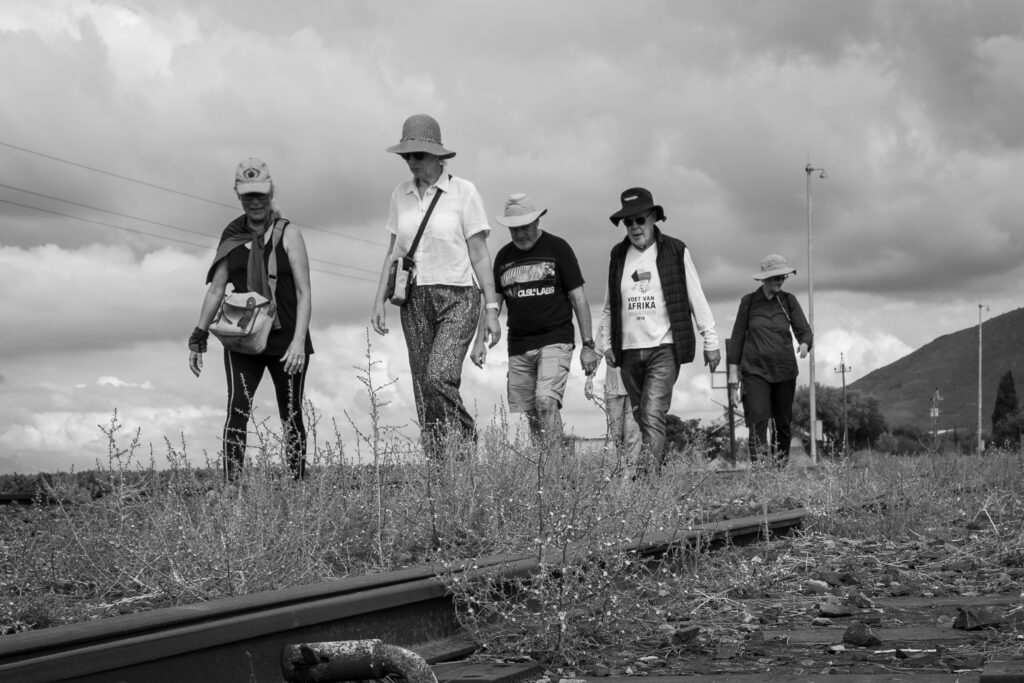
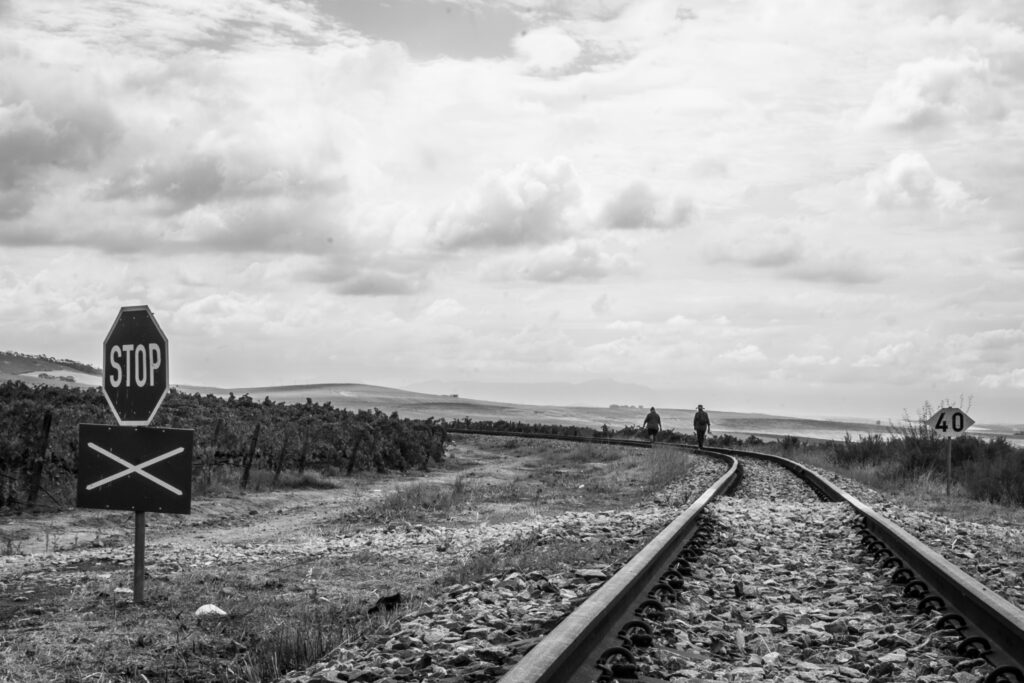
I also received photos taken by Mariette, a fellow member of the local walking group
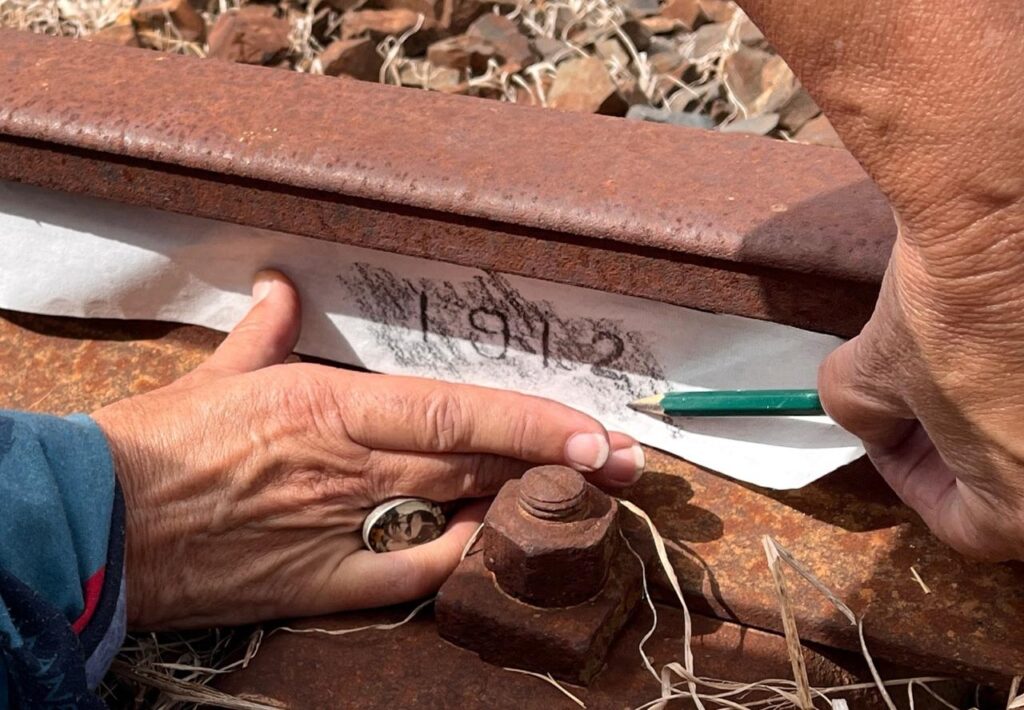
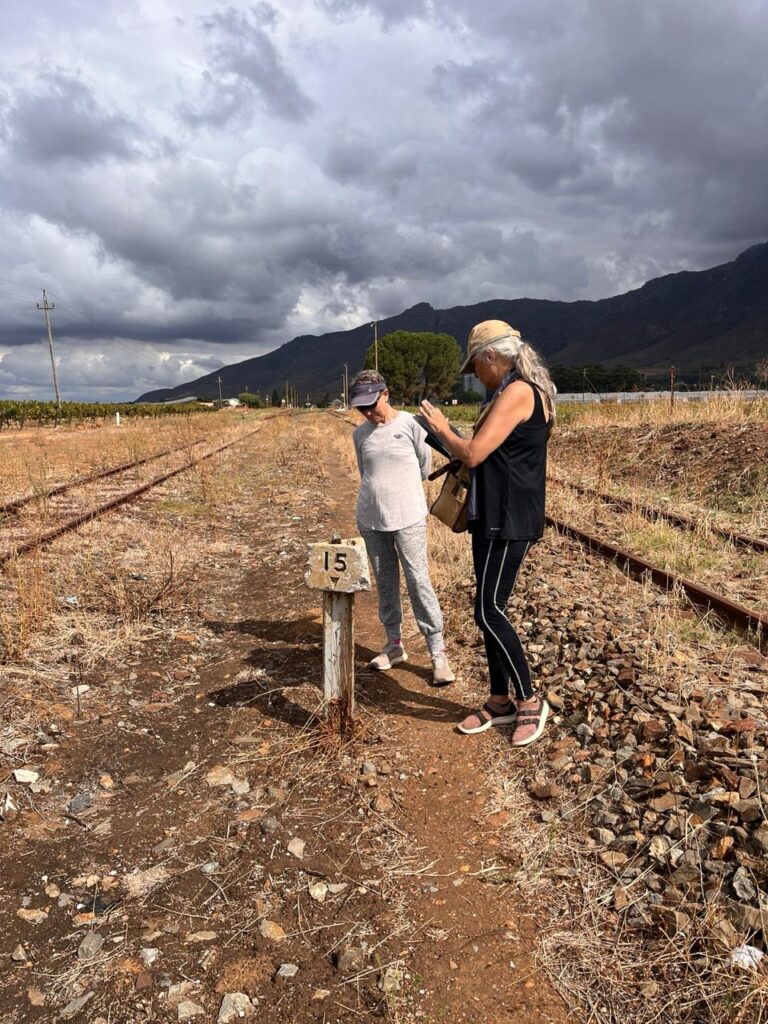
More context:
I researched the word ‘sidetracked’ and learned that it indeed comes from train terminology. The Online Etymology Dictionary gives the origin of the word(noun): “also side-track, “railway siding used for turning out or shifting rolling stock,” 1835, from side (adj.) + track (n.). The verb meaning “to move (a train car) onto a sidetrack” is from 1874. The figurative sense of “to divert from the main purpose” is attested from 1881. “
In the early days of the colonialisation of this part of South Africa, Riebeek Kasteel was the farthest outpost of the Dutch colony in the early eighteenth century. Today, one could also refer to this part of the country as being part of the wheat belt. Two prime ministers, General Smuts and Dr Malan, are sons of Riebeek West. Smuts was born at Boplaas (also known as Ongegund) at one end of the village, while Alles Verloren, where Malan was born, is three miles away at the other end. A fact which is not so widely
known that a third prime minister, General Hertzog, was born only thirty miles away and spent part of his childhood on his father’s farm, Amoskuil, in the Swartland.
On 8 April 2026, my husband and I drove along most of the ‘lost’ rail after the landowner of Knolfontein gave me permission to drive on the farm and follow the line. Our next walk to follow this line will be on Saturday, 11 April 2026, at 07:30. I asked my son to help with drone footage for another view of this line in the landscape. A photographer friend will also walk along. (I am thinking of making sound recordings in the meantime.)
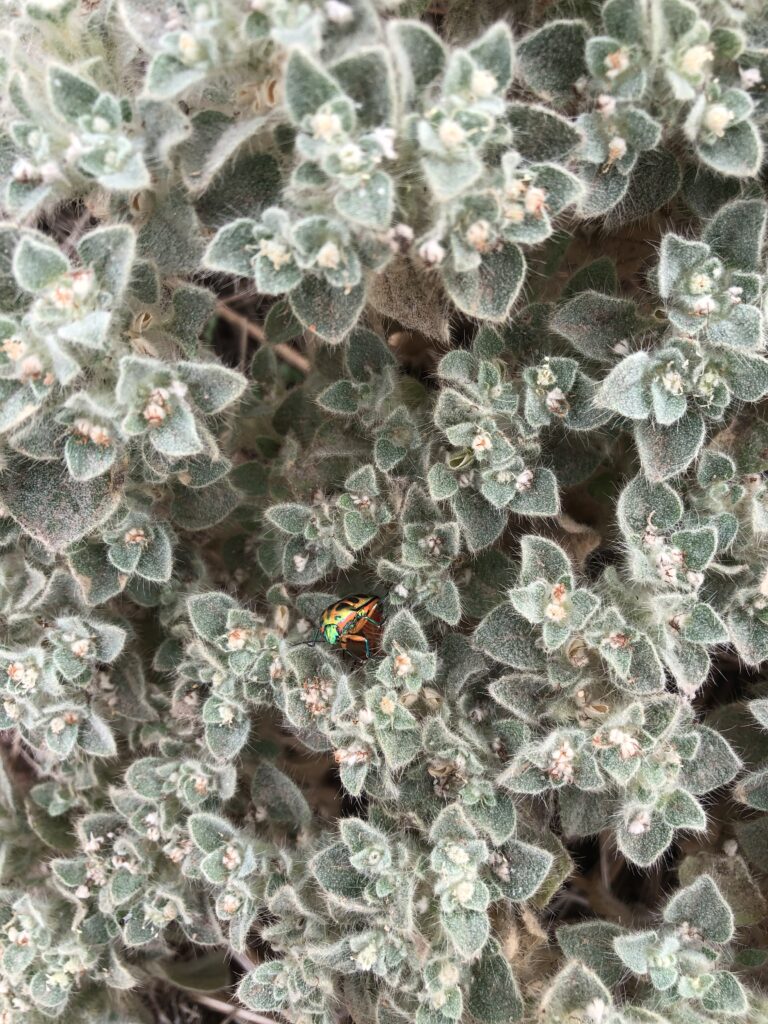
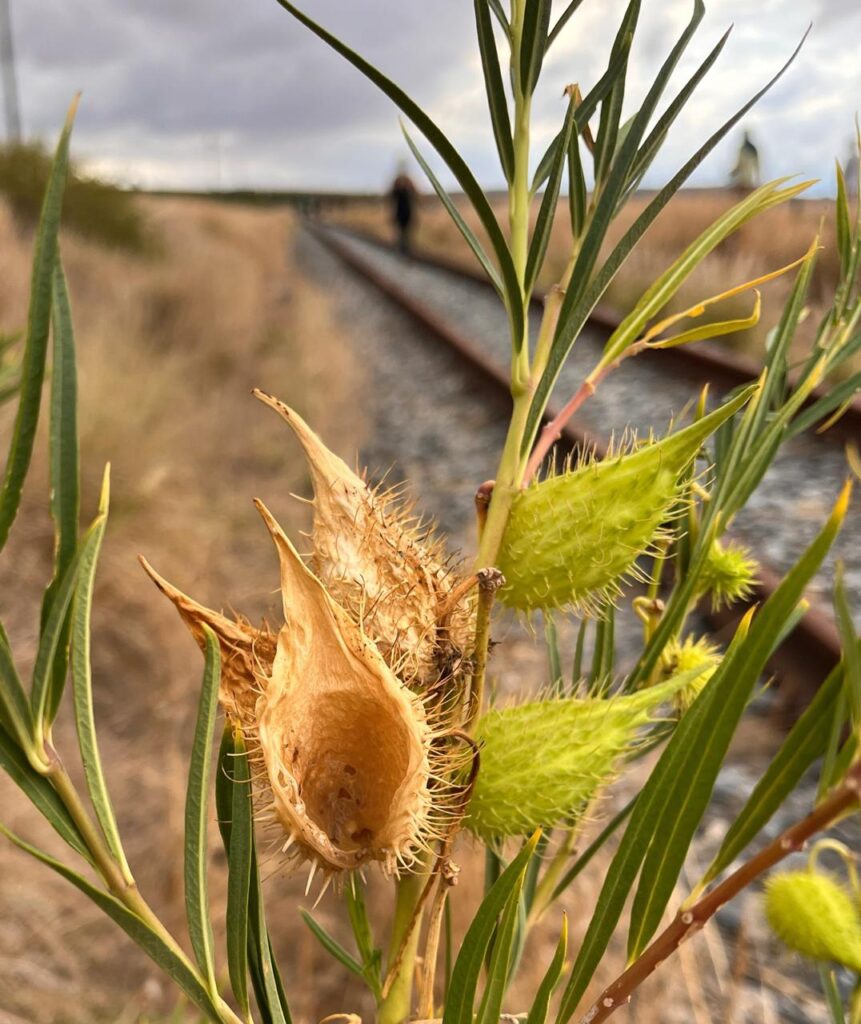
Sadly, both are considered pests in their own way – the bug is a threat to the wheat crops on the land adjacent to the train rail. ( During 2016, these insects appeared for the first time on dryland wheat in the Western Cape, including the Swartland area, completing one to two lifecycles early in the growing season.) The Doveweed plant is an invasive weed, native to Asia, and thrives in dry, disturbed areas of land in agricultural contexts. As a “creeping” weed, it spreads aggressively via above-ground stems (stolons), quickly forming dense mats that compete with wheat crops for moisture and soil nutrients. I could not help but think how this plant, like the steel rails, has naturalised over time, and a little research suggested that, as the name suggests, the seeds are a significant food source for birds, including doves, quail, and turkeys. Just consider the name, Doveweed…., and from the image, the bright little flowers attract insects. It also suggests that studies have explored its potential antioxidant, analgesic, and hepatoprotective (liver-protecting) properties.
An email to a friend about describing a new beginning I have witnessed: (10/04/2026)
Hi David
I found the trace of a decommissioned train line
Finding that ‘Invisible Line’ wasn’t a discovery, it became the birth of a new way of seeing the ground beneath my feet.
Kind greetings
Karen
I now look forward to the next walk: It’s the beginning of a conversation between me and a 100-year-old ghost.